🧠 Why Self-Awareness Is a Competitive Advantage for Leaders
🧠 Why Self-Awareness Is a Competitive Advantage for Leaders
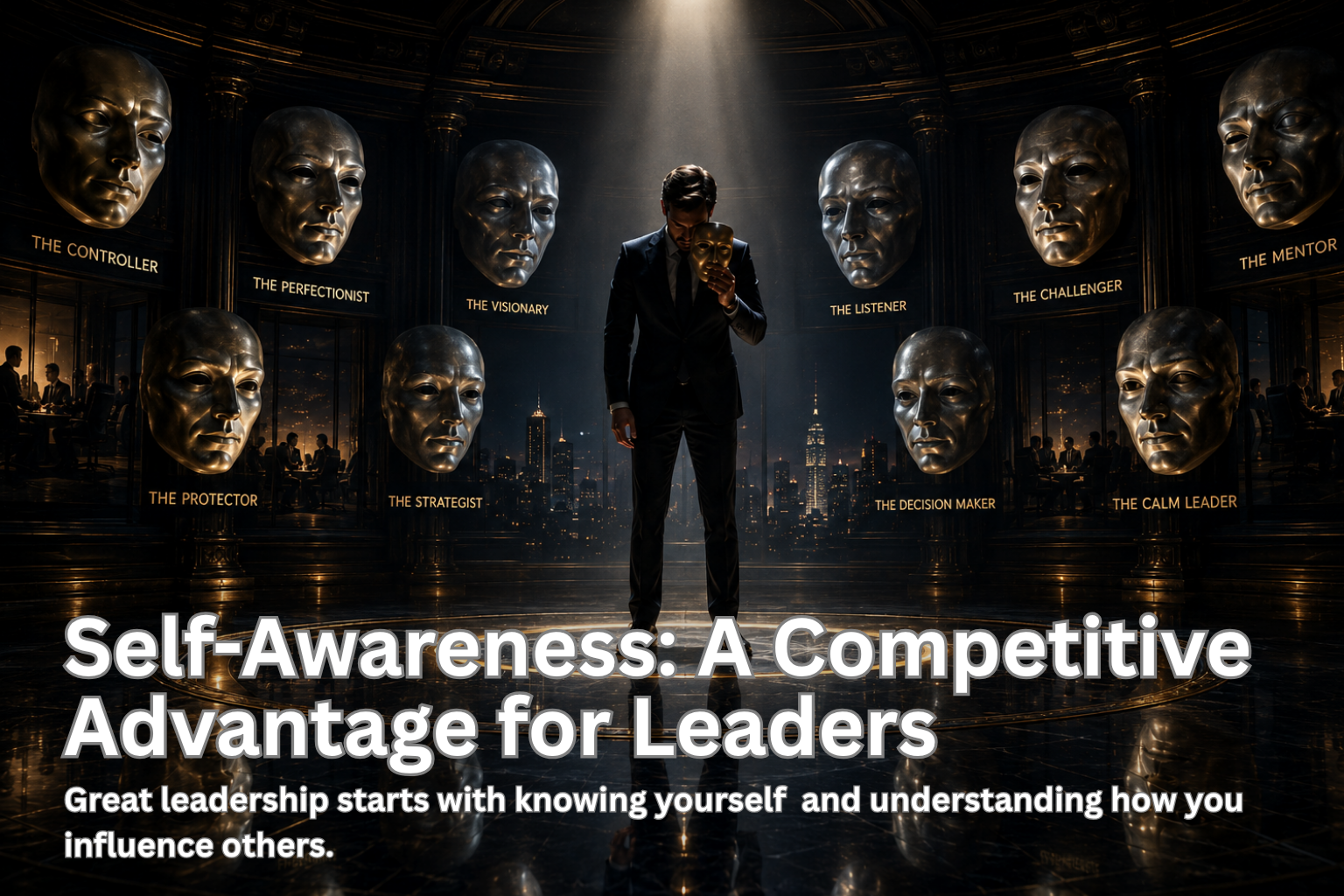
In today’s fast-moving business environment, leadership is no longer simply about making decisions, setting targets and managing performance. The strongest leaders understand that effective leadership starts with understanding yourself.
Self-awareness allows leaders to recognise their strengths, acknowledge their limitations, understand how their behaviour affects others and respond thoughtfully to challenging situations. 💡
For organisations competing for talent, innovation and sustainable growth, this makes self-awareness more than a desirable leadership quality it can be a genuine competitive advantage.
🔍 What Is Self-Awareness in Leadership?
Self-awareness is the ability to understand your own:
- 💭 Thoughts and emotions
- 🎯 Strengths and weaknesses
- 🗣️ Communication style
- ⚡ Reactions under pressure
- 🤝 Impact on colleagues and teams
- 📈 Motivations and decision-making patterns
A self-aware leader does not need to have every answer. Instead, they recognise when they need to listen, seek advice, change direction or delegate.
This creates a leadership style built around clarity, accountability and continuous improvement.
🚀 Why Does Self-Awareness Give Leaders an Advantage?
1. Better Decision-Making
Leaders make important decisions every day, often under pressure.
Self-awareness helps leaders recognise when personal assumptions, emotions or biases may be influencing their judgement. By understanding these influences, they can take a step back, consider different perspectives and make more balanced decisions.
The result? Greater clarity and stronger judgement.
2. Stronger Communication 🗣️
Leadership is fundamentally about people.
A leader may believe they are being clear, confident or supportive, while their team may experience their communication very differently. Self-aware leaders actively seek feedback and consider how their words, tone and behaviour are perceived.
This can lead to:
- More open conversations
- Greater trust
- Fewer misunderstandings
- Stronger working relationships
3. Greater Emotional Intelligence ❤️
Self-awareness is a core component of emotional intelligence.
When leaders can recognise their own emotions, they are better equipped to manage their reactions particularly during difficult conversations, periods of uncertainty or organisational change.
Instead of reacting immediately, they can pause, assess the situation and respond constructively.
That composure can have a powerful influence on the wider team.
4. More Effective Leadership Under Pressure
Leadership is often tested when circumstances become difficult.
Missed targets, organisational change, conflicting priorities and unexpected challenges can expose leadership weaknesses.
A self-aware leader understands their typical response to pressure. They know when they become overly cautious, impatient, defensive or controlling and can take deliberate steps to manage those tendencies.
💪 Knowing your pressure points is an important part of leading effectively through them.
5. Stronger Teams and Better Talent Development 🌱
Great leaders do not simply deliver results themselves; they create environments where others can perform at their best.
Self-aware leaders are more likely to recognise that different people require different approaches. They can adapt their leadership style, encourage constructive challenge and give meaningful feedback.
This can help create teams where people feel:
- Valued
- Trusted
- Heard
- Challenged
- Supported
And when people are given the opportunity to grow, organisations are better positioned to retain and develop talented professionals.
🤝 Self-Awareness Builds Trust
Trust is one of the most valuable assets a leader can develop.
Leaders who are willing to acknowledge mistakes, accept feedback and demonstrate vulnerability can create a culture where others feel comfortable doing the same.
Saying “I got that wrong” does not necessarily weaken authority. In many circumstances, it demonstrates confidence, accountability and maturity.
The most credible leaders understand that leadership is not about appearing perfect. It is about being authentic, accountable and willing to learn.
📊 How Can Leaders Develop Greater Self-Awareness?
Self-awareness is not a one-off achievement. It requires continuous reflection.
Leaders can strengthen it by:
🔹 Asking for Honest Feedback
Seek feedback from colleagues, direct reports, peers and mentors and genuinely listen to what they say.
🔹 Reflecting Regularly
Set aside time to consider important interactions and decisions. Ask yourself:
What went well? What could I have done differently? What impact did my behaviour have on others?
🔹 Understanding Your Triggers
Identify situations that consistently cause frustration, defensiveness or stress. Recognising these triggers makes it easier to manage them.
🔹 Using Coaching and Mentoring
An experienced coach or mentor can provide an external perspective and challenge assumptions that can be difficult to identify independently.
🔹 Staying Curious
Self-aware leaders remain open to learning. They recognise that there is always more to understand about themselves, their teams and the changing business environment. 🌍
🏆 The Business Impact
Self-awareness may sound like a personal development concept, but its effects can extend directly into organisational performance.
Leaders who understand themselves are often better positioned to:
Build trust → Improve communication → Develop stronger teams → Navigate change → Make better decisions → Deliver sustainable performance
In a competitive market, organisations need leaders who can adapt as quickly as the challenges around them.
Technical expertise and commercial experience remain important. But the ability to understand how you lead, why you lead the way you do and how others experience your leadership can be what separates good leadership from exceptional leadership.
💡 Final Thought
The most effective leaders are not necessarily those who speak the loudest or appear the most confident.
They are often the ones who are willing to look inward.
Self-awareness creates the foundation for better decisions, stronger relationships and more resilient leadership. And in an increasingly complex business world, those qualities can provide a significant competitive advantage. 🚀
At Wyman Bain, we understand the importance of identifying leaders who bring not only expertise and experience, but also the self-awareness, adaptability and emotional intelligence needed to make a lasting impact.
Great leadership starts with knowing yourself and understanding how you influence others. 🌟