💼 Talent Strategies for Value Creation in Mid-Market Investments
💼 Talent Strategies for Value Creation in Mid-Market Investments
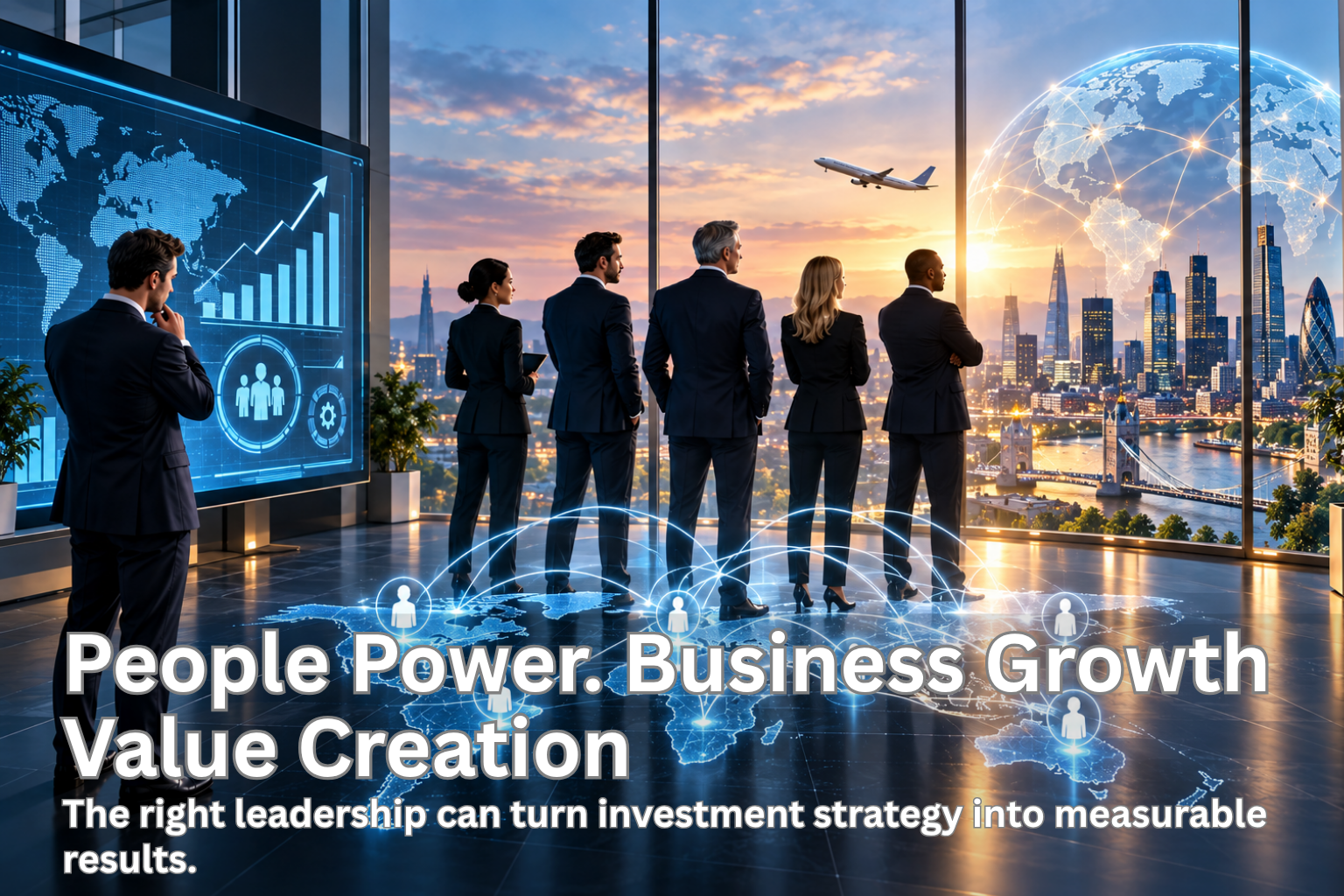
In today’s competitive investment landscape, talent is a critical driver of value creation. For mid-market investors, having the right leadership team can make the difference between a strategy that looks compelling on paper and one that delivers measurable results. 🚀
Whether the objective is accelerating growth, improving operational performance, entering new markets, completing acquisitions or preparing for exit, effective leadership is essential.
For investors, talent should not be treated as a secondary consideration. It should be integrated into the investment strategy from the beginning.
🎯 Aligning Talent with the Investment Thesis
Every investment has a specific value-creation plan. One business may need to expand internationally, while another may require operational transformation, stronger commercial leadership or improved financial controls.
Talent strategy should directly support these objectives.
Investors should ask:
- What capabilities are required to deliver the investment strategy?
- Does the existing leadership team have those capabilities?
- Where are the critical skills gaps?
- What leadership expertise will be needed as the company grows?
- Is there a strong succession plan?
By answering these questions early, investors can identify leadership requirements before they become barriers to growth.
👥 Assessing the Existing Leadership Team
A new investment does not necessarily mean a new management team.
Existing executives often bring valuable industry knowledge, customer relationships and organisational experience. The key consideration is whether they have the capability and ambition to deliver the company’s next phase of development.
Leadership assessment can consider:
- 📈 Previous growth and transformation achievements
- 🧠 Strategic and commercial capability
- ⚙️ Operational experience
- 🌍 International exposure
- 🤝 Ability to work with boards and investors
- 🔄 Experience managing organisational change
- 👔 Leadership style and cultural fit
The result may be to retain, develop, supplement or replace certain executives.
The goal is simple: build the leadership capability required to execute the investment thesis.
🚀 Recruiting for Growth
As a business grows, its leadership requirements evolve.
A founder-led organisation may eventually require additional expertise in finance, operations, technology, sales, international expansion or corporate governance.
Key leadership appointments may include:
- CEO – Strategy, growth and overall leadership
- CFO – Financial performance and governance
- COO – Operational efficiency and scalability
- Commercial Director – Revenue and market expansion
- CTO/CIO – Technology and digital transformation
- People Director – Culture, organisation and talent
The right executive can introduce new capabilities, challenge existing thinking and help accelerate the company’s transformation.
🔍 Executive Search as a Value-Creation Tool
Executive search for an investment-backed business should go beyond filling a vacancy.
The focus should be on finding leaders who have demonstrated the ability to deliver comparable results.
Investors should consider:
- What has the candidate actually achieved?
- What scale and complexity have they managed?
- Have they delivered profitable growth?
- Have they led transformation?
- Have they worked successfully with investors or boards?
- Can they operate effectively in a fast-changing environment?
- Are they motivated by the specific opportunity?
A strong CV is useful, but proven performance, leadership capability and cultural alignment are often more important.
⏱️ The Importance of Proactive Talent Planning
Leadership gaps can become expensive when they are addressed too late.
Waiting until a critical executive leaves or a new capability becomes urgently required can delay strategic initiatives and increase execution risk.
A proactive talent strategy can involve:
- Mapping the external talent market
- Building relationships with potential executives
- Developing succession plans
- Identifying future capability requirements
- Maintaining leadership talent pipelines
This allows investors and portfolio companies to respond quickly when important opportunities or challenges arise.
🔄 Leadership During Transformation
Many mid-market investments involve significant transformation.
Businesses may introduce new technology, restructure operations, expand internationally or pursue acquisitions.
These situations require leaders who can manage both performance and change.
Effective transformation leaders can establish clear priorities, communicate effectively, maintain employee engagement and ensure strategic plans translate into measurable outcomes.
Experience matters particularly when the organisation is operating under significant time and performance pressures.
🌍 Supporting International Growth
International expansion can create substantial value, but it also introduces additional complexity.
Companies entering new markets may require executives with experience in international sales, operations, regulation, supply chains and cross-cultural leadership.
Bringing in leaders with relevant international experience can help businesses navigate these challenges and accelerate expansion.
💰 Aligning Leadership with Value Creation
Leadership incentives should support the wider investment strategy.
Depending on the investment structure, executive performance may be linked to:
- Revenue growth
- EBITDA improvement
- Cash generation
- Operational milestones
- Strategic expansion
- Successful acquisitions
- Enterprise value growth
Clear alignment can encourage management teams to focus on sustainable, long-term performance rather than short-term results.
🌱 Developing Internal Leadership
External recruitment is only one part of a successful talent strategy.
Mid-market companies may already have high-potential individuals who could develop into future leaders.
Investing in internal talent can:
- Strengthen succession planning
- Retain organisational knowledge
- Improve employee engagement
- Reduce key-person dependency
- Build future leadership capability
In many cases, the strongest approach combines internal development with targeted external recruitment.
🔮 Preparing for the Exit
Talent strategy should also consider the eventual exit.
Potential buyers will want confidence that the business has a capable and sustainable leadership team.
Strong leadership can support:
- Sustainable growth
- Effective governance
- Succession planning
- Reduced key-person dependency
- Continued operational performance
Building leadership capability early can therefore strengthen the business throughout the investment period and create a stronger platform for exit.
🏆 The Wyman Bain Perspective
At Wyman Bain, we understand that exceptional leadership can play a vital role in creating value within mid-market businesses.
Our approach begins with understanding the strategic objectives, investment thesis and leadership requirements of each organisation.
We look beyond job titles and CVs to identify executives with the experience, capability, ambition and cultural fit required to deliver meaningful results.
For investors, the right executive appointment is more than a recruitment decision.
It is a strategic investment in the future of the business. 🚀
By integrating talent strategy into the investment lifecycle, investors can strengthen leadership, reduce execution risk and create the foundations for sustainable growth.
Ultimately, investment strategies are delivered by people. 👥📈