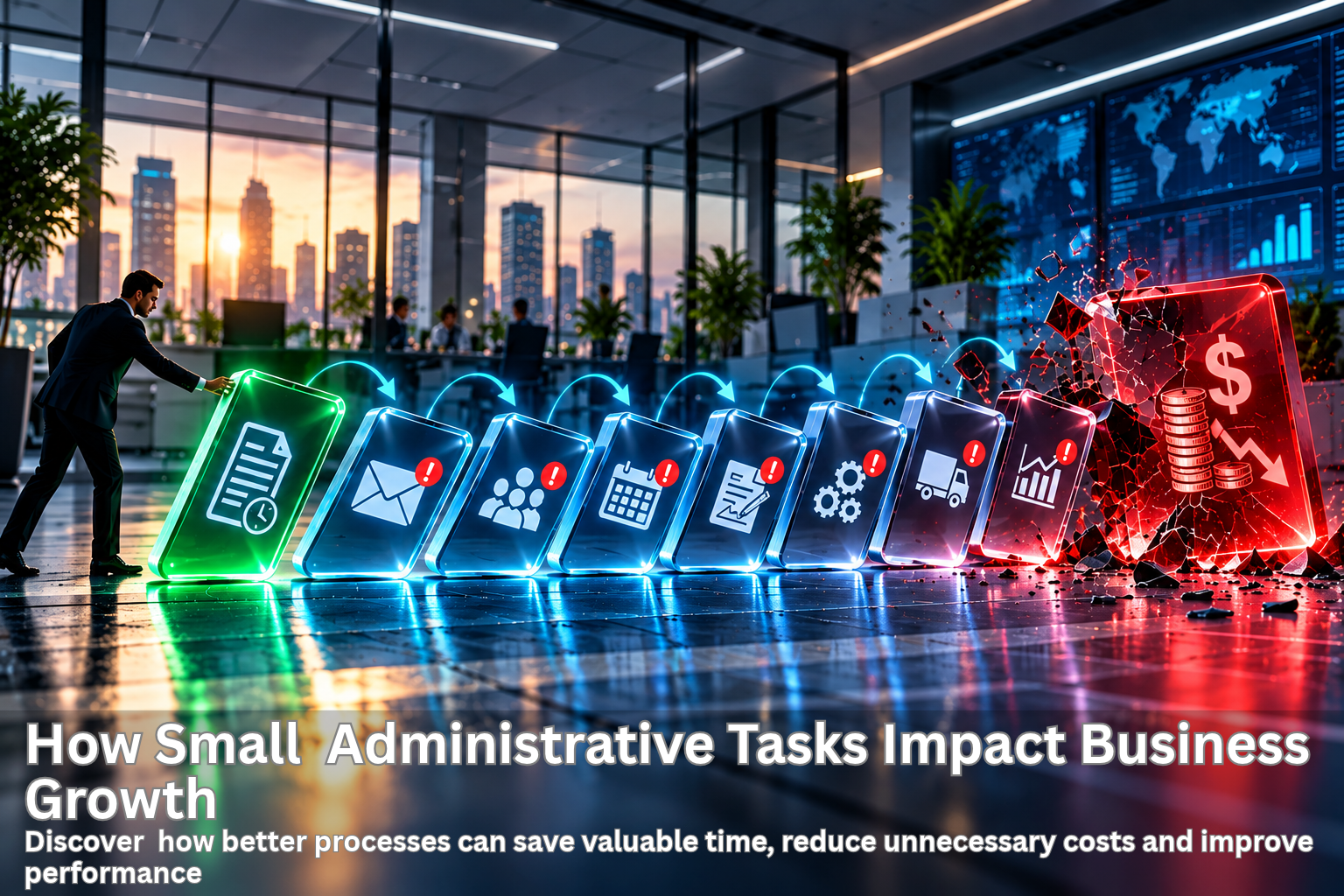
The Business Consequences of Poorly Managed Internal Dependencies
The Business Consequences of Poorly Managed Internal Dependencies
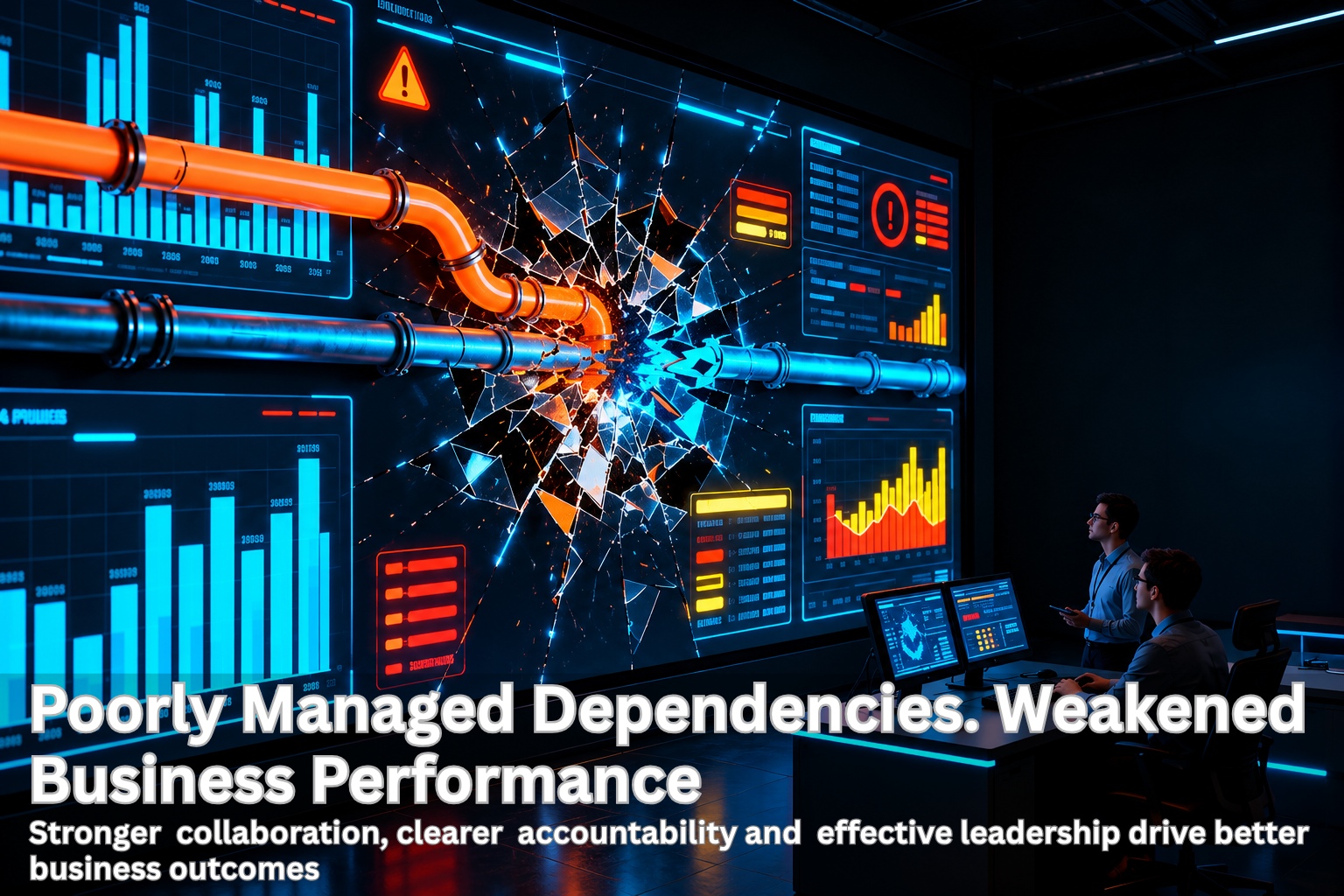
Why stronger collaboration, clearer accountability and effective leadership are essential for business performance
In today’s complex business environment, success depends on more than individual team performance. It relies on how effectively departments, functions and leadership teams work together to achieve shared objectives. When internal dependencies are poorly managed, even well-resourced organisations can experience delays, rising costs and missed commercial opportunities.
From operations and finance to sales, procurement and technology, every business function relies on others to deliver results. When these relationships lack clarity, small inefficiencies can quickly develop into wider operational challenges. 📊
🔍 What Are Internal Dependencies?
Internal dependencies occur when one team, department or business function relies on another to complete a task, make a decision or deliver an outcome.
For example, a manufacturing operation may depend on procurement to secure materials, finance to approve expenditure and logistics to ensure timely delivery. If one function falls behind, the impact can extend across the entire operation.
These dependencies are a natural part of running a business. The challenge arises when responsibilities are unclear, communication is inconsistent or decisions are delayed.
Without effective coordination, businesses risk creating bottlenecks that undermine performance across multiple functions.
⚠️ The Hidden Costs of Poorly Managed Dependencies
1. Operational Delays and Reduced Productivity
When teams are waiting for information, approvals or resources from other departments, workflows begin to slow down. Employees may spend valuable time chasing updates, resolving misunderstandings or repeating work rather than focusing on their core responsibilities.
Over time, these interruptions reduce productivity and make it harder for organisations to maintain consistent operational performance.
2. Rising Costs and Reduced Profitability 💷
Poor coordination can lead to duplicated effort, unnecessary expenditure, missed deadlines and inefficient resource allocation.
For businesses operating on tight margins, these inefficiencies can have a significant commercial impact. Projects may require additional resources to recover lost time, while delays can affect customer commitments and revenue generation.
Identifying and managing dependencies effectively can help businesses protect profitability and make better use of existing resources.
3. Weaker Decision-Making
Business decisions often require input from several departments. When information is incomplete, responsibilities are unclear or approval processes are unnecessarily complicated, decisions can become slow and inconsistent.
This can prevent leadership teams from responding quickly to changing market conditions, emerging risks or new commercial opportunities.
Clear decision-making authority and well-defined escalation processes help organisations maintain momentum without compromising appropriate governance.
4. Increased Risk and Accountability Gaps
When multiple teams contribute to the same outcome, accountability can become blurred. Employees may assume another department is responsible for a task, leaving critical activities unfinished or important risks unaddressed.
These gaps can affect compliance, project delivery, customer relationships and business continuity.
Establishing clear ownership, measurable responsibilities and effective reporting structures helps ensure that dependencies are actively managed rather than overlooked.
5. Lower Employee Engagement and Cross-Team Trust
Repeated delays and communication failures can create frustration between departments. Teams may begin to prioritise their own objectives rather than the wider interests of the business.
This can lead to internal conflict, reduced morale and a reluctance to collaborate.
Strong cross-functional relationships depend on shared goals, mutual accountability and a culture in which teams understand how their contributions support overall business performance. 🤝
📈 Why Leadership Must Take Ownership
Poorly managed internal dependencies are rarely just an operational issue. They often reflect wider challenges in leadership, organisational design and business governance.
Senior leaders play a crucial role in ensuring that departments operate as connected parts of the same organisation rather than isolated functions.
Effective leadership involves:
- Establishing clear accountability: Defining who owns decisions, deliverables and critical handovers.
- Aligning departmental objectives: Ensuring individual team targets support wider business priorities.
- Improving communication: Creating consistent channels for sharing information, raising concerns and resolving issues.
- Strengthening decision-making: Removing unnecessary approval layers and clarifying escalation routes.
- Monitoring performance: Tracking delays, recurring bottlenecks and cross-functional delivery risks.
- Encouraging collaboration: Building a culture where teams share responsibility for collective outcomes.
When leaders actively manage these areas, organisations can improve coordination, strengthen accountability and respond more effectively to operational challenges.
🛠️ How Businesses Can Improve Internal Dependency Management
Addressing internal dependencies requires a structured approach that combines processes, people and leadership.
1. Map critical business processes
Identify where one department relies on another and determine which handovers, approvals or deliverables are essential to successful execution.
2. Define ownership and expectations
Set clear responsibilities, deadlines and service expectations for each stage of a process. Teams should understand what they must deliver, when it is required and who is accountable for the outcome.
3. Introduce shared performance measures
Measure performance across functions, not just within individual departments. Shared KPIs can help encourage collaboration and prevent teams from achieving local targets at the expense of wider business objectives.
4. Improve visibility and communication
Use consistent reporting, project management systems and regular cross-functional reviews to identify potential delays before they affect delivery.
5. Address recurring bottlenecks
Review repeated failures and determine whether the underlying cause is a skills gap, resource constraint, unclear authority or inefficient process. Sustainable improvements require addressing the root cause rather than repeatedly managing the symptoms.
6. Develop leaders who think beyond departmental boundaries
Managers need the ability to understand how their decisions affect other functions. Cross-functional leadership, commercial awareness and effective stakeholder management are essential to building a more integrated organisation.
🎯 Turning Internal Dependencies into a Competitive Advantage
When managed effectively, internal dependencies can strengthen rather than hinder business performance.
Connected teams can share knowledge more efficiently, allocate resources more intelligently and make faster, better-informed decisions. Clear accountability also helps organisations respond to challenges before they escalate into costly disruptions.
For growing businesses and complex organisations, the ability to coordinate activity across functions can become a meaningful competitive advantage. It supports greater operational resilience, more consistent delivery and stronger alignment between strategy and execution.
Ultimately, business performance depends not only on how well individual teams perform, but also on how effectively they work together.
💼 The Role of Leadership and Talent
Strong processes and technology are important, but they cannot compensate entirely for gaps in leadership capability.
Organisations need leaders who can manage competing priorities, influence stakeholders, resolve cross-functional challenges and maintain a clear focus on commercial outcomes.
Recruiting and developing individuals with these capabilities can help businesses build stronger connections between departments, improve decision-making and deliver strategic objectives more consistently.
At Wyman Bain, we understand the importance of leadership capability in supporting organisational effectiveness and long-term business performance. Identifying leaders who can operate across functional boundaries is an important consideration for businesses seeking to improve collaboration, strengthen governance and deliver sustainable growth.
🚀 Final Thoughts
Poorly managed internal dependencies can quietly erode productivity, profitability and organisational trust. Left unaddressed, they create delays, weaken accountability and prevent businesses from realising their full potential.
By improving communication, clarifying ownership and strengthening cross-functional leadership, organisations can reduce operational friction and create a more coordinated approach to delivering results.
The businesses best positioned for sustainable success are those that recognise a simple principle: individual excellence matters, but effective collaboration turns that excellence into business performance.
Wyman Bain Connecting leadership capability with business ambition.