The Role of CHROs in Organisational Transformation 👥🚀
The Role of CHROs in Organisational Transformation 👥🚀
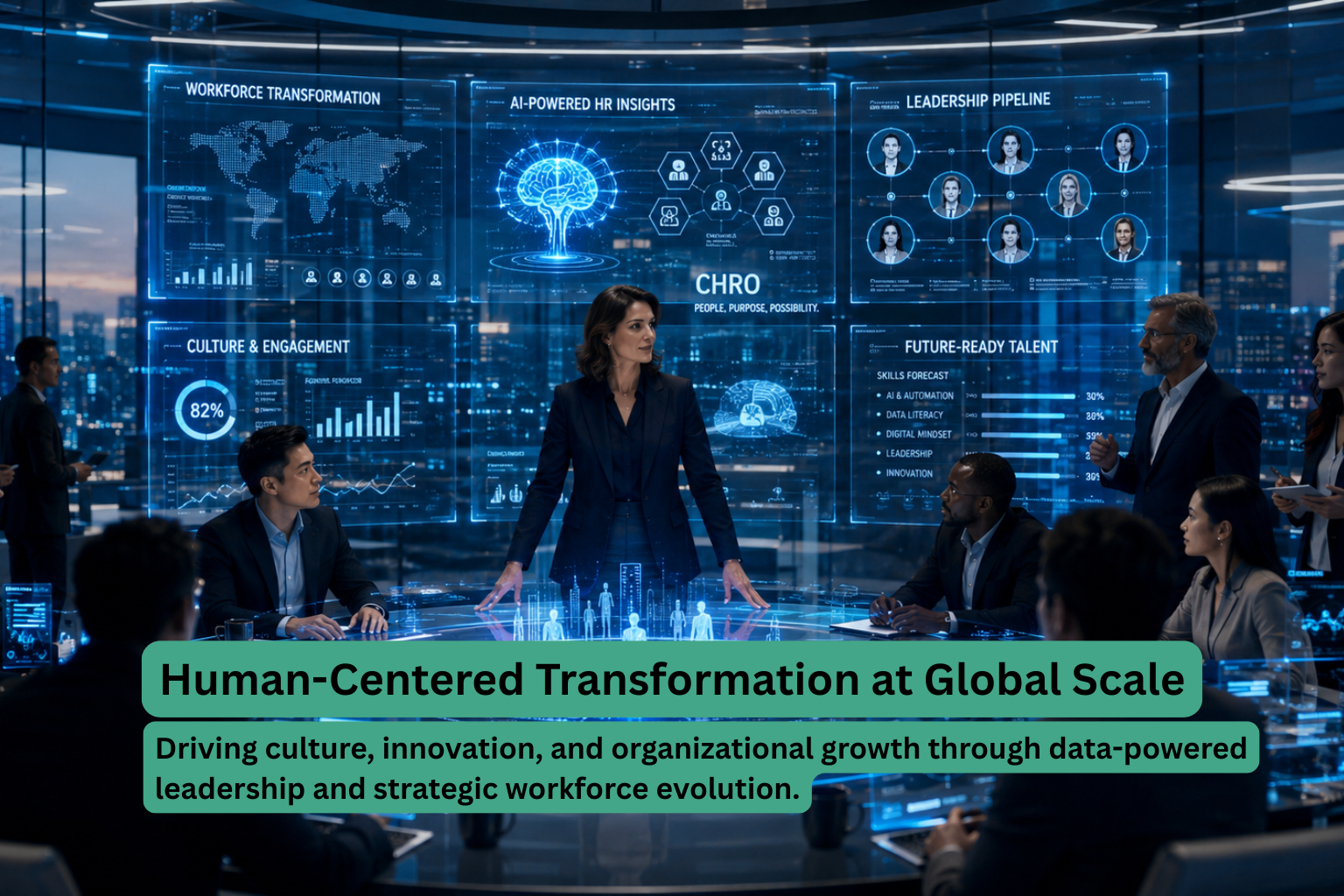
Organisational transformation is no longer a periodic exercise, it is a constant. Whether driven by digital change, shifting markets, M&A activity, or evolving workforce expectations, organisations must continuously adapt to stay competitive.
At the centre of this complexity sits the Chief Human Resources Officer (CHRO).
Once viewed as a functional leader focused on people operations, the modern CHRO is now a critical strategic partner, shaping
culture, enabling transformation, and ensuring the workforce is aligned to business ambition.
At
Wyman Bain, we see one consistent truth:
transformation succeeds or fails through people.
Transformation Is a People Challenge First 🌍
While strategy, technology, and process redesign are essential, most transformation programmes do not fail because of poor planning, they fail because of people-related challenges.
Common barriers include:
🔹
Cultural resistance to change
🔹 Weak leadership alignment
🔹 Poor communication
🔹 Capability gaps
🔹 Low employee engagement
CHROs are central to overcoming these challenges by ensuring that the workforce is ready, engaged, and supported throughout change.
They enable transformation by:
✅ Aligning people strategy with business
strategy
✅
Building organisational readiness for change
✅ Strengthening leadership capability
✅ Driving engagement and trust
✅ Embedding a performance-driven culture
Culture: The Foundation of Sustainable Change 🤝
Culture is often the most powerful enabler or blocker of transformation.
Even the best-designed strategies will struggle if culture is misaligned with desired behaviours and outcomes.
CHROs play a pivotal role in shaping culture by:
🔹 Defining and embedding organisational
values
🔹 Aligning behaviours with strategic goals
🔹 Strengthening inclusion and belonging
🔹 Encouraging accountability and collaboration
🔹 Reinforcing culture through leadership actions
During transformation, culture becomes even more critical. CHROs help ensure that change is not only implemented, but sustained.
Leading Change with
Clarity and Confidence 🔄
Transformation creates uncertainty, for employees, leaders, and stakeholders alike.
CHROs help organisations navigate this by leading structured and human-centred change management approaches.
Key priorities include:
📢 Clear and consistent communication
📢 Visible and aligned leadership messaging
📢
Employee engagement and feedback loops
📢 Change impact assessment and readiness
📢 Support systems for workforce transition
When change is managed well, organisations maintain trust, minimise disruption, and accelerate adoption.
Building Leadership Capability for the Future 🌟
No transformation succeeds without strong leadership.
CHROs are responsible for ensuring organisations have leaders who can operate effectively in complexity, ambiguity, and continuous change.
This includes:
🎯 Leadership identification and assessment
🎯
Succession planning and pipeline development
🎯
Executive coaching and capability building
🎯 High-potential talent acceleration
🎯 Leadership alignment during transformation
Strong leadership teams create stability, direction, and momentum when organisations need it most.
Creating a Future-Ready
Workforce 📈
The workforce of the future looks very different from today’s.
Automation, AI, digitalisation, and evolving customer expectations are reshaping required skills across every sector.
CHROs ensure organisations are prepared by focusing on:
💡 Strategic workforce planning
💡 Skills
mapping and capability analysis
💡 Upskilling and reskilling initiatives
💡 Talent attraction and retention strategies
💡 Employee experience and wellbeing
This ensures organisations are not only reacting to change, but actively building for it.
Driving
Engagement and Retention in Times of Change 👥
Transformation can create uncertainty, making employee engagement and retention a top priority.
CHROs play a vital role in maintaining stability by ensuring employees feel informed, valued, and supported.
Effective strategies include:
⭐ Transparent and frequent communication
⭐ Career development pathways
⭐ Recognition and reward frameworks
⭐ Inclusive leadership practices
⭐ Wellbeing and support programmes
Engaged employees are more resilient, productive, and committed during periods of change.
Data-Driven People
Strategy 📊
Modern CHROs increasingly rely on data and analytics to guide decision-making.
People data provides critical insights into:
📈 Engagement and sentiment
📈 Retention and attrition trends
📈
Leadership effectiveness
📈 Workforce productivity
📈 Skills gaps and future capability needs
By using data intelligently, CHROs can move from reactive HR support to proactive strategic leadership.
Enabling M&A and Large-Scale
Transformation 🤝
Mergers, acquisitions, and restructures are among the most complex forms of organisational change.
In these environments, CHROs are essential in ensuring successful integration and stability.
Their focus typically includes:
🔹
Cultural integration and alignment
🔹 Leadership structure and clarity
🔹 Talent retention and mobility
🔹 Workforce harmonisation
🔹 Communication and engagement strategies
In many cases, the success of an integration is determined by the effectiveness of the people
strategy.
The Evolving
Role of the CHRO 🚀
The CHRO role has fundamentally evolved.
Today’s CHRO is:
✨ A strategic business leader
✨ A
culture architect
✨ A transformation enabler
✨ A leadership partner to the CEO
✨ A driver of organisational performance
They sit at the intersection of people, performance, and purpose, making them one of the most influential roles in modern business.
Final Thoughts 💬
Organisational transformation is ultimately a human process.
Technology and strategy may define direction, but it is people and leadership, that determine success.
CHROs are uniquely positioned to bridge this gap. Through culture, capability building, leadership development, and change management, they enable organisations to turn ambition into sustainable outcomes.
At Wyman Bain, we partner with organisations to identify and secure exceptional CHRO and HR leadership talent capable of driving meaningful transformation and long-term success.
In an era defined by constant change, the CHRO has never been more critical or more strategic.