Leadership for Post-Merger Integration Success 🤝📈
Leadership for Post-Merger Integration Success 🤝📈
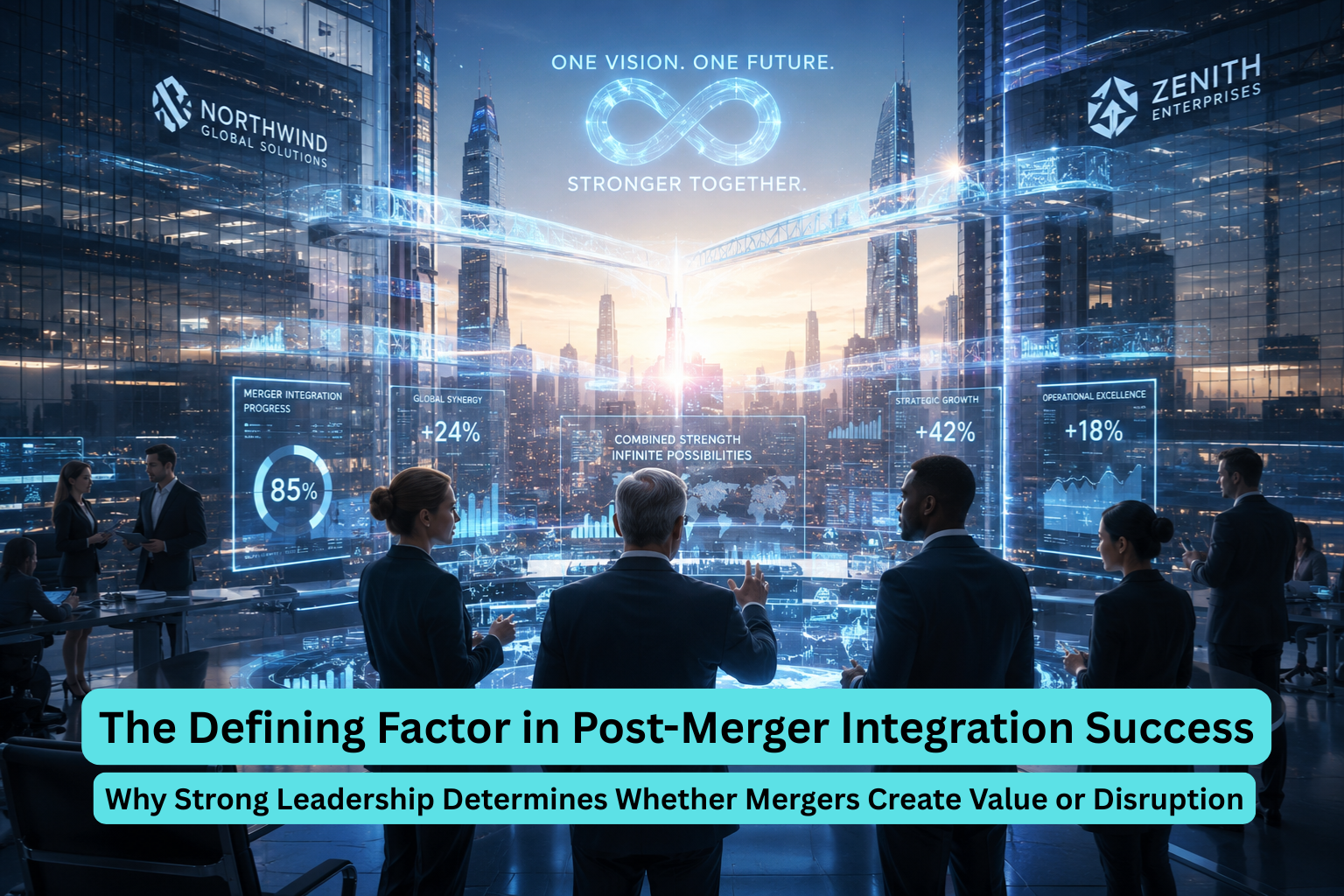
Mergers and acquisitions have the potential to accelerate growth, expand
market presence, unlock operational efficiencies, and create significant long-term
value. Yet while considerable attention is often devoted to the transaction itself, the true challenge begins once the deal is complete.
Research consistently shows that many mergers fail to deliver their anticipated benefits. In most cases, the issue is not the strategic rationale behind the transaction, but the execution of the integration process.
Successful post-merger integration requires more than aligning systems, processes, and structures. It demands exceptional leadership.
At
Wyman Bain, we believe that leadership is the single most important factor in determining whether a merger becomes a catalyst for growth or a source of disruption. The ability to unite people, align
cultures, maintain performance, and drive a shared vision ultimately determines the success of any integration programme.
Navigating
Complexity in a Period of Change 🔄
The period following a merger or acquisition is often characterised by uncertainty, heightened expectations, and significant organisational change.
Executive leaders must simultaneously manage:
🔹 Cultural integration
🔹 Leadership alignment
🔹 Employee engagement
🔹 Customer retention
🔹 Operational continuity
🔹 Stakeholder confidence
Balancing these priorities requires a combination of strategic vision, emotional intelligence, and decisive leadership.
Organisations that approach integration with a strong leadership framework are significantly more likely to achieve their intended business outcomes and realise the full value of the transaction.
Establishing a
Clear Vision for the Future 🎯
One of the most important responsibilities of executive leadership during integration is creating a compelling vision for the combined organisation.
Employees, customers, investors, and stakeholders need clarity regarding:
✅ The purpose of the merger
✅ The strategic objectives being pursued
✅ How the organisations will work together
✅ What success will look like
Without a clearly communicated vision, uncertainty can quickly undermine confidence and engagement.
Effective leaders articulate a future that employees can understand, support, and contribute towards. By creating alignment from the outset, organisations can accelerate integration efforts and maintain momentum throughout the transition.
Cultural Integration: The Defining Factor 🌍
Culture is often described as the most challenging aspect of post-merger integration and for good reason.
Every organisation develops its own values, behaviours, leadership styles, and ways of working. When two businesses come together, these differences can create friction, confusion, and resistance if not carefully managed.
Successful leaders recognise that cultural integration cannot be left to chance.
They focus on:
🤝 Identifying cultural strengths within both organisations
🤝 Building a shared set of values and behaviours
🤝 Encouraging collaboration and trust
🤝 Creating an inclusive environment
🤝 Addressing concerns openly and transparently
When culture is treated as a strategic priority, organisations are better positioned to strengthen engagement, improve collaboration, and achieve long-term integration success.
Retaining Key
Talent During Transition 👥
Periods of transformation inevitably create uncertainty for employees.
Questions about organisational structure, leadership changes, career progression, and future opportunities can lead to increased turnover if not addressed effectively.
The loss of key talent during integration can significantly impact performance and delay the achievement of strategic objectives.
Executive leaders must prioritise:
⭐ Transparent communication
⭐ Leadership visibility
⭐ Employee engagement initiatives
⭐ Career development opportunities
Retaining high-performing individuals not only preserves critical expertise but also reinforces stability and continuity during a period of significant change.
Communication as a
Strategic Leadership Tool 📢
Communication is one of the most powerful drivers of successful integration.
In the absence of clear information, uncertainty often fills the gap.
Effective leaders communicate with consistency, transparency, and purpose. They ensure that employees understand what is changing, why it is changing, and how those changes will affect the organisation.
Successful communication strategies include:
📌 Regular leadership updates
📌 Clear integration milestones
📌 Open forums for discussion and feedback
📌 Consistent messaging across leadership teams
📌 Recognition of employee contributions and achievements
Strong communication builds trust, strengthens engagement, and supports organisational alignment throughout the integration journey.
Maintaining
Performance While Driving Transformation ⚖️
A common challenge during post-merger integration is balancing transformation efforts with ongoing business performance.
While leaders focus on integration objectives, customers still expect exceptional service, employees require support, and shareholders expect results.
Executive teams must successfully balance:
📈 Strategic transformation
📈 Operational excellence
📈 Customer satisfaction
📈 Workforce engagement
📈 Financial performance
The most effective leaders ensure that integration activities enhance, rather than disrupt, the organisation's ability to deliver value.
Building an Aligned Leadership Team 🏆
Leadership alignment is essential during post-merger integration.
Employees take their cues from senior leaders. When leadership teams demonstrate unity, collaboration, and a shared commitment to the future, confidence across the organisation increases significantly.
Successful integration leaders:
🚀 Establish clear governance structures
🚀 Define roles and responsibilities early
🚀 Foster collaboration across functions
🚀 Make timely and informed decisions
🚀 Lead with accountability and integrity
An aligned leadership team creates the foundation for organisational stability and long-term success.
The
Leadership Qualities That Drive Integration Success 🌟
Post-merger environments place extraordinary demands on executive leaders.
The most successful integration leaders typically demonstrate:
✔ Agility and resilience
✔ Strong stakeholder management skills
✔ Exceptional communication capabilities
✔ Cultural intelligence
✔ Commercial acumen
✔ Change leadership expertise
These qualities enable leaders to navigate complexity, manage risk, and create sustainable value throughout the integration process.
Securing the Right
Leadership Talent 🤝
As mergers and acquisitions become increasingly complex, organisations cannot afford to underestimate the importance of executive talent.
The right leaders do more than manage integration programmes. They inspire confidence, unite teams, accelerate cultural alignment, and drive business performance.
At Wyman Bain, we partner with organisations to identify, attract, and secure exceptional executive leaders who possess the experience, expertise, and leadership capabilities required to deliver successful post-merger outcomes.
Our approach helps businesses build leadership teams that can navigate complexity, lead transformation, and unlock the full potential of strategic transactions.
Final Thoughts 💬
A successful merger is not defined by the signing of a deal, it is defined by what happens afterwards.
While operational planning, financial management, and strategic execution all play important roles, leadership remains the decisive factor in determining integration success.
Organisations that invest in exceptional leadership are better positioned to align cultures, retain talent, maintain performance, and achieve the full value of their merger or acquisition.
In an increasingly competitive and fast-changing business environment, strong leadership is not simply an advantage, it is a necessity.
At
Wyman Bain, we help organisations secure the executive talent needed to lead with confidence, navigate transformation, and achieve lasting post-merger success.