Building Resilient Leadership Teams During Economic Uncertainty 🌍💼
Building Resilient Leadership Teams During Economic Uncertainty 🌍💼
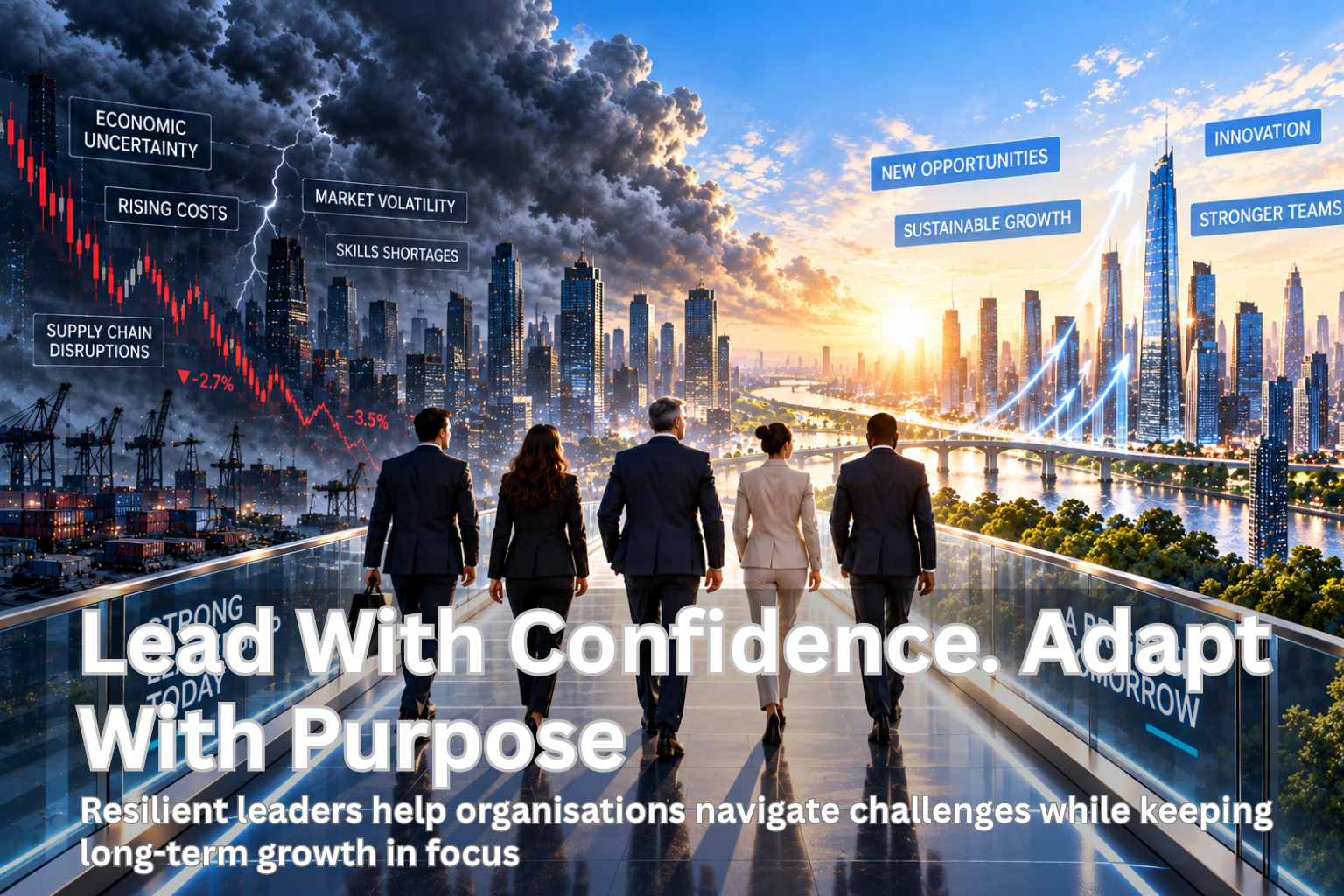
Economic uncertainty can challenge even the strongest organisations. Rising costs, changing market conditions, evolving customer expectations and skills shortages can make it difficult for businesses to plan with confidence. 📊
Yet, during uncertain times, strong leadership becomes more important not less. 💪
Organisations that invest in resilient leadership teams are better positioned to navigate disruption, maintain performance and identify opportunities for sustainable growth. 🚀
What Makes a Leadership Team Resilient? 🧭
Resilient leadership is not simply about reacting quickly to challenges. It is about having the right people, capabilities and mindset in place to make informed decisions when circumstances change. 🔄
A resilient leadership team typically demonstrates:
🔹 Strategic agility – the ability to adapt plans without losing sight of long-term objectives. 🎯
🔹 Commercial awareness – leaders who understand market pressures, customer needs and financial priorities. 💷
🔹 Decisive leadership – the confidence to make difficult decisions when information may be incomplete. ⚡
🔹 Collaborative thinking – leaders who work across functions rather than operating in silos. 🤝
🔹 Emotional intelligence – the ability to communicate effectively, support teams and maintain confidence during periods of change. 🧠
🔹 Future-focused thinking – an understanding of the skills and capabilities the organisation will need next, rather than only what it needs today. 🔮
Why Leadership Hiring Matters During Uncertainty 🔍
When economic conditions are unpredictable, organisations may become more cautious about hiring. However, delaying critical leadership appointments can create significant risks. ⚠️
Leadership gaps can affect:
📌 Strategic decision-making
📌 Employee engagement and retention
📌 Business
development
📌 Operational performance
📌 Innovation
📌 Succession planning
📌
Organisational culture
The right leadership appointment can have a much wider impact than simply filling a vacancy.
It can strengthen an organisation's ability to respond to change. 💪📈
Build Talent Pipelines Before You Need Them 🌱
One of the most effective approaches to leadership resilience is to move away from purely reactive recruitment.
Instead of waiting for a senior leader to leave or a new position to become urgent, organisations can proactively identify and engage with potential leadership talent. 🔎
This can include:
📍 Mapping talent within competitors and relevant sectors
🌟 Identifying emerging leaders with high-growth potential
🤝 Building relationships with passive candidates
🛡️ Assessing succession risks
📊 Benchmarking leadership capabilities against the wider market
🎯 Understanding where specialist skills are becoming increasingly scarce
This proactive approach creates a stronger talent pipeline and gives businesses greater flexibility when hiring decisions need to be made quickly. ⚡
Leadership Diversity Strengthens Decision-Making 🌍
Resilient leadership teams also benefit from diverse perspectives. 💡
Different professional backgrounds, experiences, industries and ways of thinking can help leadership teams challenge assumptions and consider alternative approaches.
Diversity should therefore be viewed not only as a people objective, but also as a strategic business advantage. 🌟
A leadership team capable of looking at challenges from multiple perspectives can be better equipped to understand changing markets, customers and employees. 👥
Retaining Leadership Talent Is Just as Important ❤️
Recruitment is only one part of building resilience.
During periods of economic uncertainty, organisations should also focus on retaining their strongest leaders. 🔐
This means understanding what motivates senior professionals, providing meaningful career opportunities and creating an environment where leaders can contribute to the organisation's long-term direction. 🌱
Regular conversations around career progression, leadership development, organisational purpose and succession can help businesses retain critical expertise. 💬
The Role of Executive Search in Building Resilient Teams 🤝
Finding exceptional leadership talent requires more than matching a CV to a job description. 📄
Executive search should consider:
Experience + Leadership Style + Cultural Alignment + Strategic Capability + Future Potential 🎯
The strongest candidates may not always be actively looking for their next opportunity. Identifying and engaging these individuals requires a deep understanding of the talent market and a targeted approach to candidate engagement. 🔎
At Wyman Bain, executive search can help organisations identify leadership talent that aligns with both their immediate requirements and their longer-term ambitions. 🚀
Turning Uncertainty Into Opportunity 🚀
Economic uncertainty will always create challenges, but it can also create opportunities for organisations willing to think differently. 💡
Businesses that understand their talent markets, develop strong leadership pipelines and make strategic hiring decisions can emerge from periods of uncertainty stronger, more agile and more competitive. 📈
The key question is not simply:
“Who do we need to hire today?” 🤔
It is:
“What leadership capabilities will our organisation need to succeed tomorrow?” 🔮
By answering that question early, businesses can build leadership teams that are prepared not only to withstand uncertainty, but to lead through it. 💪🌟
Build Your Future Leadership Team 🚀
The right leadership talent can make the difference between simply responding to change and turning change into an opportunity. 🎯
If your organisation is planning its next phase of growth, succession strategy or leadership hiring, Wyman Bain can help you identify the talent capable of making that vision a reality. 🤝💼