The Leadership Skills Driving Change Across Environmental Businesses 🌱
The Leadership Skills Driving Change Across Environmental Businesses 🌱
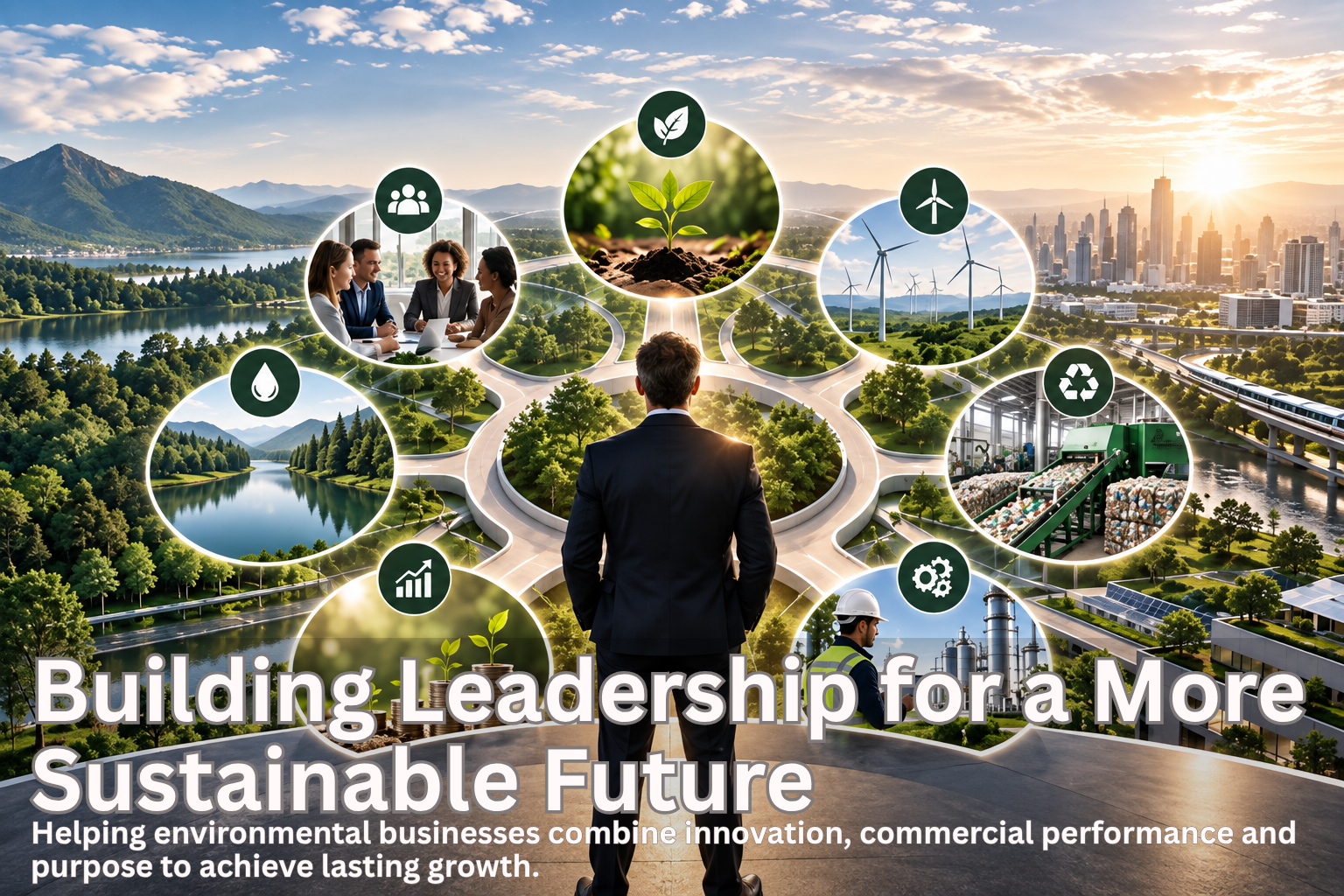
Environmental businesses are operating in a period of significant transformation. From the transition to net zero and the growth of renewable energy to evolving environmental regulations, circular economy models and increasing pressure from investors, customers and stakeholders, the sector is changing rapidly.
For organisations operating across environmental services, sustainability, energy, waste management, water, engineering and related sectors, success increasingly depends on more than technical expertise.
It requires leaders who can navigate complexity, inspire change and turn environmental ambition into commercial and operational results.
At Wyman Bain, we recognise that the leadership skills required within environmental businesses are evolving alongside the sector itself.
🌍 Leading Through Environmental and Regulatory Change
Environmental organisations operate within a constantly changing regulatory landscape.
New legislation, sustainability standards, reporting requirements and climate-related expectations can significantly influence business strategy and investment decisions.
Effective leaders need to understand these changes while ensuring their organisations remain commercially resilient.
This requires the ability to:
- Anticipate regulatory and market developments
- Translate complex environmental requirements into practical strategies
- Balance compliance with commercial objectives
- Identify emerging risks and opportunities
- Communicate change clearly across an organisation
The strongest leaders are not simply reacting to regulatory change. They are using it to identify opportunities for innovation and long-term growth.
♻️ Turning Sustainability into Business Strategy
Sustainability is increasingly becoming part of core business strategy rather than a standalone corporate initiative.
Environmental leaders therefore need to understand how sustainability can influence:
- Revenue growth
- Operational efficiency
- Cost management
- Investment decisions
- Supply chains
- Customer relationships
- Brand reputation
- Long-term business resilience
Leaders who can connect environmental objectives with measurable commercial outcomes are becoming increasingly valuable.
The ability to demonstrate that sustainability can support both environmental impact and business performance is an important leadership capability.
📊 Commercial and Financial Acumen
Passion for environmental change is important, but successful environmental businesses also need strong commercial foundations.
Senior leaders must understand how to translate environmental opportunities into sustainable business models.
This includes understanding:
- Revenue and margin growth
- Capital investment
- M&A opportunities
- Market expansion
- Operational efficiency
- Financial risk
- Customer economics
- Investment returns
The ability to combine purpose with commercial discipline can be a significant differentiator at executive level.
👥 Building High-Performing and Purpose-Led Teams
Environmental organisations often attract people who are motivated by purpose.
However, purpose alone does not create high-performing teams.
Leaders need to establish clear expectations, develop talent and create cultures where people can perform at their best.
This requires strong capabilities in:
- Talent development
- Succession planning
- Employee engagement
- Performance management
- Diversity and inclusion
- Organisational design
- Cultural transformation
As environmental businesses grow, leaders must also ensure that organisational culture evolves without losing the purpose that helped attract talent in the first place.
🔄 Leading Transformation
Many environmental businesses are undergoing significant transformation.
This could involve entering new markets, implementing new technology, restructuring operations, acquiring another business or changing the organisation's commercial model.
Transformation requires leaders who can combine strategic thinking with practical execution.
Successful transformation leaders are able to establish a clear direction while bringing employees and stakeholders with them.
They understand that transformation is ultimately about people as much as processes and technology.
🌐 Thinking Beyond Traditional Boundaries
Environmental businesses increasingly operate across interconnected markets.
Energy, infrastructure, waste, water, transport, technology and sustainability are becoming increasingly connected.
Future leaders therefore need a broader perspective.
Rather than focusing exclusively on their own function or sector, they need to understand how changes elsewhere can affect their organisation.
Curiosity, adaptability and strategic thinking are becoming increasingly important characteristics of successful environmental leadership.
🧠 Adaptability and Resilience
Environmental markets can be unpredictable.
Economic conditions, government policy, technological developments, supply chain pressures and changing customer expectations can all influence strategic priorities.
Leaders must therefore be able to adapt without losing sight of their long-term objectives.
Resilient leadership means:
- Remaining calm during periods of uncertainty
- Making informed decisions with incomplete information
- Adjusting strategy when circumstances change
- Maintaining employee confidence
- Continuing to focus on long-term objectives
The ability to balance short-term responsiveness with long-term vision will remain an important leadership skill across the environmental sector.
🚀 What Does This Mean for Environmental Businesses?
As the sector develops, organisations will increasingly need leadership teams with a combination of technical, commercial and strategic capabilities.
The leaders driving the next phase of environmental business growth are likely to be those who can combine:
🌱
Environmental purpose
💡 Innovation
📊 Commercial acumen
🤝 Stakeholder
leadership
🔄 Transformation capability
👥 Talent development
🌍 Strategic thinking
🧠
Adaptability
This combination can help organisations navigate complexity while continuing to identify new opportunities for growth and impact.
Finding the Leadership Talent to Drive Change
For environmental businesses, identifying the right leadership talent is becoming increasingly important.
Traditional sector experience remains valuable, but organisations may also benefit from leaders who bring transferable experience in transformation, technology, infrastructure, energy, engineering, sustainability and other adjacent markets.
The right executive can provide more than functional expertise. They can bring vision, commercial discipline, cultural leadership and the ability to turn strategy into action.
At Wyman Bain, we understand the importance of identifying leaders who can operate at this intersection of people, purpose, performance and change.
As environmental businesses continue to evolve, the quality of leadership will play a critical role in determining how successfully organisations respond to the opportunities ahead.
🌿 The Future of Environmental Leadership
The environmental sector is entering an exciting period of growth and transformation.
For organisations looking to build resilient, innovative and commercially successful businesses, leadership should be viewed as a strategic investment rather than simply a recruitment requirement.
The leaders who can connect environmental ambition with commercial execution will be well placed to help organisations navigate change, build high-performing teams and create sustainable long-term value.
The future of environmental business will require more than new technology and new ideas. It will require exceptional leadership. 🌍