The Leadership Skills Driving Change Across Media Businesses 🎬📱
The Leadership Skills Driving Change Across Media Businesses 🎬📱
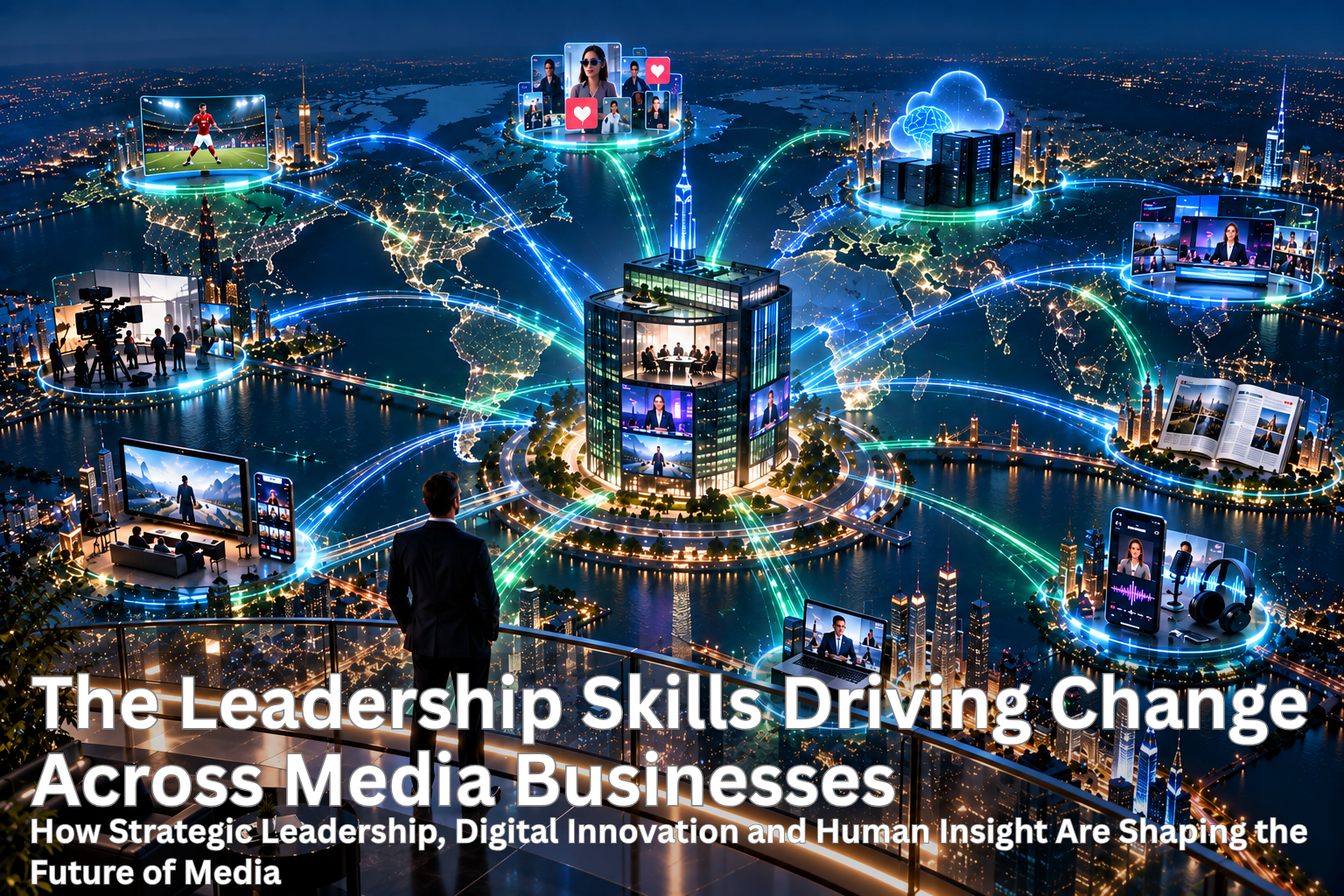
The media industry is changing at extraordinary speed. Digital platforms, artificial intelligence, streaming, social media, changing audience behaviours and new commercial models are reshaping how content is created, distributed and monetised.
For media businesses, technology is only part of the transformation. The real differentiator is leadership.
As organisations navigate increasingly complex markets, leaders must combine commercial understanding with creativity, adaptability and the ability to bring people through significant change. The leadership skills required today are evolving alongside the industry itself.
🌐 1. Leading Through Digital Transformation
Digital transformation is no longer a standalone technology project. It affects almost every part of a media organisation, from content production and audience engagement to advertising, subscriptions and distribution.
Effective leaders need to understand how technology can support commercial objectives while ensuring that transformation remains focused on the customer and the organisation's long-term strategy.
This requires leaders who can:
- Understand emerging digital technologies
- Identify opportunities for new revenue streams
- Modernise legacy systems and processes
- Lead teams through technological change
- Balance innovation with commercial discipline
The strongest media leaders do not simply adopt new technology. They understand why it matters and how it can create sustainable value.
🤖 2. Understanding the Impact of Artificial Intelligence
AI is rapidly influencing the media landscape, from content creation and personalisation to audience analytics, advertising and operational efficiency.
For senior leaders, the challenge is not simply understanding what AI can do. It is knowing where it should be applied, how it can complement human creativity and how potential risks should be managed.
Leaders increasingly need the ability to ask important questions around:
- Data and intellectual property
- Content authenticity
- Copyright and ownership
- Responsible AI adoption
- Workforce transformation
- Customer trust
💡 The most effective approach is likely to be one where AI enhances human capability rather than attempting to replace the creativity, judgement and relationships that remain central to successful media businesses.
📊 3. Commercial and Data-Led Decision Making
Creativity remains fundamental to media, but today's leadership decisions increasingly require a strong understanding of data.
Audience behaviour can provide valuable insight into what people watch, read, listen to and engage with. Subscription data, advertising performance and customer analytics can help organisations identify opportunities and respond more quickly to changing market conditions.
Successful leaders therefore need to combine creative instinct with commercial and analytical thinking.
The ability to interpret data, challenge assumptions and translate insight into action is becoming increasingly important at board and executive level.
🔄 4. Adaptability and Agility
The media landscape rarely stands still.
Consumer preferences can change quickly. New platforms can emerge almost overnight. Business models can evolve, while technological developments can alter established competitive dynamics.
Leaders therefore need to be comfortable operating in uncertainty.
Agile leadership involves:
- Making informed decisions without having perfect information
- Responding quickly to market developments
- Encouraging experimentation
- Learning from unsuccessful initiatives
- Adjusting strategy when circumstances change
Rather than protecting established ways of working, effective leaders create organisations that can continually adapt and evolve.
🧠 5. Combining Creativity with Strategic Thinking
Media businesses have always depended on creativity. However, creativity alone does not guarantee commercial success.
Modern media leaders must create an environment where creative teams have the freedom to innovate while remaining aligned with the wider business strategy.
This means understanding both sides of the equation:
Creative ambition + Commercial discipline = Sustainable growth
Leaders who can bridge editorial, creative, technological and commercial functions are particularly valuable because they can connect different perspectives across an organisation.
🤝 6. Building Collaborative Leadership Cultures
The traditional media organisation often consisted of clearly defined departments. Today's media businesses are increasingly interconnected.
Technology, content, marketing, advertising, data, commercial and editorial teams may need to work together on the same initiatives.
This makes collaboration an essential leadership capability.
Strong leaders create cultures where people can:
- Share ideas openly
- Challenge established thinking
- Work across organisational boundaries
- Take responsibility for outcomes
- Learn from different perspectives
The ability to bring diverse teams together can become a significant competitive advantage.
🚀 The Future of Media Leadership
The next generation of media leaders will need to operate across multiple disciplines.
They will need commercial awareness, technological understanding, creativity, emotional intelligence and the ability to lead continuous change.
Most importantly, they will need to connect people, technology and strategy.
The media businesses that successfully navigate the next phase of transformation are likely to be those that recognise leadership as a strategic capability rather than simply a position within the organisational structure.
At Wyman Bain, we understand the importance of identifying leadership talent that can operate effectively in complex and rapidly evolving environments.
Whether organisations are undergoing digital transformation, developing new commercial models, expanding into new markets or strengthening their executive teams, the right leadership can provide the capability required to move forward with confidence. 🔎
💬 Final Thought
Technology may continue to transform the media industry, but leadership will determine how effectively organisations respond to that transformation.
The leaders who can combine strategic thinking, creativity, adaptability and human insight will be increasingly important as media businesses navigate the opportunities and challenges ahead. 🌟