The Executive Skills Driving Change Across Aerospace and Defence 🚀
The Executive Skills Driving Change Across Aerospace and Defence 🚀
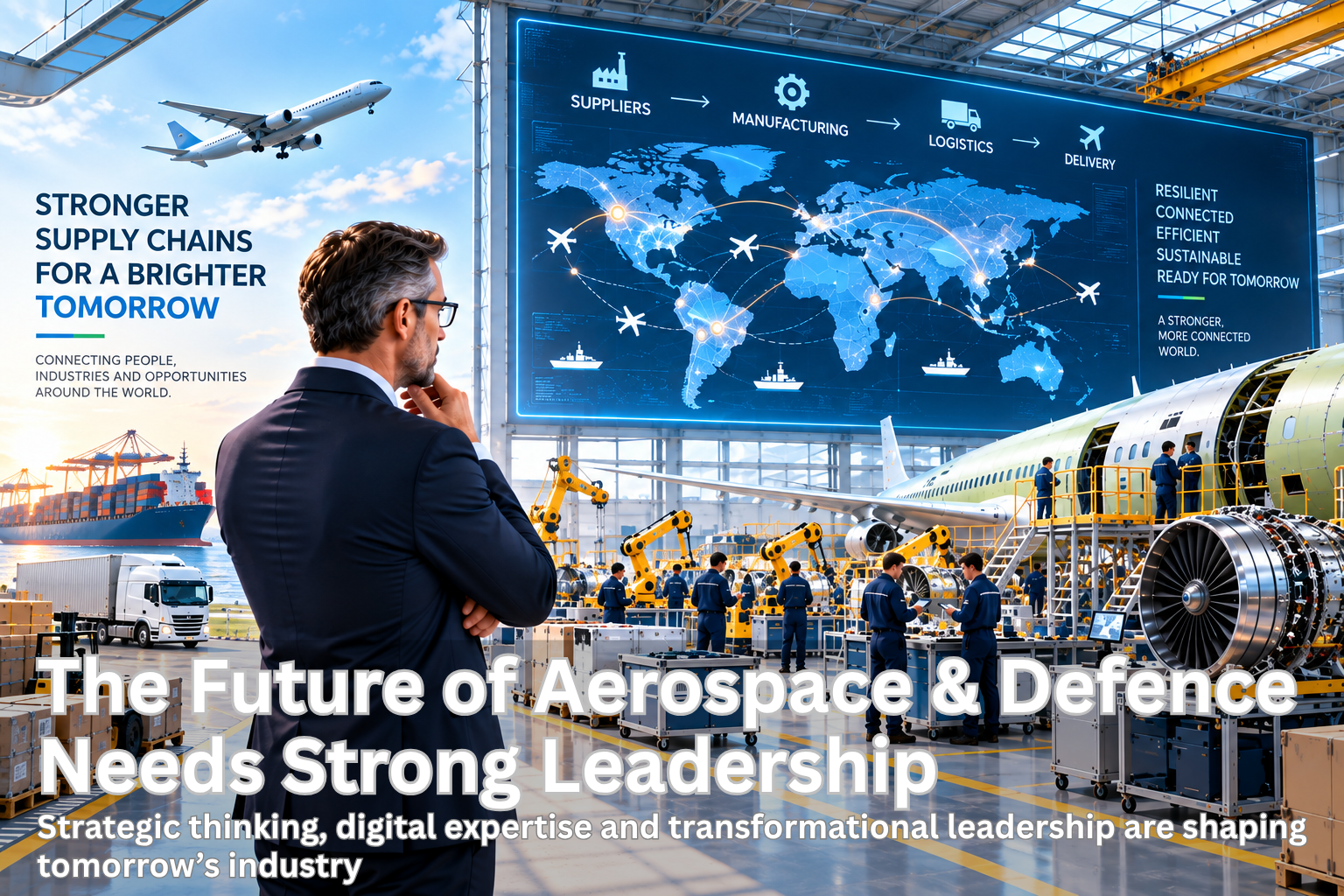
The aerospace and defence sectors are entering a period of significant transformation.
From the rapid adoption of artificial intelligence and advanced manufacturing to increasing geopolitical complexity, supply chain pressures and the transition towards more sustainable technologies, organisations are operating in an environment where leadership capability has never been more important.
For businesses across aerospace and defence, technical expertise remains fundamental. However, the executives driving successful transformation increasingly require a broader combination of strategic thinking, commercial awareness, digital understanding and people leadership.
At Wyman Bain, we work with organisations where leadership capability can have a direct impact on growth, innovation and long-term resilience. Here are some of the executive skills increasingly shaping the future of aerospace and defence.
1. Strategic Leadership in a Changing Environment 🎯
Aerospace and defence organisations must make decisions against a backdrop of constant change.
Executives need to understand market developments, customer requirements, regulatory pressures, geopolitical developments and technological advancements while maintaining a clear long-term strategic direction.
Strong strategic leaders are able to:
- Translate complex market developments into actionable strategies
- Balance immediate operational priorities with long-term objectives
- Identify emerging opportunities and risks
- Align leadership teams around a clear organisational vision
- Make informed decisions when information is incomplete or constantly changing
The ability to think several steps ahead is becoming increasingly valuable as organisations navigate more complex markets.
2. Digital and Technology Leadership 💡
Technology is transforming almost every area of aerospace and defence.
Artificial intelligence, automation, robotics, advanced analytics, digital engineering and connected systems are changing how organisations design, manufacture, operate and maintain products and services.
Executives do not necessarily need to be technology specialists themselves. However, they increasingly need enough technological understanding to ask the right questions and recognise where technology can create commercial and operational value.
Leaders who can bridge the gap between business strategy and technological innovation are becoming increasingly important.
3. Commercial Acumen 💼
Technical excellence alone does not guarantee business success.
Senior executives need to understand how strategic decisions influence revenue, profitability, investment, customer relationships and long-term growth.
Commercially focused leaders can connect technical capabilities with market opportunities, helping organisations determine where to invest, which partnerships to pursue and how to build sustainable competitive advantages.
This is particularly important in a sector where programmes can involve substantial investment, lengthy development cycles and complex stakeholder relationships.
4. Supply Chain and Operational Resilience 🔗
Recent years have demonstrated how vulnerable global supply chains can be to disruption.
Aerospace and defence organisations must increasingly consider resilience alongside efficiency.
Executive leaders need to understand:
- Supplier dependencies
- Manufacturing capacity
- Procurement risk
- Global logistics
- Critical component availability
- Supplier diversification
- Business continuity planning
The ability to build resilient operating models can become a significant strategic advantage.
5. Cybersecurity and Risk Awareness 🛡️
As aerospace and defence organisations become increasingly digital, cybersecurity is moving higher up the executive agenda.
Connected systems, digital infrastructure, intellectual property and sensitive operational information all require effective protection.
Senior leaders need to understand not only the technical risks but also the wider business implications of cyber threats.
Effective executives create cultures where risk management and security are considered part of everyday decision-making rather than simply technical or compliance responsibilities.
6. Innovation and Transformation 🚀
Innovation has always played an important role in aerospace and defence. Today, however, the pace of technological change is accelerating.
Executives need to create environments where organisations can experiment, adapt and introduce new technologies without losing sight of operational requirements.
This requires leaders who can:
- Encourage innovation
- Challenge established processes
- Manage transformation programmes
- Develop partnerships with technology companies and research organisations
- Balance innovation with risk
- Turn emerging technologies into practical business outcomes
The strongest transformation leaders understand that successful innovation is as much about people and culture as it is about technology.
7. Exceptional Stakeholder Management 🤝
Aerospace and defence organisations operate within highly complex stakeholder environments.
Executives may need to work with customers, suppliers, investors, regulators, government organisations, partners, employees and international stakeholders.
The ability to communicate complex information clearly and build trust across different groups is therefore essential.
Strong stakeholder management helps executives navigate competing priorities while maintaining productive long-term relationships.
What Does This Mean for Aerospace and Defence Organisations?
The executive profile required to lead aerospace and defence organisations is evolving.
Technical expertise remains essential, but organisations increasingly require leaders who can combine technical understanding with:
Strategic vision + Commercial thinking + Digital awareness + Operational resilience + People leadership
The challenge for many organisations is identifying individuals who possess this combination of capabilities.
Traditional career paths may provide valuable technical or operational expertise, but transformational leadership often requires experience across multiple functions, markets and business environments.
This is where executive search can play an important role.
Building the Leadership Teams of Tomorrow 🔎
At Wyman Bain, we understand that identifying senior talent is about more than matching a CV to a job description.
It is about understanding an organisation's strategy, culture, challenges and future ambitions and identifying leaders capable of delivering against them.
Whether an organisation is undergoing digital transformation, entering a new market, strengthening its leadership team or preparing for its next phase of growth, the right executive appointment can make a significant difference.
The aerospace and defence industry is evolving rapidly.
The organisations that thrive will need leaders who can evolve with it.
Looking for Executive Talent?
If your organisation is looking to strengthen its leadership team across Aerospace, Defence, Engineering or Technology, Wyman Bain can help identify experienced executives with the skills, expertise and leadership capabilities required for the next stage of growth.
📩 Get in touch with Wyman Bain to discuss your executive recruitment requirements.
🌐 Wyman Bain Executive Search & Recruitment