
Why Small Administrative Inefficiencies Can Accumulate into Significant Business Costs
Why Small Administrative Inefficiencies Can Accumulate into Significant Business Costs
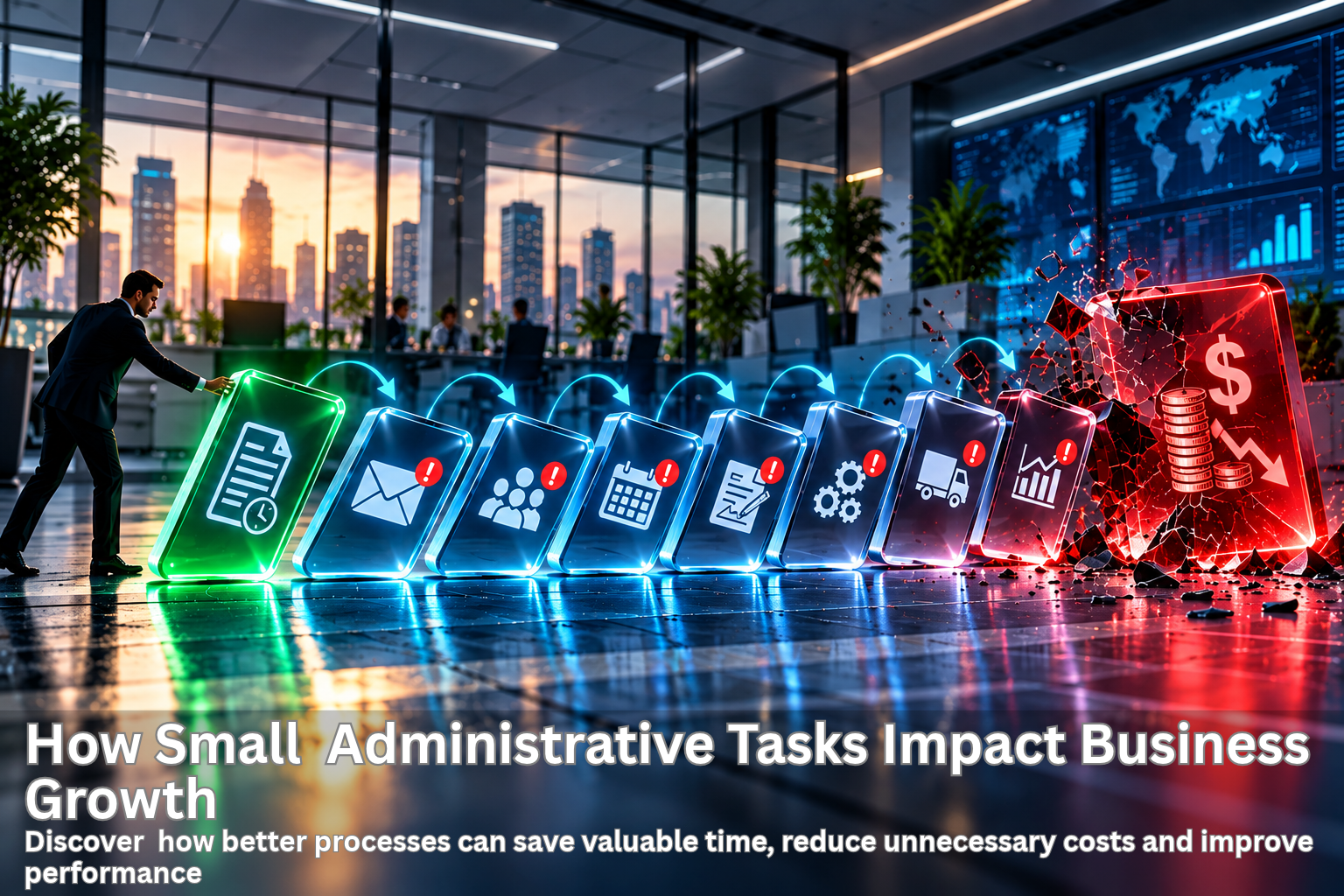
Small administrative inefficiencies may appear harmless, but over time, they can reduce productivity, increase operational expenses and limit business growth. 💼
In today's competitive business environment, organisations often focus on major investments and strategic decisions while overlooking the everyday processes that consume valuable time and resources. Repetitive data entry, unnecessary meetings, delayed approvals and poor communication can gradually create significant financial and operational challenges.
For business leaders, recognising these hidden costs is essential to improving efficiency, strengthening performance and supporting sustainable growth.
🔍 The Hidden Cost of Everyday Administration
Administrative tasks are necessary for every organisation, from managing documents and maintaining records to coordinating meetings and preparing reports. However, when these activities lack structure, they can become unnecessarily time-consuming.
For example, employees may spend valuable hours searching for information, updating multiple spreadsheets or repeating tasks because systems are disconnected. Although each activity may take only a few minutes, the cumulative impact across an entire workforce can be substantial.
If 20 employees each lose 15 minutes per working day to avoidable administrative tasks, the organisation loses approximately 1,300 working hours annually, assuming 260 working days.
These hours could otherwise be invested in client relationships, business development, strategic planning and other activities that contribute directly to organisational success.
⏳ 1. Reduced Productivity and Employee Efficiency
One of the most immediate consequences of administrative inefficiency is reduced employee productivity. When staff spend excessive time on repetitive tasks, they have less capacity to concentrate on their primary responsibilities.
Frequent interruptions, unnecessary reporting and duplicated processes can also disrupt concentration and delay important projects. Over time, this can affect employee engagement, service quality and the organisation's ability to meet deadlines.
How businesses can improve: Leaders should review existing workflows, eliminate unnecessary steps and establish clear responsibilities. Standardised procedures can help employees complete routine activities more efficiently and focus on higher-value work.
💷 2. Increasing Operational Expenses
Small inefficiencies can create hidden costs through additional working hours, repeated work, avoidable errors and unnecessary software expenditure.
When businesses fail to identify these problems, they may hire additional employees to manage workloads that could be reduced through better processes. This increases operating expenses without necessarily improving overall performance.
A structured review of administrative activities can help organisations identify where resources are being wasted and where improvements would deliver the greatest financial benefit.
How businesses can improve: Monitor the time and resources required for routine activities, review overlapping software subscriptions and identify opportunities to simplify processes before increasing staffing levels.
📊 3. Poor Data Management and Duplicated Work
Accurate information is essential for effective decision-making. However, when records are spread across emails, spreadsheets and disconnected systems, employees may struggle to locate reliable information.
This can lead to duplicated data entry, inconsistent reports, avoidable mistakes and delays in responding to clients or colleagues. Poor information management can also make it harder for leadership teams to assess performance and identify potential risks.
How businesses can improve: Introduce consistent data management procedures, establish clear ownership of information and use integrated systems where appropriate. A reliable central source of information can reduce duplication and improve collaboration.
🤝 4. Communication Delays and Ineffective Collaboration
Unclear instructions, excessive email exchanges and poorly organised meetings can create unnecessary administrative pressure. When employees are uncertain about responsibilities or priorities, tasks may be repeated, decisions delayed and deadlines missed.
These challenges become particularly costly when several departments must coordinate their activities to deliver a service or complete a project.
How businesses can improve: Establish clear communication channels, define responsibilities and ensure meetings have specific objectives. Documenting decisions and assigning actions can help teams work more effectively and avoid repeated discussions.
⚙️ 5. Using Technology to Improve Efficiency
Technology can help organisations reduce repetitive administrative work and improve consistency. Tasks such as scheduling, document management, reporting and routine notifications may be suitable for automation.
However, businesses should first understand their existing processes. Automating an inefficient workflow without addressing its underlying problems may simply reproduce those problems more quickly.
How businesses can improve: Review current workflows, remove unnecessary steps and identify suitable opportunities for automation. Measure the results and maintain appropriate human oversight where accuracy, confidentiality or professional judgement is important.
📈 6. The Impact on Long-Term Business Growth
Administrative inefficiencies often become more noticeable as organisations expand. Processes that work for a small team may become difficult to manage as employee numbers, client relationships and workloads increase.
Without effective systems, managers can become occupied with resolving operational problems rather than focusing on strategic priorities. This can restrict scalability, affect service quality and reduce the organisation's ability to respond to new opportunities.
Businesses that invest in efficient processes are better positioned to manage increasing demand without allowing administrative complexity to grow unnecessarily.
🌱 Creating a More Efficient Organisation
Improving administrative efficiency does not always require major investment. Often, meaningful progress begins with identifying the tasks that consume the most time and understanding why they are inefficient.
Business leaders can start by reviewing everyday activities, measuring processing times, gathering employee feedback and establishing clear performance indicators. Regular reviews can help organisations monitor progress and ensure improvements remain effective as operational needs change.
A culture of continuous improvement also encourages employees to identify practical solutions rather than accepting inefficient processes as unavoidable.
💡 Final Thoughts
Small administrative inefficiencies can accumulate into significant business costs through lost working hours, duplicated effort, unnecessary expenditure and delayed decisions.
By simplifying workflows, improving communication, strengthening data management and adopting appropriate technology, organisations can release valuable capacity and improve operational performance.
At Wyman Bain, understanding the operational challenges that influence organisational effectiveness is an important part of supporting stronger leadership and sustainable business success.
Sometimes, the smallest operational improvements can create the greatest long-term value. 🚀