🤝 The Relationship Between Boards and Executive Leadership Teams
🤝 The Relationship Between Boards and Executive Leadership Teams
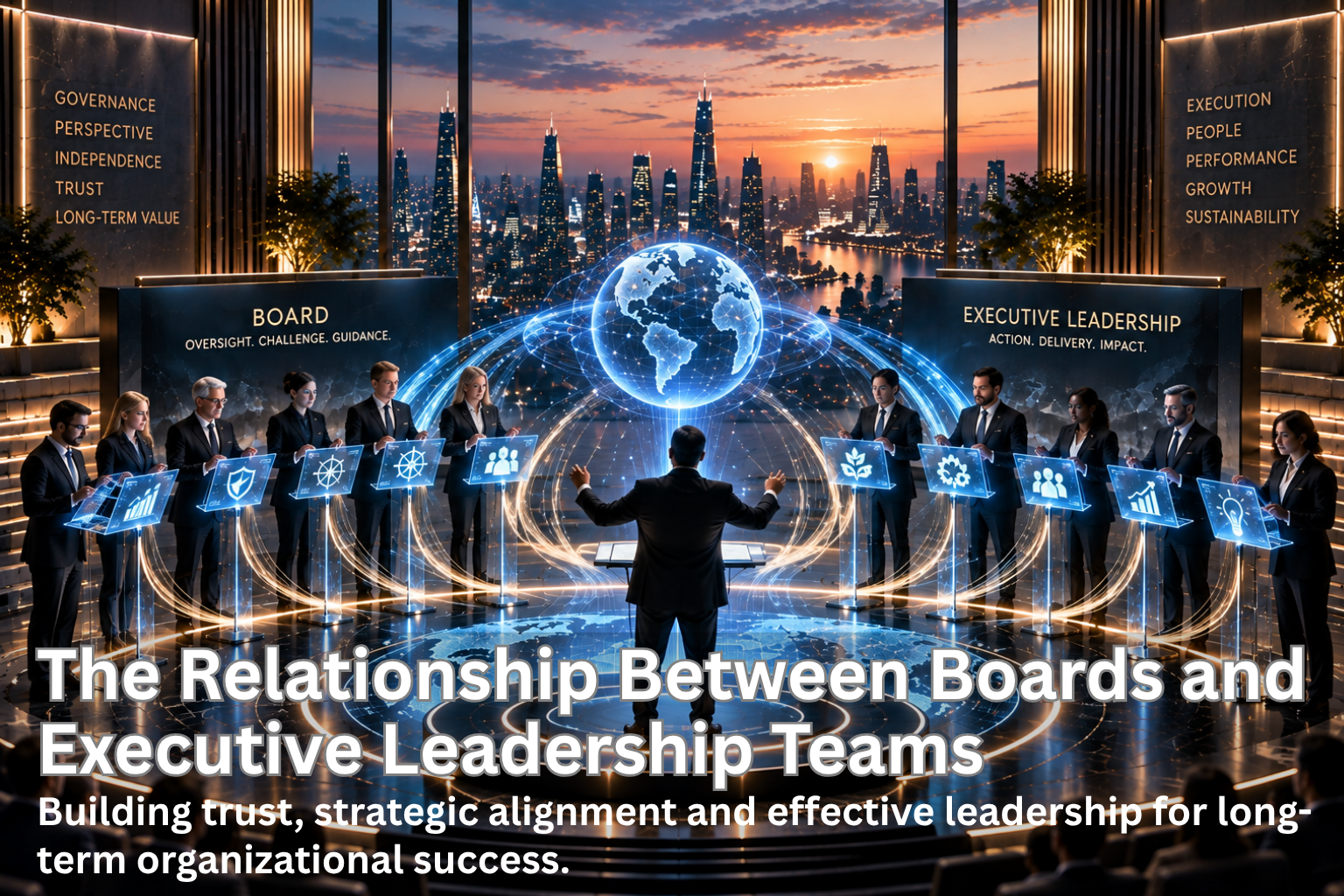
The relationship between a Board of Directors and an Executive Leadership Team (ELT) is fundamental to organisational success. While the Board and executive team have different responsibilities, they share a common objective: ensuring the organisation is well led, strategically focused and positioned for sustainable long-term success. 🎯
When this relationship works effectively, it creates a strong balance between governance, strategic oversight and executive leadership. 🎯
Understanding how Boards and Executive Leadership Teams should work together is essential for high-performing organisations.
🏛️ The Role of the Board
The Board provides governance, oversight and strategic direction. Its responsibility is to ensure that the organisation is managed effectively and that decisions are made in the best interests of the business and its stakeholders.
Key responsibilities include strategic oversight, performance, risk, compliance, executive oversight, succession planning and constructive challenge.
A strong Board should challenge the Executive Leadership Team where necessary, while avoiding unnecessary involvement in day-to-day management.
👥 The Role of the Executive Leadership Team
The Executive Leadership Team is responsible for turning strategic objectives into measurable action. 🚀 Led by the CEO or Managing Director, the ELT brings together senior leaders across key business functions.
Executives manage performance, make operational decisions, allocate resources and deliver agreed priorities. They need authority to lead while remaining accountable to the Board.
⚖️ Creating the Right Balance
Finding the right balance between Board oversight and executive autonomy is one of the biggest challenges in corporate leadership.
Too little Board challenge can mean important risks go unnoticed. ⚠️ Excessive Board intervention, however, can undermine executive authority and create confusion about decision-making responsibilities.
The strongest Board–ELT relationships are based on clear boundaries, mutual respect and trust. Board members should know when to challenge, when to advise and when to allow executives to lead. Executives should recognise that constructive scrutiny is an essential part of good governance.
❤️ Trust and Transparency
Trust is at the heart of an effective relationship.
Executives must feel comfortable presenting difficult information, including missed targets, emerging risks or strategic concerns. Board members need confidence that information is accurate, timely and transparent. 🔎
Open discussion helps Boards and executives identify solutions before challenges become more serious.
📣 The Importance of Communication
Clear communication is essential to effective Board and executive relationships.
Effective communication should help directors understand performance, strategic progress, key risks, emerging opportunities and decisions requiring support.
💡 Constructive Challenge
Independent challenge allows directors to test assumptions, explore alternatives and identify risks. 🧠 Disagreement can be healthy when it remains professional and focused on achieving the best outcome.
Constructive challenge should strengthen decisions, improve accountability and enhance performance.
🎯 Strategic Alignment
Different perspectives can lead to stronger strategic thinking. However, once major decisions have been made, both groups need to understand and support the agreed direction. Regular conversations about strategy and performance help maintain alignment and focus on longer-term objectives. 🚀
👔 The Chair and CEO Relationship
The relationship between the Chair and CEO is particularly important because it influences the wider relationship between the Board and ELT.
A strong Chair–CEO relationship requires:
🤝 Mutual respect
❤️ Trust
📣 Open communication
🎯 Clear
responsibilities
💬 Honest feedback
⚖️ Appropriate challenge
Both individuals need to understand their respective roles.
🌱 Preparing for Future Leadership
Boards also have an important responsibility for leadership succession and organisational resilience.
Effective succession planning considers the skills and capabilities the organisation will need in the future. Identifying and developing future leaders can help maintain continuity, respond to change and remain competitive. 🌟
🚀 Final Thoughts
These principles help leadership teams make better decisions together.
The relationship between the Board and Executive Leadership Team is much more than a governance requirement. It is a critical leadership partnership that can influence an organisation’s culture, strategy and long-term performance.
At Wyman Bain, we understand that exceptional executive leadership is about more than experience. It is about identifying leaders who can work effectively within complex organisations, contribute constructively at Board level and collaborate with fellow executives to deliver sustainable growth.
When the right people are in the right leadership positions, this relationship can become a powerful driver of organisational success. 🤝🌟