
How Organisations Can Identify Unnecessary Complexity in Their Operating Procedures 🔍
How Organisations Can Identify Unnecessary Complexity in Their Operating Procedures 🔍
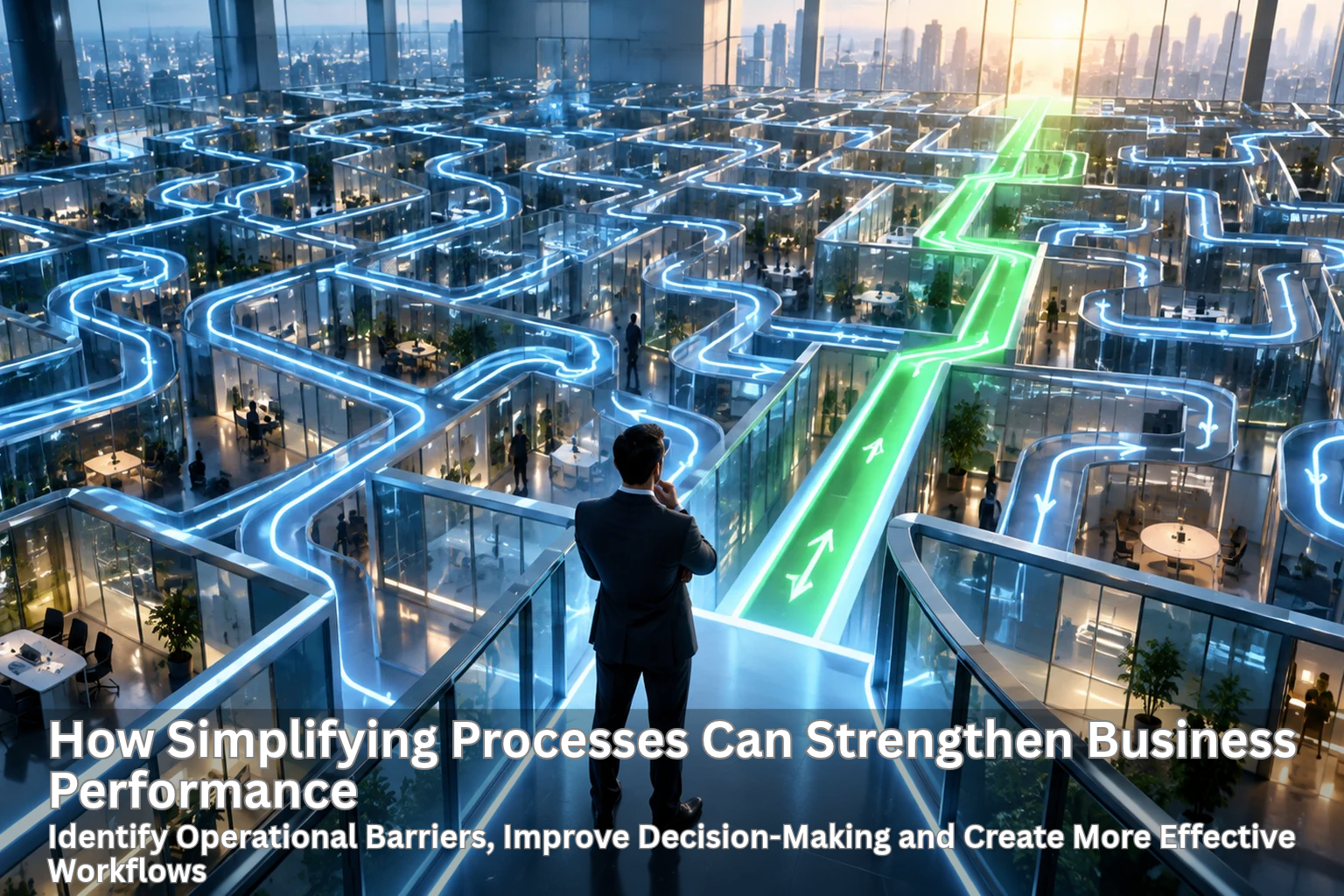
In today’s competitive business environment, organisations need efficient operating procedures that support productivity, accountability and sustainable growth. However, as businesses expand and adapt to changing demands, their internal processes can gradually become more complicated than necessary.
What begins as a straightforward procedure can develop into multiple approval stages, duplicated responsibilities, excessive reporting and unnecessary administrative tasks. Over time, these complications can slow decision-making, increase costs and prevent employees from focusing on activities that deliver genuine business value.
For business leaders, identifying unnecessary complexity is essential to creating an agile, responsive and effective organisation. But how can organisations recognise these problems and take practical steps towards improvement
🔎 1. Identify Repetitive and Duplicated Tasks
One of the clearest signs of unnecessary complexity is the duplication of work across departments. Employees may enter the same information into multiple systems, prepare similar reports for different stakeholders or repeat checks already completed elsewhere.
These activities can develop gradually as teams introduce new procedures without reviewing existing ones.
Organisations should examine their workflows to identify repeated tasks, overlapping responsibilities and activities that contribute little additional value. Consolidating these processes can reduce administrative workloads, improve accuracy and allow employees to concentrate on higher-value responsibilities.
⚙️ 2. Review Approval Processes
Excessive approval requirements can create significant bottlenecks, particularly within organisations with several management layers.
When routine decisions require approval from multiple individuals, projects can experience unnecessary delays. Employees may also become dependent on senior leaders for decisions that could be managed more efficiently elsewhere.
Leadership teams should review approval structures, identify recurring delays and establish whether every stage serves a clear purpose.
The objective is not to eliminate essential oversight. Instead, organisations should introduce proportionate controls and clear delegation of authority, allowing employees to make appropriate decisions while maintaining accountability and effective governance.
📊 3. Use Data to Measure Process Efficiency
Identifying unnecessary complexity requires reliable information rather than assumptions. Organisations should measure how effectively their procedures operate and identify areas where performance falls below expectations.
Useful indicators include process completion times, approval turnaround, operating costs, error rates, repeated work and the number of steps required to complete routine activities.
These measurements help leaders understand where resources are being wasted and which processes require closer examination.
However, efficiency should not be measured through speed alone. Organisations must also consider quality, compliance, customer satisfaction and risk management when evaluating whether a process is genuinely effective.
👥 4. Listen to Employee Feedback
Employees often understand operational challenges better than anyone because they work with procedures every day. They may recognise confusing instructions, unnecessary paperwork, duplicated tasks or systems that make straightforward responsibilities difficult.
Organisations should encourage employees to share their experiences through feedback sessions, surveys and cross-functional workshops.
Asking which activities consume excessive time, where delays occur and what could be improved can uncover valuable opportunities.
Importantly, feedback should lead to meaningful action. When employees see their suggestions being considered, they become more willing to contribute ideas and support improvements across the organisation.
🧩 5. Clarify Responsibilities Between Departments
Complexity frequently develops when several departments contribute to the same process without clearly defined responsibilities.
For example, finance, human resources and operational teams may each maintain separate records, request similar information or wait for another department to take action. This can create duplicated effort, inconsistent information and unnecessary delays.
Organisations should map important workflows and establish clear ownership at every stage. Employees need to understand who is responsible, who must contribute and when decisions should be escalated.
Clear responsibilities improve collaboration, reduce unnecessary handovers and help departments work towards shared business objectives.
💻 6. Evaluate Existing Technology
Technology should simplify work, but poorly integrated systems can introduce additional complications. Employees may need to switch between platforms, transfer information manually or maintain spreadsheets because business applications do not communicate effectively.
Organisations should assess whether their systems support efficient workflows, provide accurate information and integrate with other essential applications.
Automation can eliminate repetitive tasks, but automating an inefficient process may simply reproduce its problems digitally.
Businesses should therefore simplify procedures before introducing automation, ensuring technology supports practical improvements rather than adding another layer of complexity.
🎯 Turning Complexity into Opportunity
Unnecessary complexity can affect productivity, decision-making, operating costs and strategic execution. Organisations that recognise these challenges can create opportunities to improve performance without compromising essential standards.
By reviewing workflows, analysing data, listening to employees and clarifying responsibilities, business leaders can develop procedures that are practical, transparent and aligned with organisational objectives.
Ultimately, simplifying operations is not about removing structure or reducing oversight. It is about creating the right structure, enabling employees to work effectively and helping leaders make informed decisions.
At Wyman Bain, we recognise the importance of effective leadership, clear organisational structures and sound operating models in supporting sustainable business performance.