The Difference Between Managing and Leading at Executive Level 👔
The Difference Between Managing and Leading at Executive Level 👔
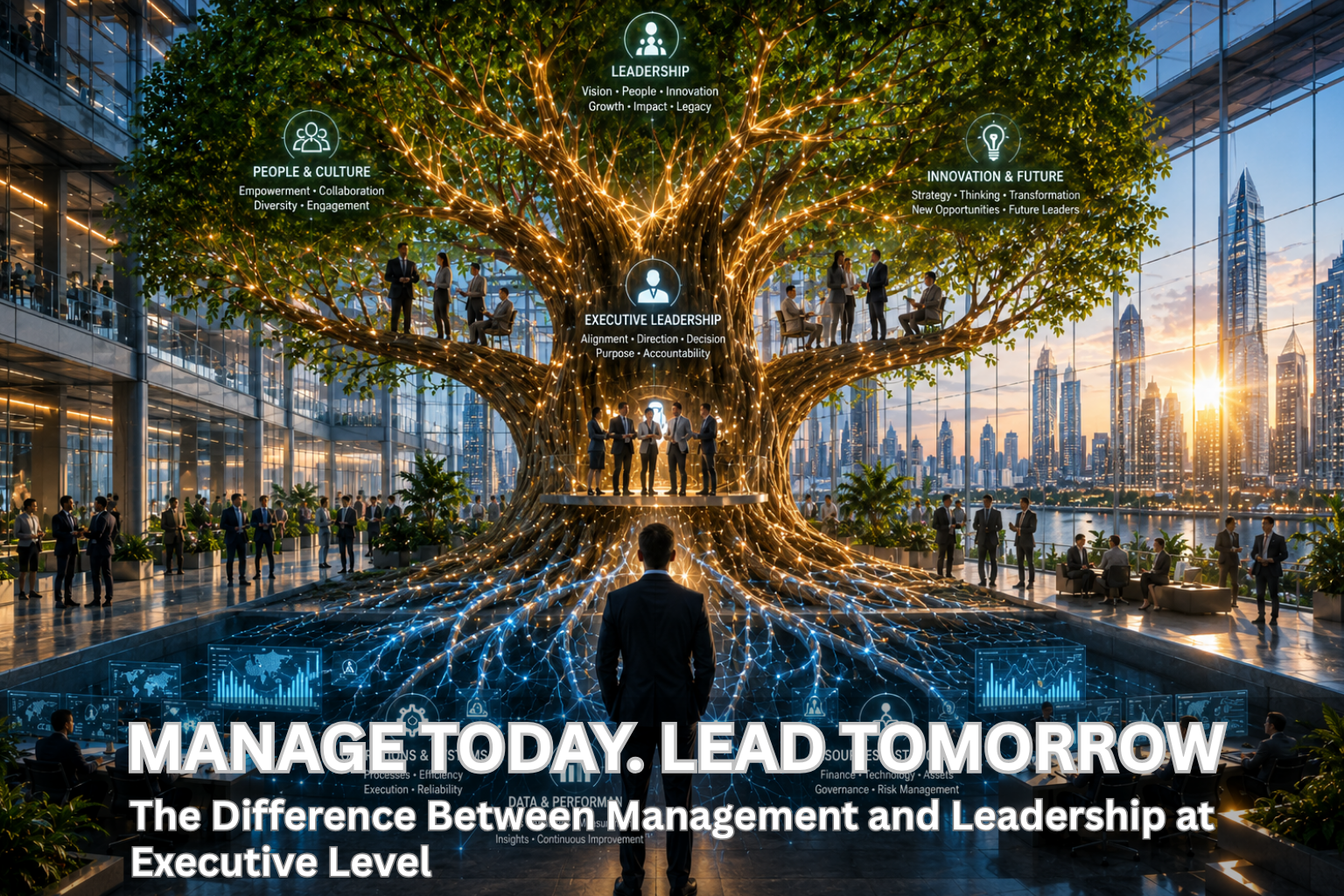
At executive level, managing and leading are closely connected, but they are not the same.
Both are essential to organisational success, yet they require different mindsets, behaviours and capabilities. While management focuses on performance, processes and execution, leadership focuses on vision, people and long-term direction.
For organisations appointing senior executives, understanding this distinction is critical.
Managing: Delivering Results 📊
Management is primarily concerned with turning objectives into measurable results.
Effective executive managers focus on:
- 🎯 Setting clear objectives and performance targets
- 💷 Managing budgets and resources
- ⚙️ Establishing effective processes
- 📈 Monitoring KPIs and business performance
- 🛡️ Managing operational risks
- 🤝 Ensuring accountability
- 🔧 Resolving day-to-day business challenges
Strong management creates structure, consistency and operational discipline.
Without it, even a strong business strategy can struggle to deliver results.
However, executives who focus too heavily on management can become consumed by immediate operational priorities and lose sight of the organisation's longer-term ambitions.
Leading: Creating Direction 🧭
Leadership looks beyond today's priorities.
An effective executive leader asks:
Where are we going, why are we going there, and how do we bring people with us?
Leadership involves:
- 🌟 Creating a clear vision
- 🧭 Establishing strategic direction
- 🤝 Inspiring and engaging employees
- 🌱 Building organisational culture
- 👥 Developing future leaders
- 🔄 Managing significant change
- 💬 Influencing key stakeholders
- 🛡️ Creating confidence during uncertainty
Leadership is therefore not simply about having authority.
It is about influence, trust and purpose.
Management Controls. Leadership Inspires. 💡
One of the clearest differences between management and leadership is how people are motivated.
A manager may focus on:
"What needs to be achieved?"
A leader also considers:
"Why does it matter, and how can we achieve it together?"
Employees need clear expectations and accountability, but they also need to understand the purpose behind their work.
When people understand the bigger picture, they are more likely to take ownership, contribute ideas and remain committed to organisational goals.
Leaders Develop People 🌱
At executive level, success cannot depend on one individual.
The strongest leaders build capable, confident and accountable teams.
Effective leaders focus on:
- 🔎 Identifying potential
- 🤲 Delegating effectively
- 🎓 Coaching and mentoring
- 🎯 Encouraging accountability
- 🔄 Developing succession plans
- 📈 Creating opportunities for career progression
The objective is not simply to achieve today's results, but to build the capability required for tomorrow's success.
Leaders Navigate Change 🔄
Executive leadership becomes particularly important during periods of transformation.
Whether an organisation is restructuring, entering new markets, adopting new technology or responding to changing customer expectations, employees need clarity and confidence.
Strong leaders communicate:
- 💡 Why change is necessary
- 🎯 What the organisation is trying to achieve
- 👥 How the change will affect people
- 📊 What success will look like
- 🤝 How employees will be supported
Managing change requires planning.
Leading change requires people to believe in the direction.
The Best Executives Do Both ⚖️
Successful executives do not choose between management and leadership.
They combine both.
Management ensures the
organisation performs today.
Leadership ensures the organisation is prepared for tomorrow.
An executive who only leads may create an inspiring vision without the operational discipline needed to deliver it.
An executive who only manages may achieve short-term efficiency without creating the innovation, culture and strategic thinking required for sustainable growth.
The strongest executives know when to manage, when to lead and when to do both.
What Organisations Should Look For
When appointing senior executives, organisations should look beyond qualifications and career history.
They should consider:
- 🧭 Can this individual create a compelling vision?
- 📊 Can they translate strategy into measurable results?
- 👥 Can they build and develop high-performing teams?
- 🤝 Can they influence stakeholders effectively?
- 🔄 Can they lead through uncertainty?
- ⚡ Can they make difficult decisions?
- 🌱 Can they shape a positive organisational culture?
- 🚀 Can they develop the next generation of leaders?
These qualities can make the difference between appointing someone who can manage a business and someone who can lead it forward.
The Bottom Line 🎯
Managers focus on getting things done. Leaders focus on getting the right things done, and bringing people with them.
At executive level, organisations need both.
The most effective executives combine operational discipline with strategic vision, accountability with empowerment, and performance with people development.
Ultimately, exceptional executive leadership is about more than managing today's business.
It is about shaping the organisation's future. 🚀
Looking for Exceptional Executive Talent? 👔
Finding the right executive requires more than matching experience to a job description. It requires understanding the organisation's culture, ambitions, challenges and future direction.
Wyman Bain helps organisations identify senior leaders who can deliver results today while creating the foundations for sustainable success tomorrow.
The right executive appointment can shape an organisation's future. 🌟