
Why Growing Businesses Need Better Succession Planning 📈🔑
Why Growing Businesses Need Better Succession Planning 📈🔑
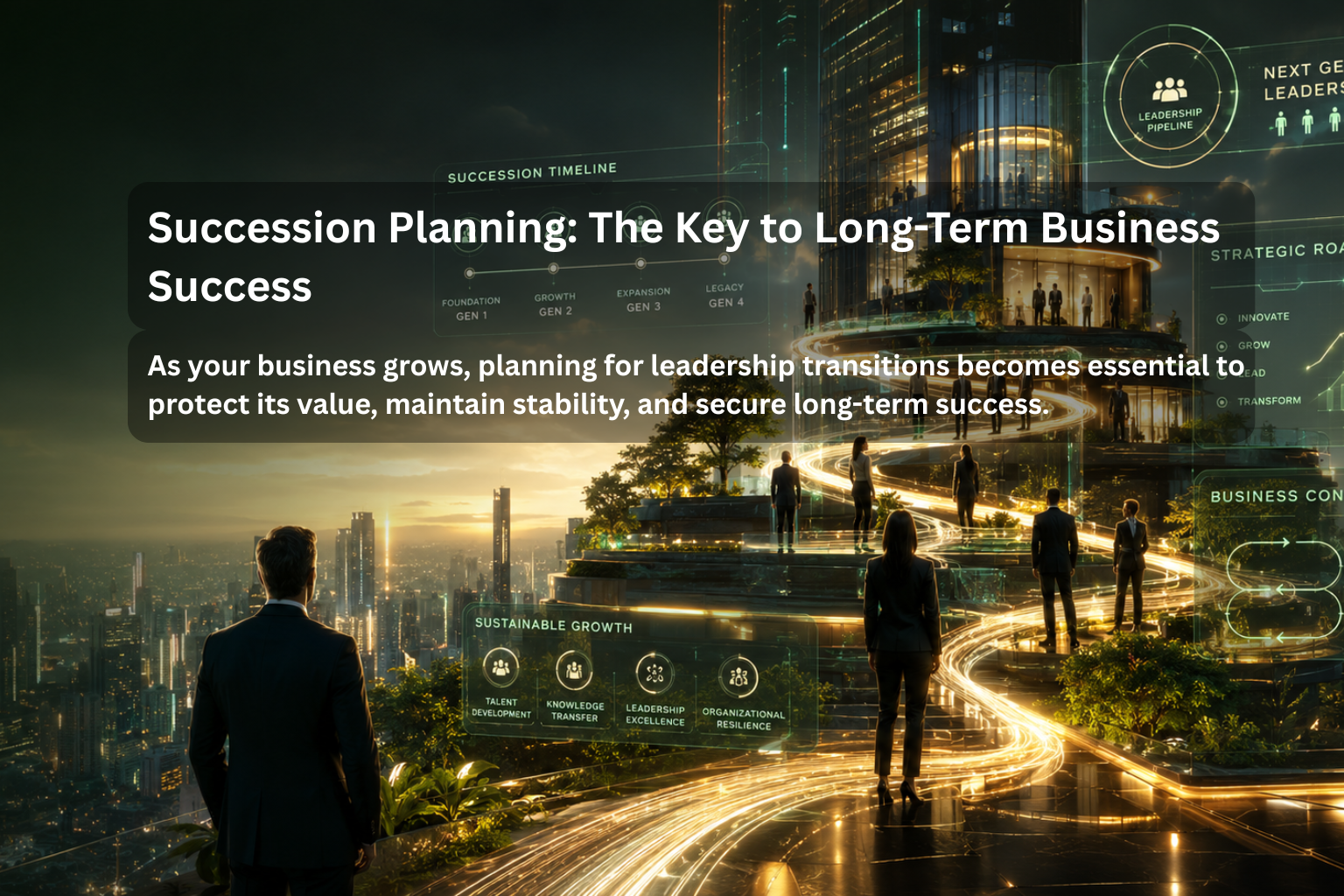
As your business grows, so do the opportunities, challenges, and responsibilities. Many business owners focus on increasing sales, expanding their team, and winning new clients but far fewer spend time planning for what happens if they step away from the business.
Succession planning isn't just about retirement. It's about protecting everything you've worked so hard to build. 🏢✨
What Is Succession Planning? 🤔
Succession planning is the process of identifying and preparing the right people to take over key leadership roles when the time comes. Whether you're planning to retire, sell your business, or simply want to reduce your day-to-day involvement, having a clear succession plan ensures a smooth transition.
Without one, your business could face uncertainty, disruption, or even financial loss.
Why Growing Businesses Can't Afford to Ignore It 🚀
As businesses expand, they often become more dependent on the owner or a small group of senior leaders. This creates risk.
A strong succession plan helps you:
- ✅ Maintain business continuity
- ✅ Protect your company’s value
- ✅ Build confidence among employees, customers, and suppliers
- ✅ Reduce operational disruption
- ✅ Prepare for unexpected events
- ✅ Support long-term growth and stability
Planning ahead means your business is ready for change whenever it happens.
The Cost of Poor Succession Planning ⚠️
Many businesses delay succession planning because it feels like something to think about "later". Unfortunately, unexpected circumstances rarely wait.
Without a plan, businesses may experience:
- 📉 Loss of key knowledge and expertise
- 💷 Reduced business value
- 😟 Uncertainty amongst staff
- 🤝 Loss of customer confidence
- ⏳ Delays in decision-making
- ⚖️ Family or shareholder disputes
The longer succession planning is postponed, the greater the potential impact.
Succession Planning Is More Than Choosing a Replacement 👥
Effective succession planning looks beyond simply appointing a new leader.
It should include:
- 🎯 Identifying critical roles within the business
- 🌱 Developing future leaders
- 📚 Documenting key processes and knowledge
- 💼 Reviewing ownership and exit strategies
- 📊 Assessing financial and operational risks
- 🔄 Creating a structured transition plan
The goal is to ensure your business can continue to thrive regardless of who is leading it.
When Should You Start? ⏰
The best time to start succession planning is earlier than you think.
Whether you're aiming to exit in five years or twenty, planning ahead provides more options and better outcomes. It allows time to develop talent, improve business systems, and maximise business value before any transition takes place.
Succession planning should be reviewed regularly as your business evolves.
How Wyman Bain Can Help 🤝
At Wyman Bain, we help growing businesses prepare for the future with practical, strategic succession planning.
Our experienced advisers work closely with business owners to:
- ✔️ Develop tailored succession strategies
- ✔️ Identify future leadership opportunities
- ✔️ Improve business resilience
- ✔️ Support business growth
- ✔️ Maximise long-term business value
- ✔️ Create smooth and successful transitions
Every business is different, which is why our advice is tailored to your unique goals and circumstances.
Building a successful business takes years of dedication. Protecting its future should be just as important as growing it.
Succession planning isn't about stepping away it's about ensuring your business continues to succeed, whatever the future holds.
The earlier you start planning, the stronger your business will be for the next generation of leadership. 🌟
Ready to future-proof your business? 📞
Contact Wyman Bain today to discuss how our succession planning expertise can help safeguard your business, protect its value, and prepare for long-term success.