🚀 The Changing Role of the Chief Operating Officer (COO)
🚀 The Changing Role of the Chief Operating Officer (COO)
🚀 The Changing Role of the Chief Operating Officer (COO)
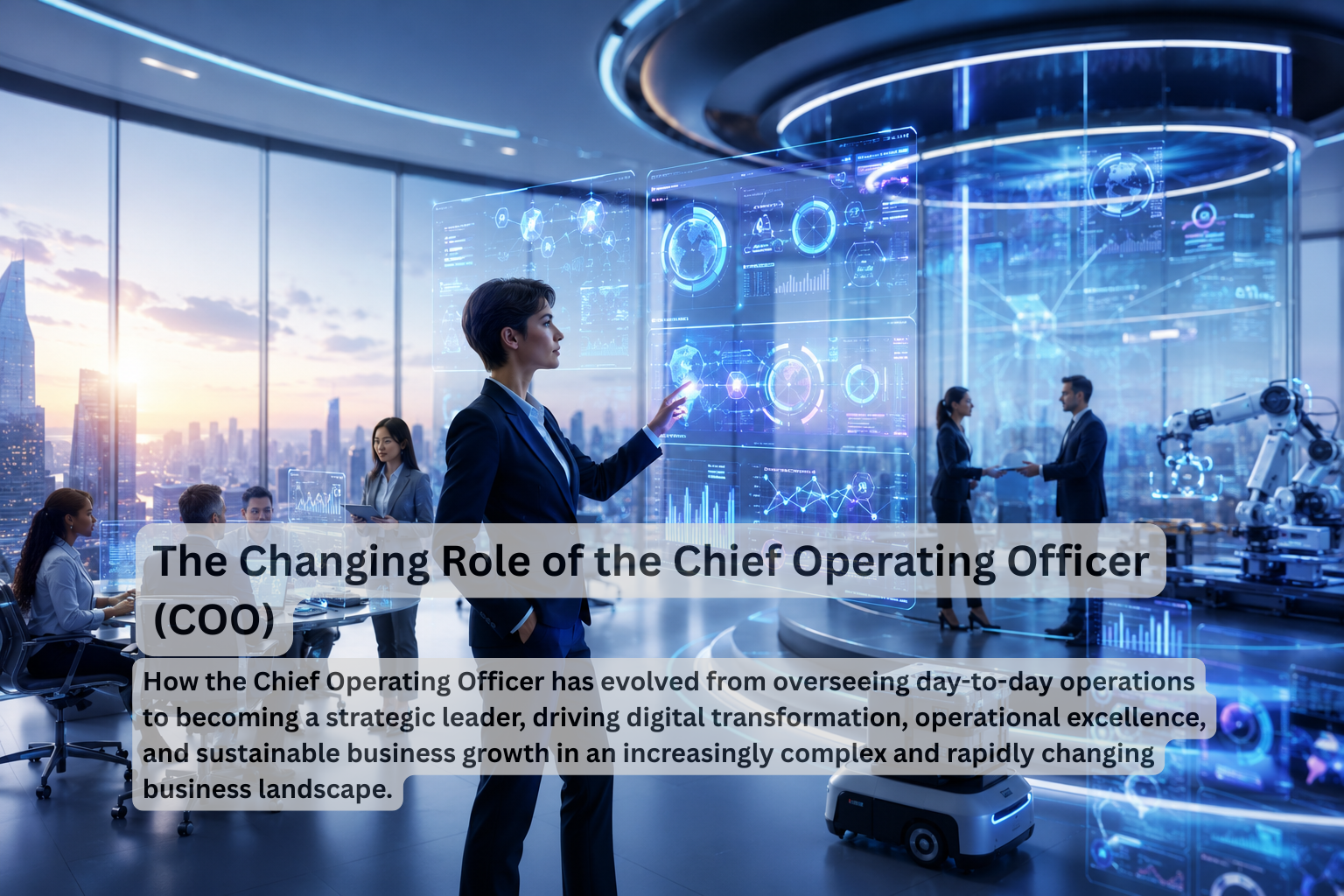
In today's fast-moving business environment, the role of the Chief Operating Officer (COO) has evolved far beyond managing day-to-day operations. Once viewed primarily as the executive responsible for efficiency and execution, the modern COO has become a strategic leader, transformation expert, and trusted partner to the Chief Executive Officer (CEO). 🌍
As organisations navigate digital disruption, economic uncertainty, changing customer expectations, and rapid technological advancement, the COO has emerged as one of the most influential figures in driving sustainable growth and operational excellence.
📈 From Operational Manager to Strategic Leader
Traditionally, COOs focused on internal processes, productivity, and ensuring the business ran smoothly. While these responsibilities remain essential, today's COO is expected to think strategically and contribute directly to the organisation's long-term vision.
Modern COOs now play a critical role in:
🎯 Executing corporate strategy
🤝 Aligning departments around common goals
📊 Driving organisational performance
🚀 Leading business transformation initiatives
🌱 Building resilient and scalable operating models
The COO is no longer simply managing operations they are shaping the future of the organisation.
💻 Digital Transformation is Now an Operational Priority
Technology is redefining every industry, making digital transformation one of the COO's greatest responsibilities.
Today's operational leaders are expected to:
🤖 Leverage Artificial Intelligence (AI) and automation
📈 Improve decision-making through data analytics
☁️ Optimise cloud-based operations
🔐 Strengthen cyber resilience
⚡ Increase operational agility through digital innovation
Rather than viewing technology as an IT initiative, successful COOs embed digital capabilities across the entire business.
👥 People and Culture Matter More Than Ever
Operational success is no longer measured solely by efficiency. High-performing organisations understand that engaged employees create exceptional customer experiences.
The modern COO plays a significant role in:
🌟 Developing future leaders
❤️ Creating a positive workplace culture
🤝 Encouraging collaboration across functions
🧠 Supporting employee wellbeing
📚 Investing in continuous learning and development
People are increasingly recognised as a company's greatest competitive advantage.
🌍 Leading Through Uncertainty
Economic volatility, geopolitical tensions, supply chain disruption and evolving regulations require organisations to be more resilient than ever before.
COOs must now become experts in:
🛡️ Risk management
🔄 Business continuity planning
📦 Supply chain resilience
💰 Cost optimisation
📉 Scenario planning and forecasting
The ability to adapt quickly has become a defining characteristic of successful operational leadership.
📊 Data-Driven Decision Making
The modern COO relies less on instinct and more on data.
Real-time insights allow organisations to:
📉 Identify operational inefficiencies
📈 Measure performance accurately
💡 Improve customer outcomes
⚙️ Optimise resource allocation
🎯 Make faster, evidence-based decisions
Businesses that embrace data-driven operations consistently outperform competitors.
🌱 Sustainability Has Become an Operational Responsibility
Environmental, Social and Governance (ESG) considerations are now firmly embedded within operational strategy.
COOs are increasingly responsible for:
🌍 Reducing environmental impact
♻️ Improving operational sustainability
📋 Strengthening governance frameworks
🤝 Building ethical supply chains
📊 Measuring ESG performance
Sustainability is no longer simply a compliance exercise, it's a business imperative.
🤝 The COO as the CEO's Strategic Partner
Perhaps the most significant shift has been the relationship between the CEO and COO.
The best-performing organisations see these two roles working in close partnership.
While the CEO focuses on:
🔭 Vision
🌍 External relationships
📢 Market positioning
The COO ensures that strategy becomes reality through:
⚙️ Operational execution
👥 Organisational alignment
📈 Performance management
🚀 Continuous improvement
Together, they provide both strategic direction and operational excellence.
🔮 Looking Ahead
As businesses continue to evolve, the COO's role will become even more influential. Future operational leaders will require a combination of strategic thinking, digital expertise, emotional intelligence, commercial awareness, and the ability to lead through constant change.
The organisations that thrive will be those whose COOs can balance operational discipline with innovation, efficiency with agility, and performance with purpose.
The Chief Operating Officer is no longer simply responsible for "keeping the lights on". Today's COO is a catalyst for transformation, a driver of innovation, and a key architect of organisational success.
At Wyman Bain, we believe operational excellence is about more than efficiency it's about creating resilient, people-focused organisations that are prepared for the future. By combining strategic leadership with operational expertise, today's COOs are uniquely positioned to turn vision into measurable results and help businesses achieve sustainable, long-term success. 🚀