
Talent Pool Analysis: Identifying Leadership Gaps Before They Become Problems 🔍👥
Talent Pool Analysis: Identifying Leadership Gaps Before They Become Problems 🔍👥
In today’s fast-moving business environment, organisations cannot afford to wait until a senior leader leaves before thinking about who will step into their shoes. ⏳
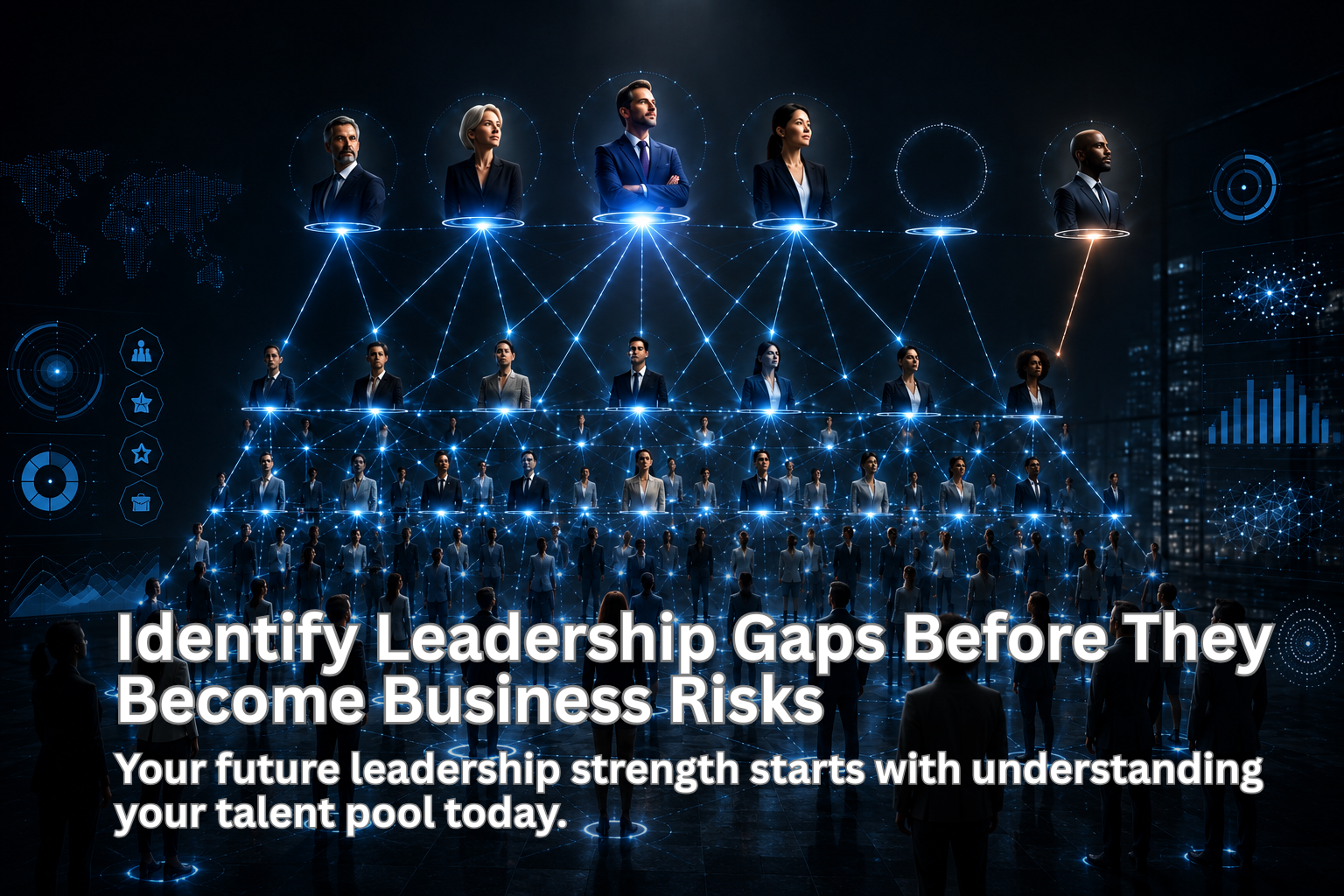
Strong leadership succession starts much earlier. Talent pool analysis gives organisations the insight they need to understand the strength, depth and readiness of their future leadership pipeline, helping identify potential gaps before they become costly business problems. 🚀📊
What Is Talent Pool Analysis? 🤔
Talent pool analysis is the process of assessing the skills, experience, potential and readiness of employees within an organisation to determine whether the business has the right talent available for current and future leadership requirements.
Rather than focusing solely on existing vacancies, it takes a forward-looking approach by asking:
- 👤 Who could step into a leadership role today?
- 📅 Who could be ready within 12–24 months?
- ⚠️ Where are the critical capability gaps?
- 🔄 Which leadership positions have limited succession options?
- 🔮 What skills will the organisation need in the future?
For organisations operating in competitive markets, these insights can make the difference between a smooth leadership transition and a significant disruption. 📈
Why Leadership Gaps Often Go Unnoticed ⚠️
Leadership gaps are not always immediately visible.
An organisation may have a strong-performing executive team today, but that does not necessarily mean it has a healthy leadership pipeline for tomorrow. Key individuals may be approaching retirement, considering their next career move or simply holding specialist knowledge that has not been transferred elsewhere. 🧩
There may also be a tendency to promote high performers without properly assessing whether they possess the leadership capabilities required for a more senior role. 📉
Without regular talent pool analysis, these vulnerabilities can remain hidden until they become urgent. 🚨
Five Areas to Examine 🔎
1. Leadership Readiness 🚦
Assess whether potential successors are ready now, ready soon, or require further development.
A useful talent pool might include:
- 🟢 Ready now, capable of taking on the role immediately.
- 🟡 Ready in 1, 2 years, strong potential with targeted development.
- 🔵 Longer-term potential, promising individuals who require broader experience.
This creates a much clearer picture of succession depth. 📊
2. Critical Skills and Capabilities 🧠
Leadership today requires far more than technical expertise.
Organisations should consider capabilities such as strategic thinking, commercial judgement, change leadership, stakeholder management, digital awareness and the ability to lead through uncertainty. 🌐
Mapping these capabilities against future business requirements can reveal where development investment is most needed.
3. Succession Risk ⚠️
Not every leadership role carries the same level of succession risk.
A role becomes particularly vulnerable when there is:
- 👤Only one potential successor.
- ❌No internal successor identified.
- 📉A significant skills gap between the current leader and potential successors.
- 🔐Heavy reliance on one individual’s knowledge or relationships.
- 🌍A lengthy external recruitment process likely to be required.
Identifying these risks early gives organisations time to act rather than react. ⏱️
4. Diversity of the Leadership Pipeline 🌍🤝
A resilient talent pool should reflect the diversity of the organisation and the markets it serves.
Analysing the composition of the future leadership pipeline can help organisations identify where representation is limited and whether existing development and promotion processes are creating unintended barriers.
A broader leadership pipeline can also bring different perspectives, experiences and approaches to decision-making. 💡
5. Development Priorities 🎯
Talent pool analysis should not simply identify gaps, it should help organisations decide what to do about them.
Potential actions may include:
- 🧑💼 Executive coaching
- 🤝 Mentoring
- 🚀 Stretch assignments
- 🔄 Cross-functional exposure
- 🌍 International experience
- 📚 Targeted leadership development
The objective is to turn talent data into a practical development strategy. 📈
From Talent Data to Better Leadership Decisions 🧭
Effective talent pool analysis combines data with professional judgement.
Performance reviews, career aspirations, competency assessments and succession information can provide valuable insight, but organisations should also consider factors such as leadership potential, adaptability, motivation and the ability to operate effectively in increasingly complex environments. 🧠
This is where independent assessment can add significant value.
An objective view can challenge assumptions, identify overlooked talent and provide greater confidence when making important succession decisions. 🔍
The Cost of Waiting ⏳
When a critical leadership vacancy emerges unexpectedly, organisations may find themselves competing for scarce external talent while simultaneously managing the disruption caused by the departure.
The consequences can include:
- 📚 Loss of organisational knowledge.
- 😟 Reduced team confidence.
- 🐢 Slower strategic decision-making.
- 💷 Increased recruitment costs.
- 🔥 Pressure on existing leaders.
- 🚧 Delays to important business initiatives.
By contrast, a well-developed internal talent pool provides greater flexibility and resilience. 💪
Building a Future-Ready Leadership Pipeline 🚀
Talent pool analysis should not be a one-off exercise carried out only when succession becomes urgent.
The most effective organisations review their leadership pipeline regularly, align it with their business strategy and continually reassess whether their future leaders have the experience and capabilities required for what comes next. 🔄📈
At Wyman Bain, understanding leadership capability, potential and succession risk is central to making better talent decisions. A structured approach to assessing leadership talent can help organisations move from reactive succession planning to proactive leadership strategy. 🧭👥
The Bottom Line 💡
Leadership gaps rarely become problems overnight. They usually develop quietly over time.
The organisations best positioned to manage change are those that identify potential vulnerabilities early, understand the strength of their talent pool and invest deliberately in the leaders they will need tomorrow. 🌱🚀
🔍 Analyse your talent pool today, and you can build leadership resilience for tomorrow.