Recruiting Executives to Lead AI and Digital Transformation Initiatives 🚀
Recruiting Executives to Lead AI and Digital Transformation Initiatives 🚀
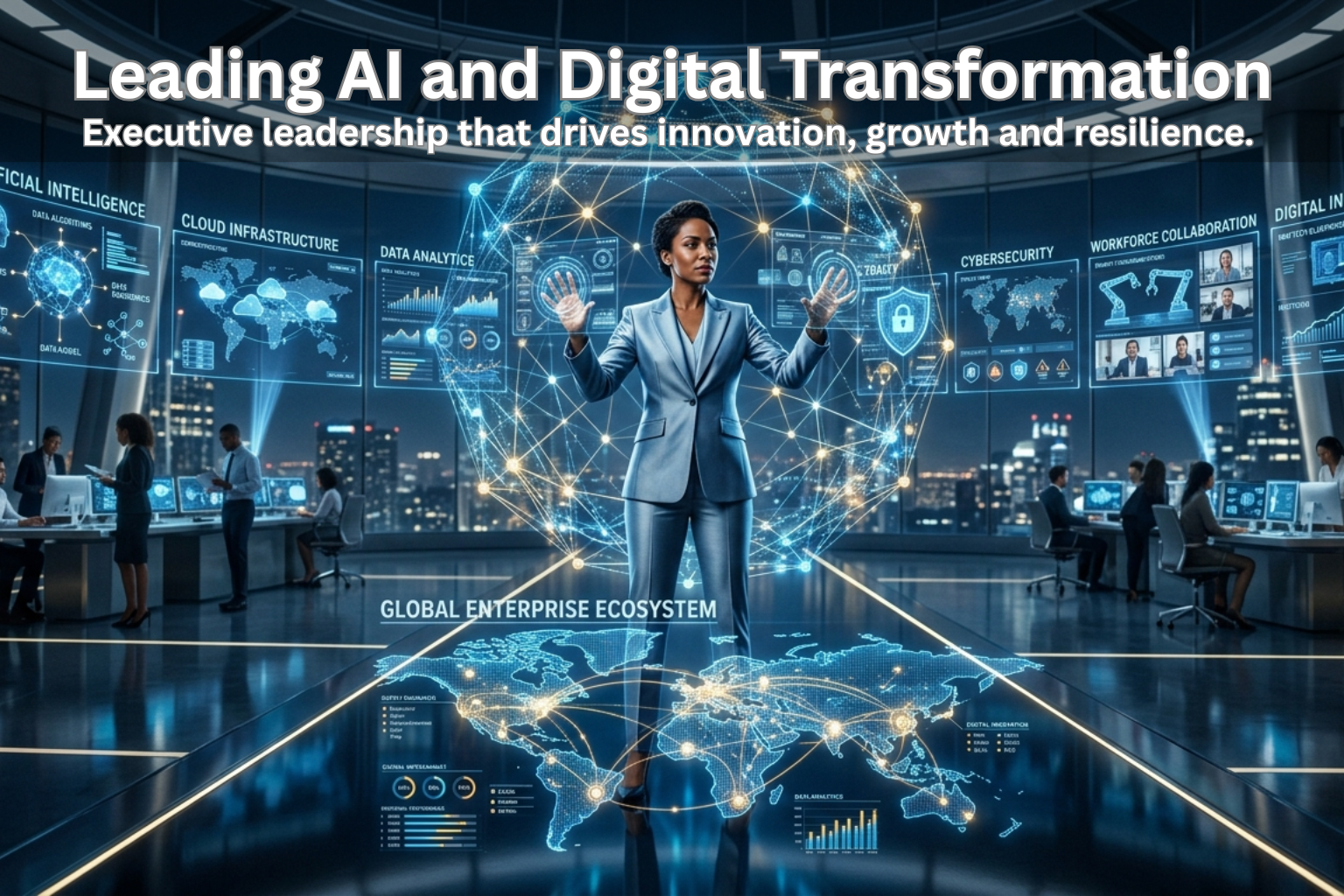
Digital transformation is no longer a future ambition for organisations, it has become a business necessity.🌍
Across every industry, businesses are investing heavily in Artificial Intelligence (AI), automation, cloud technologies, data analytics and digital infrastructure to improve efficiency, strengthen competitiveness and support long-term growth.
However, while technology investment continues to accelerate, many organisations are discovering that successful transformation depends far less on the technology itself and far more on leadership capability.
At Wyman Bain, we believe the success of AI and digital transformation initiatives is ultimately determined by the quality of leadership driving them forward. 🧠
Because digital transformation is not simply a technology initiative.
It is a business, operational and
cultural transformation challenge.
Why Leadership Matters in
Digital Transformation 🌱
Many organisations underestimate the complexity of transformation leadership.
Implementing new technologies is rarely the biggest obstacle.
The real challenge lies in leading organisations through:
🔄 Change and uncertainty
🤝
Workforce adaptation
📈 New operating models
⚙️ Process redesign
🌍 Evolving customer expectations
🚀 Continuous innovation
This requires executives who can balance strategic vision with operational execution while maintaining alignment across people, technology and commercial priorities.
Strong transformation leaders do more than oversee projects.
They create clarity, confidence and organisational momentum during periods of significant change. 🚀
The Growing Demand for AI and Digital
Leaders 📊
As organisations accelerate digital investment, demand for experienced transformation leaders continues to rise.
Businesses are actively seeking executives with expertise in:
🤖 AI
strategy and implementation
📊 Data and analytics transformation
☁️ Cloud and digital infrastructure
🔄 Automation and operational transformation
💻 Cybersecurity and digital resilience
🚀 Enterprise-wide transformation leadership
However,
executives who combine technical understanding with strong commercial and leadership capability remain in limited supply.
The most effective transformation leaders possess:
🧠
Strategic thinking
📈 Commercial awareness
🤝 Strong communication and stakeholder management
🌱 Cultural influence and leadership agility
⚙️ Operational and digital expertise
Because successful digital transformation requires far more than technical knowledge alone.
Why Many
Transformation Hires Fail ⚠️
One of the most common recruitment mistakes organisations make is hiring purely based on technical expertise or previous project experience.
Even highly experienced executives can struggle if they cannot:
🤝 Influence stakeholders effectively
📢 Communicate change clearly
🌱
Build trust across teams
🔄 Lead through resistance and uncertainty
📈 Align people behind strategic objectives
Digital transformation often fails because of leadership misalignment rather than technology limitations.
That is why executive recruitment for AI and digital transformation requires a broader and more strategic assessment process.
The Leadership
Capabilities That Matter Most 🧩
Strategic Vision 📊
Transformation leaders must understand how digital investment supports business growth, operational performance and competitive advantage.
Leadership Agility 🔄
Digital environments evolve rapidly. Executives must remain adaptable, decisive and resilient under pressure.
Emotional Intelligence 🤝
Transformation impacts people at every level of the organisation. Leaders who communicate clearly and build trust strengthen engagement and long-term adoption.
Commercial Awareness 💼
Successful leaders balance innovation with measurable business outcomes, operational priorities and financial performance.
Cultural Influence 🌱
Technology transformation often requires cultural transformation. Executives must shape behaviours, collaboration and organisational mindset.
Recruiting for Future Leadership Capability 🚀
At Wyman Bain, we believe organisations should recruit transformation leaders not only for what they have achieved previously, but for their ability to lead future change.
Modern executive search should evaluate:
🧠 Leadership adaptability
📈 Strategic and commercial capability
🤝 Stakeholder influence and
communication
🚀 Transformation readiness
🌱 Cultural alignment
⚙️ Digital and operational leadership capability
Because transformation leadership is not static.
It must evolve alongside the organisation itself.
The Importance of
Succession Planning 🌍
As AI and digital transformation continue reshaping industries, organisations must also think beyond immediate hiring needs.
Forward-thinking businesses are investing in:
📊 Leadership pipeline development
🌱 Succession planning
🤝 Internal leadership capability building
🚀 Future digital leadership readiness
Building long-term resilience requires organisations to continuously develop leaders who can navigate emerging technologies, market disruption and evolving workforce expectations.
The
Wyman Bain Approach 🤝
At Wyman Bain, we partner with organisations to identify and recruit executives capable of leading complex AI and digital transformation initiatives.
Our approach focuses on:
🎯 Executive search and leadership assessment
📈 Strategic and commercial capability evaluation
🚀 Transformation leadership readiness
🤝 Organisational and
cultural alignment
🌱 Succession planning and leadership development
⚙️ Digital, operational and technology leadership capability
We help organisations build leadership teams equipped to navigate complexity, drive innovation and sustain long-term business growth in increasingly digital environments.
Conclusion 🌟
AI and digital transformation are redefining how organisations operate, compete and grow.
But technology alone does not deliver transformation success.
Leadership does.
The organisations that succeed will be those that recruit executives capable of:
🚀 Leading change confidently
🤝 Influencing people effectively
📈 Aligning strategy with execution
🌱 Building resilient organisational cultures
🧠 Adapting continuously within evolving
markets
Because in today’s business environment, digital transformation is ultimately a leadership challenge, not simply a technology initiative.