Leadership Recruitment Across the Steel Manufacturing Value Chain 🏭⚙️
Leadership Recruitment Across the Steel Manufacturing Value Chain 🏭⚙️
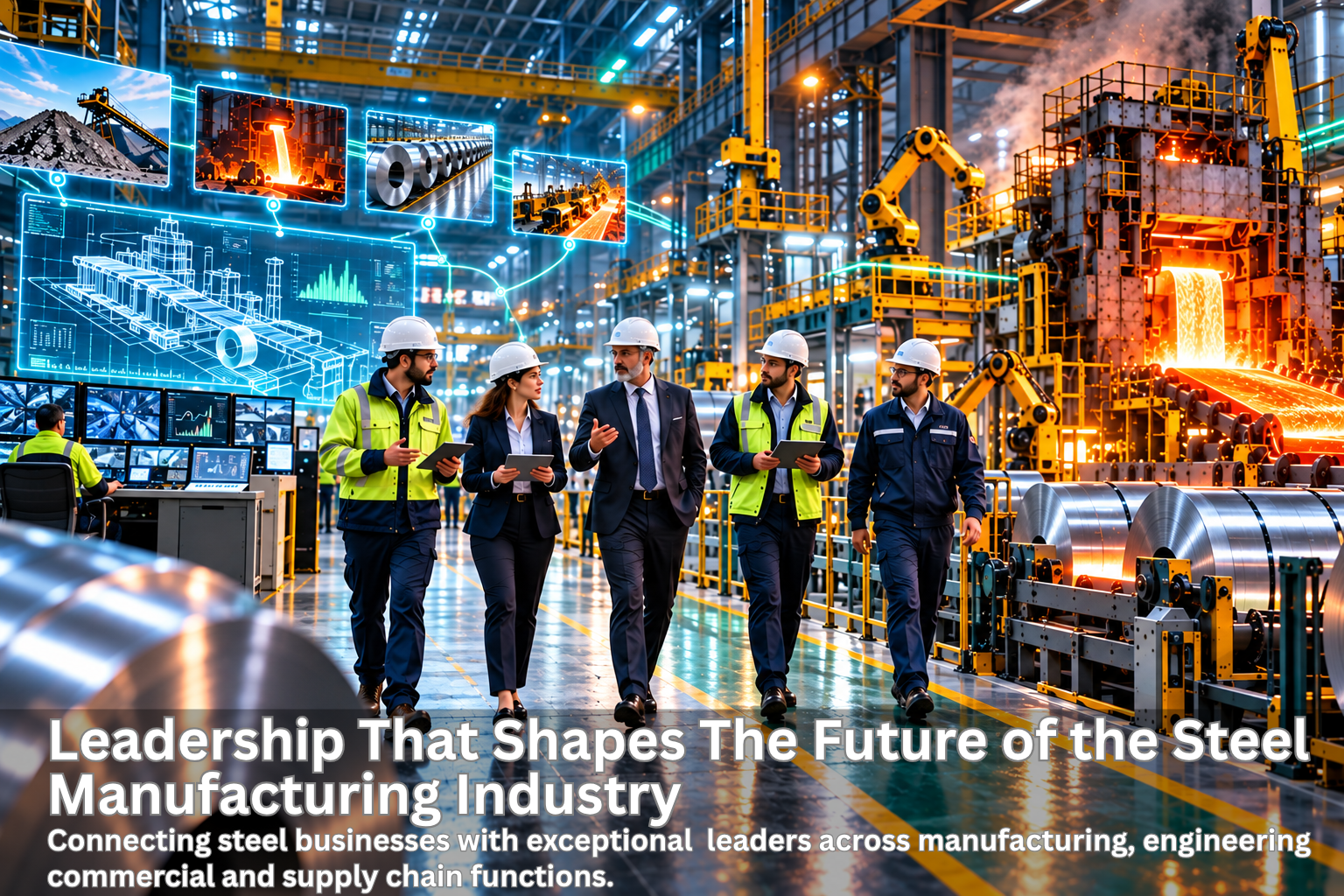
The global steel industry is entering a period of significant transformation. 🌍 From changing customer expectations and evolving technologies 🤖 to decarbonisation 🌱, energy costs ⚡ and increasingly complex global supply chains 🚢, steel businesses are operating in a more demanding environment than ever before.
In this landscape, strong leadership has become a critical competitive advantage. 👔 Organisations need executives who can manage today's operational challenges while also preparing their businesses for the opportunities of tomorrow.
Across the entire steel manufacturing value chain 🔗, the right leadership can improve productivity, strengthen commercial performance, support innovation and create sustainable long-term growth. 📈
Understanding the Steel Manufacturing Value Chain 🔗🏭
The steel industry is supported by a complex network of activities. From the sourcing of raw materials ⛏️ and energy to manufacturing 🔥, processing ⚙️, distribution 🚚 and customer relationships 🤝, every stage contributes to overall performance.
Effective leadership is required across each part of this value chain.
⛏️ Raw Materials & Procurement
Reliable access to raw materials is fundamental to steel production. Leaders in procurement and sourcing must manage supplier relationships, costs, availability and supply risks.
Strong procurement leadership can help organisations build more resilient supply networks while identifying opportunities to improve efficiency and manage costs. 💷
🔥 Manufacturing & Operations
Steel production requires leaders who understand operational performance, safety, quality and productivity.
Operations executives are responsible for creating high-performing environments where teams can deliver consistently while maintaining rigorous safety and quality standards. ⚙️🦺
The ability to identify inefficiencies, introduce process improvements and drive operational discipline can have a significant impact on profitability. 📊
🛠️ Engineering & Technology
Technology is playing an increasingly important role across modern steel manufacturing.
Automation 🤖, digitalisation 💻, advanced production technologies and data-driven decision-making are changing how businesses operate.
Engineering and technology leaders must therefore combine technical expertise with a clear understanding of commercial objectives. Their role is not simply to introduce new technology, but to ensure innovation delivers measurable business value. 💡📈
🚚 Supply Chain & Logistics
Global supply chains continue to face disruption and uncertainty. Steel manufacturers need leaders who can create flexible, efficient and resilient logistics networks.
Strong supply chain leadership can help businesses manage inventory, transportation, customer delivery and supplier relationships while responding quickly to changing market conditions. 🌍🚛
💼 Commercial & Sales Leadership
Technical and operational excellence must ultimately be supported by strong commercial performance.
Commercial leaders within the steel industry need a deep understanding of customers, markets, pricing, margins and competitive positioning. 📊
They must identify new opportunities, strengthen customer relationships and develop strategies that support sustainable revenue growth. 🤝📈
🌱 Sustainability & Decarbonisation
Sustainability is increasingly shaping the future of steel manufacturing.
The transition towards lower-carbon production requires significant investment, innovation and strategic planning. 🌱⚡
Leaders must understand how environmental objectives can be aligned with operational and commercial priorities, ensuring that sustainability initiatives contribute to long-term business resilience.
The Changing Requirements of Steel Industry Leaders 👔🧠
The modern steel industry requires a different type of leadership.
Technical knowledge remains important, but today's executives also need commercial awareness, strategic thinking, adaptability and strong people leadership.
The most effective leaders are often those who can:
🧭 Set a Clear Strategic Direction – Establishing priorities and creating a roadmap for sustainable growth.
⚙️ Drive Operational Excellence – Improving productivity, quality, efficiency and safety.
📊 Strengthen Commercial Performance – Understanding markets, customers, costs and profitability.
🔄 Lead Transformation – Managing organisational and technological change effectively.
👥 Develop High-Performing Teams – Building capable teams and creating a strong leadership pipeline.
💡 Encourage Innovation – Identifying new technologies and approaches that can improve business performance.
🌱 Think Long Term – Preparing organisations for changes in regulation, sustainability, technology and customer expectations.
Why Specialist Leadership Recruitment Matters 🎯
Recruiting senior talent within the steel industry requires more than reviewing CVs and matching job titles.
The best leadership appointments come from understanding the organisation, its culture, commercial objectives and future ambitions.
A successful appointment needs to fit both the current requirements of the business and its future direction. 🚀
For example, an organisation undergoing digital transformation may need a leader with experience in automation and technology. Another business focused on international growth may require an executive with strong commercial and international market experience. 🌍
Understanding these differences is essential when identifying the right talent.
Building Leadership for the Future 🚀
The steel industry will continue to evolve. New technologies 🤖, changing customer requirements, sustainability pressures 🌱 and global economic conditions will create both challenges and opportunities.
Organisations that invest in strong leadership will be better positioned to respond.
The next generation of steel industry leaders will need to combine industry expertise with commercial vision, innovation and adaptability. They will need to make confident decisions, lead through uncertainty and create cultures capable of continuous improvement.
Wyman Bain: Connecting Businesses with Exceptional Leadership 👔🤝
At Wyman Bain, we understand that leadership recruitment is about finding more than someone who can perform a role.
It is about identifying individuals who can shape strategy, lead people, improve performance and create lasting value. 📈
Our approach focuses on understanding the unique requirements of each organisation and identifying leadership talent with the experience, capability and mindset to deliver against those requirements.
Whether the requirement is within manufacturing, operations, engineering, procurement, supply chain, commercial leadership or senior executive management, the right appointment can have a significant impact across the organisation.
The Future of Steel Depends on Strong Leadership 🏭🌍
As the steel manufacturing value chain becomes more complex, leadership will play an increasingly important role in determining which businesses succeed.
Organisations that combine operational excellence ⚙️, commercial strength 💼, innovation 💡 and sustainability 🌱 will be best placed to compete in the future.
And behind every successful transformation is people experienced leaders who can turn strategy into action. 👔🚀
At Wyman Bain, we help organisations identify the leadership talent they need to navigate change, unlock opportunity and build a stronger future. 🤝