
🚀 How High-Growth Businesses Avoid Leadership Bottlenecks
🚀 How High-Growth Businesses Avoid Leadership Bottlenecks
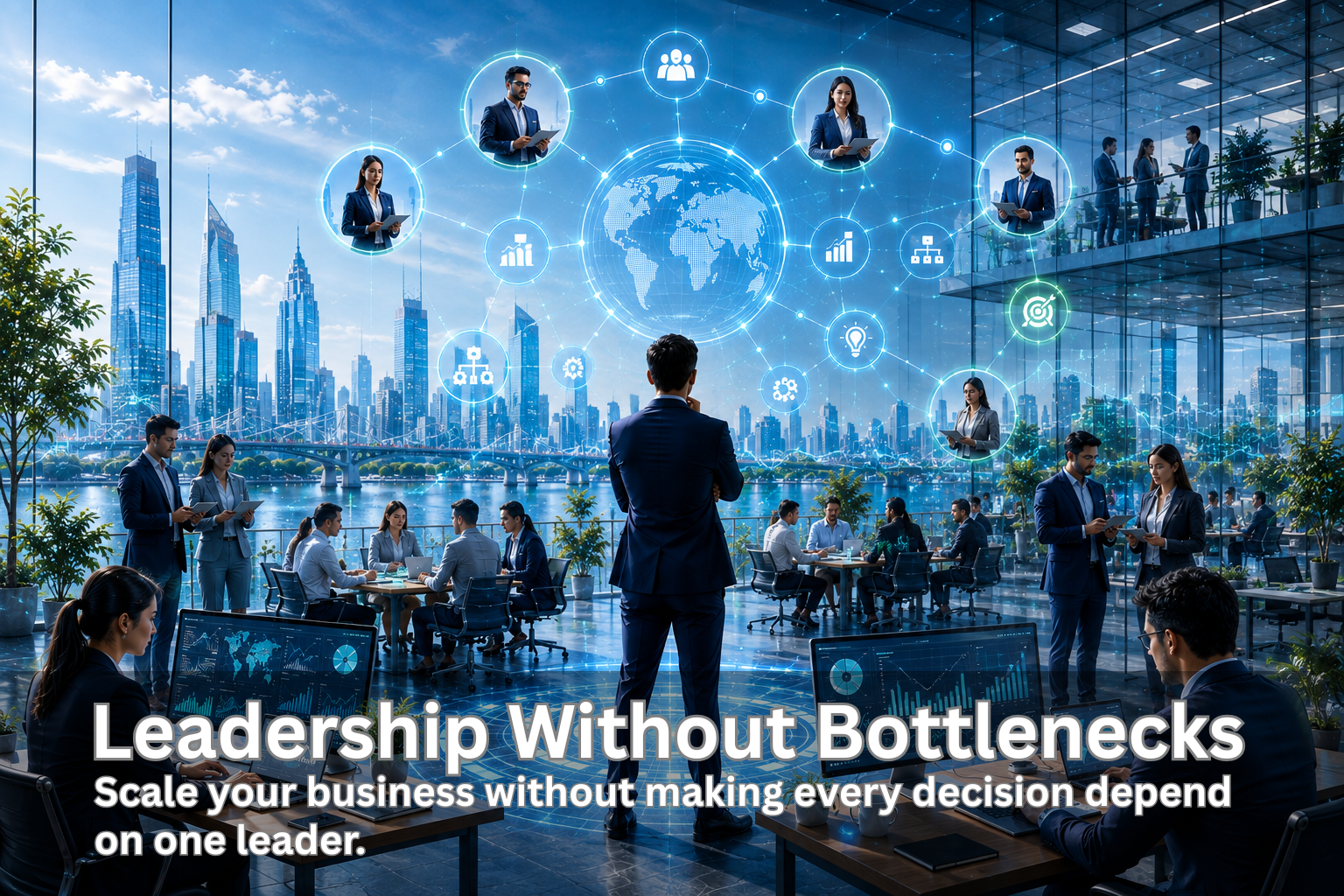
Rapid growth is exciting. 📈 But as businesses expand, decision-making, communication and accountability become more complex.
One of the biggest obstacles to continued growth is often a leadership bottleneck, when too many decisions depend on one founder, CEO or small group of senior leaders.
This can lead to:
- ⏳ Slower decision-making
- 🚧 Delayed opportunities
- 📩 Constant approval requests
- 😓 Overloaded senior leaders
- 🔗 Growing key-person dependency
- 📉 Less time for strategic priorities
So, how can high-growth businesses scale leadership effectively?
🌱 1. Build Leadership Capacity Early
Don't wait until growth creates a leadership gap.
- Identify high-potential employees early.
- Give them meaningful ownership.
- Allow them to make decisions.
- Develop their judgement and confidence.
- Prepare future leaders before they are urgently needed.
👉 Leadership development should be part of the growth strategy, not a reaction to growth.
🤝 2. Delegate Decisions, Not Just Tasks
True delegation means more than giving people additional responsibilities.
Effective leaders:
- Give people clear authority.
- Define decision-making boundaries.
- Provide the right context and information.
- Trust capable teams to make decisions.
- Accept that decisions may sometimes be made differently.
🎯 The goal is to create ownership, not another layer of approval.
🎯 3. Create Clear Accountability
As organisations grow, ambiguity becomes expensive.
Everyone should understand:
- 👤 Who owns each responsibility
- 🎯 What outcomes they are accountable for
- 🔑 Which decisions they can make
- 🤝 Where collaboration is required
- 🚦 When escalation is genuinely necessary
Clear accountability helps teams move faster without creating unnecessary bureaucracy.
💡 4. Encourage Constructive Challenge
A strong leadership team shouldn't simply agree with the CEO.
High-performing leaders should be able to:
- 🔍 Challenge assumptions
- ⚠️ Identify potential risks
- 💭 Offer alternative perspectives
- 🗣️ Disagree respectfully
- 🎯 Focus discussions on better outcomes
Healthy debate can lead to better decisions and stronger leadership.
🚀 5. Reduce Founder Dependency
Founder-led businesses often reach a point where the same leadership approach that created early success becomes difficult to scale.
The founder may still set the vision and direction, but shouldn't need to answer every operational question.
The objective isn't to make the founder less important.
👉 It's to make the organisation less dependent on the founder for day-to-day momentum.
📚 6. Make Leadership Development Continuous
Leadership capability must grow alongside the business.
As organisations become more complex, leaders need to develop new skills in:
- 👥 Managing larger teams
- 🔄 Leading through change
- 💼 Commercial decision-making
- 🧠 Strategic thinking
- 🤝 Cross-functional collaboration
- 🎯 Performance and accountability
Coaching, mentoring and regular feedback can help leaders adapt to these demands.
🔄 7. Know When Your Leadership Model Needs to Change
The structure that works for a 20-person company may not work for a 200-person organisation.
Look out for warning signs:
- 🚨 Decisions constantly reach the CEO
- ⏳ Senior leaders are buried in operational work
- 🛑 Teams wait for permission instead of taking initiative
- 📉 Communication becomes increasingly difficult
- 🔗 Key-person dependency continues to grow
- 🎯 Strategic priorities keep getting pushed back
Recognising these signals early allows businesses to strengthen leadership capacity before growth becomes constrained.
🏆 The Real Competitive Advantage: Leadership at Scale
Sustainable growth isn't just about having a great strategy.
It's about building an organisation that can execute that strategy without every decision flowing through one person.
When leadership capacity grows alongside the business:
⚡ Decisions become faster
🎯 Accountability becomes clearer
🤝
Teams become more empowered
📈 Leaders focus on strategic priorities
🚀
Organisational momentum increases
💭 Final Thought
Growth should create opportunities, not overloaded leadership teams.
Ask yourself:
“Are we building a business that depends on great leaders, or one that depends on one great leader?”
That answer could determine how successfully your business scales its next chapter. 🚀
At Wyman Bain, we understand the leadership challenges that come with growth and transformation. The right leadership capability can help businesses move from founder dependency to sustainable, scalable performance