Executive Talent Strategies for Defence Supply Chain Businesses 🛡️
Executive Talent Strategies for Defence Supply Chain Businesses 🛡️
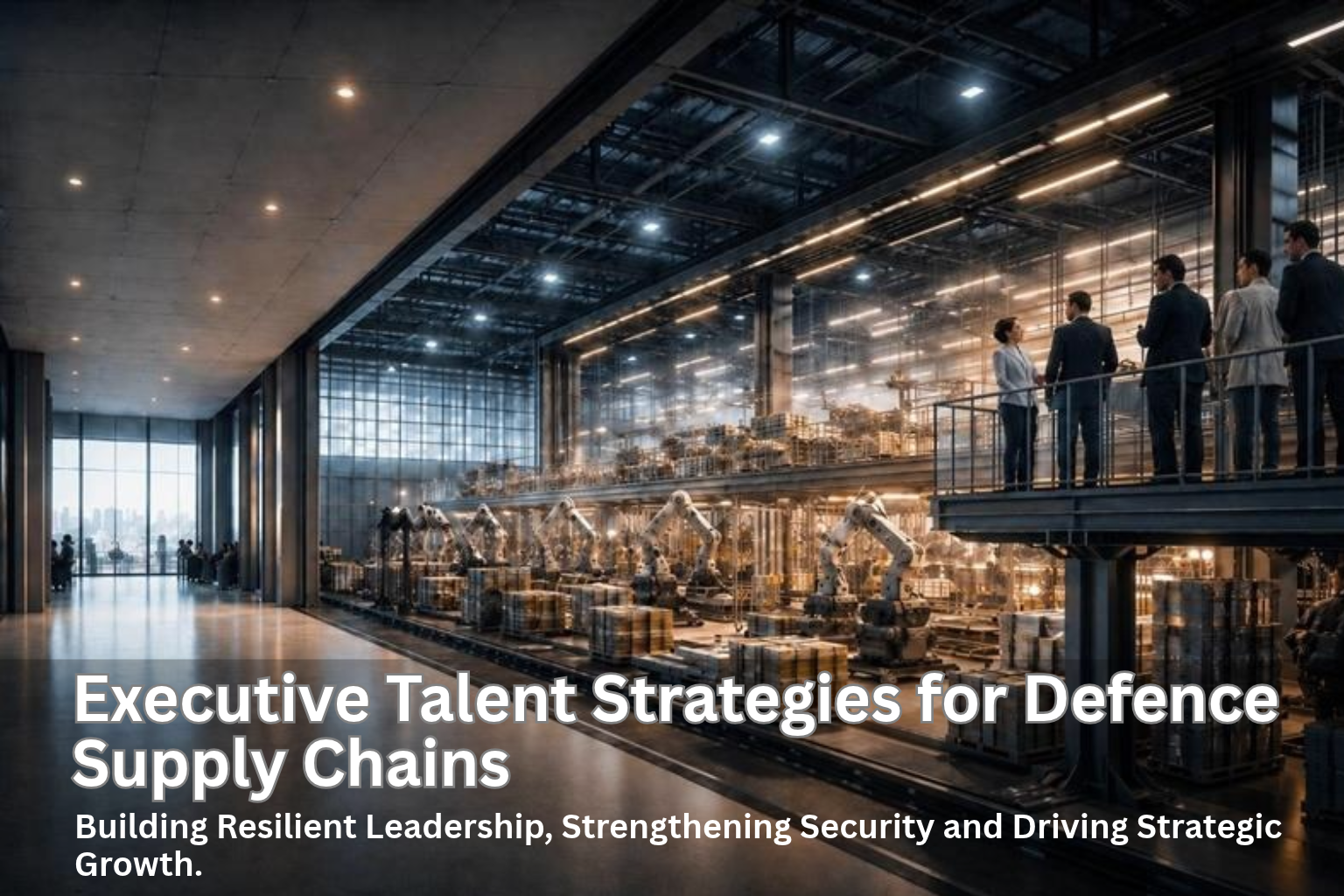
Defence supply chain businesses operate in a demanding environment where operational reliability, national security, regulatory compliance and technological advancement are essential. From aerospace components and specialist engineering to logistics, manufacturing and procurement, organisations must maintain resilient supply chains while responding to changing defence priorities.
Meeting these challenges requires more than technical expertise. Businesses need experienced executives who can combine commercial judgement, strategic thinking and operational leadership to deliver sustainable results.
As defence programmes become increasingly complex, attracting and retaining the right leadership talent is a strategic priority. Effective executive talent strategies help organisations secure the expertise required to strengthen supply chain resilience, manage risk and support long-term growth.
1. 🎯 Identifying Critical Leadership Requirements
The first step in building an effective executive talent strategy is understanding which leadership capabilities the organisation needs.
Defence supply chain businesses often require executives with experience in procurement, operations, engineering, programme management, commercial strategy and risk management. However, technical knowledge alone is rarely sufficient.
Senior leaders must also understand customer expectations, contractual obligations, regulatory requirements and the commercial pressures associated with complex defence programmes.
Organisations should assess their current leadership teams, identify capability gaps and establish clear requirements for future appointments. This approach ensures recruitment decisions are aligned with business objectives rather than driven solely by immediate vacancies.
2. 🔍 Developing a Targeted Executive Search Strategy
Executive recruitment within the defence supply chain sector requires a focused and informed approach. The most suitable candidates may already hold senior positions in aerospace, advanced manufacturing, engineering, logistics or other highly regulated industries.
A targeted executive search strategy helps businesses identify leaders whose experience aligns with their operational requirements and long-term ambitions.
Rather than relying exclusively on active jobseekers, organisations should engage with passive candidates who possess relevant expertise but are not actively looking for new opportunities.
Successful searches begin with a clear understanding of the role, the organisation's culture and the challenges the incoming executive will face. This enables recruiters to identify candidates with the right combination of experience, leadership capability and strategic vision.
3. 🛠️ Prioritising Supply Chain Resilience and Risk Management
Resilient supply chains are fundamental to defence operations. Disruptions involving specialist components, supplier capacity, international logistics or changing regulations can affect programme delivery and operational readiness.
Executive leaders must therefore understand how to anticipate risks, develop contingency plans and strengthen supplier relationships.
Candidates with experience in strategic sourcing, supplier diversification, inventory management and business continuity can bring valuable capabilities to defence supply chain organisations.
During executive selection, businesses should assess how candidates have managed previous disruptions, improved supplier performance and maintained operational continuity under pressure.
Leaders who combine practical supply chain knowledge with strategic risk management can help organisations build more adaptable and dependable operations.
4. 🔐 Evaluating Security, Compliance and Governance Expertise
Defence supply chains operate under stringent security, contractual and regulatory expectations. Leadership appointments must reflect the importance of protecting sensitive information, maintaining appropriate controls and supporting responsible business practices.
Executives should understand the compliance requirements relevant to their organisation, including applicable export controls, procurement obligations, information security standards and customer-specific security requirements.
Recruitment processes should evaluate candidates' experience in governance, risk oversight and compliance management.
Where roles require security clearance or other formal authorisation, organisations must follow the relevant eligibility, verification and clearance procedures.
Assessing these capabilities early helps reduce recruitment risks and ensures that successful candidates are prepared to operate within the organisation's regulatory environment.
5. 🚀 Attracting Leaders with Digital and Technological Expertise
Digital transformation is reshaping defence supply chains. Advanced analytics, automation, artificial intelligence and digital supply chain platforms are creating opportunities to improve forecasting, visibility and operational efficiency.
However, technology investments require effective leadership to deliver meaningful results.
Defence businesses should seek executives who understand how digital tools can support better decision-making, strengthen supplier oversight and improve programme performance.
Candidates do not necessarily need to be technical specialists, but they should be capable of leading transformation initiatives, managing implementation risks and encouraging collaboration between technology teams and operational departments.
Leaders who combine commercial awareness with digital understanding can help organisations modernise their operations while maintaining security, reliability and accountability.
6. 🤝 Strengthening Stakeholder Management and Collaboration
Defence supply chain businesses frequently work with government bodies, prime contractors, specialist suppliers, engineering teams and international partners.
These relationships require clear communication, sound judgement and the ability to balance competing priorities.
Executive candidates should demonstrate experience in stakeholder engagement, contract negotiations, partnership development and cross-functional leadership.
Strong leaders understand that successful programme delivery depends on collaboration across the entire supply chain. They can establish clear expectations, resolve disagreements constructively and maintain productive relationships under pressure.
Assessing these capabilities during recruitment helps organisations identify executives who can build trust and align diverse stakeholders around shared objectives.
7. 📈 Building a Sustainable Executive Talent Pipeline
Recruitment should not begin only when a senior leader leaves or a new contract creates an urgent requirement.
Forward-thinking defence supply chain businesses develop long-term talent pipelines to prepare for succession, expansion and changes in strategic direction.
Succession planning identifies potential future leaders, evaluates their readiness and establishes development opportunities to address capability gaps.
Organisations can also build relationships with external executive candidates who may become suitable for future appointments.
Regular workforce planning helps businesses anticipate leadership requirements before they become urgent. This reduces dependence on reactive recruitment and supports greater continuity across critical functions.
8. 🌱 Retaining High-Performing Executive Talent
Attracting experienced leaders is only part of the challenge. Retaining them is equally important, particularly in a competitive market for specialist defence and engineering expertise.
Senior executives are more likely to remain engaged when they understand the organisation's strategic direction, have appropriate decision-making authority and can see the impact of their contributions.
Competitive remuneration, meaningful responsibilities, professional development and a supportive leadership culture all influence retention.
Organisations should also establish clear performance expectations and maintain regular communication with senior leaders.
By investing in executive engagement and development, businesses can preserve institutional knowledge, strengthen succession planning and reduce the disruption associated with leadership turnover.
9. 📊 Measuring the Effectiveness of Executive Recruitment
Executive talent strategies should be evaluated against measurable business outcomes rather than recruitment activity alone.
Useful indicators include time to appoint, candidate quality, executive retention, succession readiness and progress against strategic objectives.
For defence supply chain businesses, additional measures may include improvements in supplier performance, programme delivery, operational resilience and compliance outcomes where these can reasonably be linked to the executive's responsibilities.
Regular reviews help organisations identify weaknesses in their recruitment processes and refine their leadership requirements.
A structured evaluation framework also encourages closer collaboration between recruitment specialists, HR teams and senior stakeholders.
10. 🏆 The Role of Executive Search Partners
Finding exceptional leadership talent in the defence supply chain sector can be challenging. The most suitable executives may possess highly specialised experience, established professional networks and a limited interest in conventional recruitment channels.
An experienced executive search partner can help organisations define leadership requirements, map relevant talent markets and engage with suitable candidates confidentially.
External search expertise can also provide an objective perspective on leadership capability, market expectations and candidate suitability.
By combining sector understanding with a structured assessment process, executive search
partners can support better-informed appointments and help businesses secure leaders who align with their
strategic priorities.
CONTACT US >>>>>>