The Talent Implications of Digital-First Business Models 💻
The Talent Implications of Digital-First Business Models 💻
Digital-first business models are fundamentally reshaping how organisations operate, compete and create value.
From customer engagement and operational delivery to decision-making and workforce structures, digital transformation is no longer a future initiative, it is now central to long-term business strategy.
Yet while many organisations invest heavily in
technology, the true differentiator is talent.
At
Wyman Bain, we consistently see that successful digital-first organisations are not defined solely by the systems they implement, but by the leadership, culture and capability they build around them.
Because technology enables transformation.
People sustain it. 🚀
What a Digital-First
Business Really Requires 🌐
A digital-first organisation integrates technology into the core of how it operates, innovates and grows.
This often includes:
- Data-driven decision-making 📊
- AI and automation integration 🤖
- Agile operating models ⚙️
- Digital customer experiences 📱
- Hybrid and distributed workforce structures 🌍
- Faster innovation and delivery cycles 🚀
However, becoming digital-first is not simply a technology shift.
It is an organisational and leadership transformation.
Why Talent
Strategy Has Become a Competitive Advantage 🧠
As business models evolve, so do the capabilities required to lead them.
Traditional leadership structures and hiring approaches are increasingly struggling to keep pace with the speed and complexity of digital change.
Organisations now require leaders who can:
- Lead through uncertainty and continuous change 🔄
- Build agile, adaptable teams 🌱
- Balance innovation with operational discipline ⚖️
- Drive collaboration across functions 🤝
- Make confident decisions in fast-moving environments 📈
The challenge is no longer only attracting talent.
It is
building a workforce capable of continuous evolution.
The New
Leadership Profile 🚀
Digital-first environments demand a different kind of leadership.
Technical knowledge matters.
But leadership capability determines whether transformation succeeds.
The most effective digital leaders are:
Adaptable 🌍
Comfortable navigating ambiguity, change and evolving priorities.
Commercially Minded 📈
Able to connect digital transformation to measurable business outcomes.
Collaborative 🤝
Capable of breaking down silos and aligning teams around shared goals.
Data-Led 📊
Confident using insight, analytics and evidence-based decision-making.
People-Centred 🌱
Focused on culture, engagement and sustainable performance.
Innovation-Oriented 💡
Committed to learning, experimentation and continuous improvement.
The organisations creating long-term advantage are those evolving leadership capability alongside
technology capability.
Culture Matters More in a Digital World 🔗
One of the biggest misconceptions about digital transformation is that technology reduces the importance of culture.
In reality, it increases it.
As organisations become more distributed, fast-moving and digitally connected, culture becomes the foundation that maintains alignment, trust and performance.
Strong cultures enable:
- Faster decision-making ⚡
- Greater accountability 📋
- Stronger collaboration 🤝
- Higher engagement and retention 🌟
- Increased adaptability during change 🔄
Without intentional cultural leadership, even the best digital strategies can struggle to deliver sustainable results.
The Talent
Challenges Organisations Cannot Ignore ⚠️
Many organisations are now facing:
- Digital and leadership capability gaps
- Increasing competition for specialist talent
- Employee fatigue from continuous transformation
- Resistance to new ways of working
- Difficulties maintaining culture in hybrid environments
These challenges cannot be solved through recruitment alone.
They require long-term leadership and workforce strategies aligned to the future direction of the business.
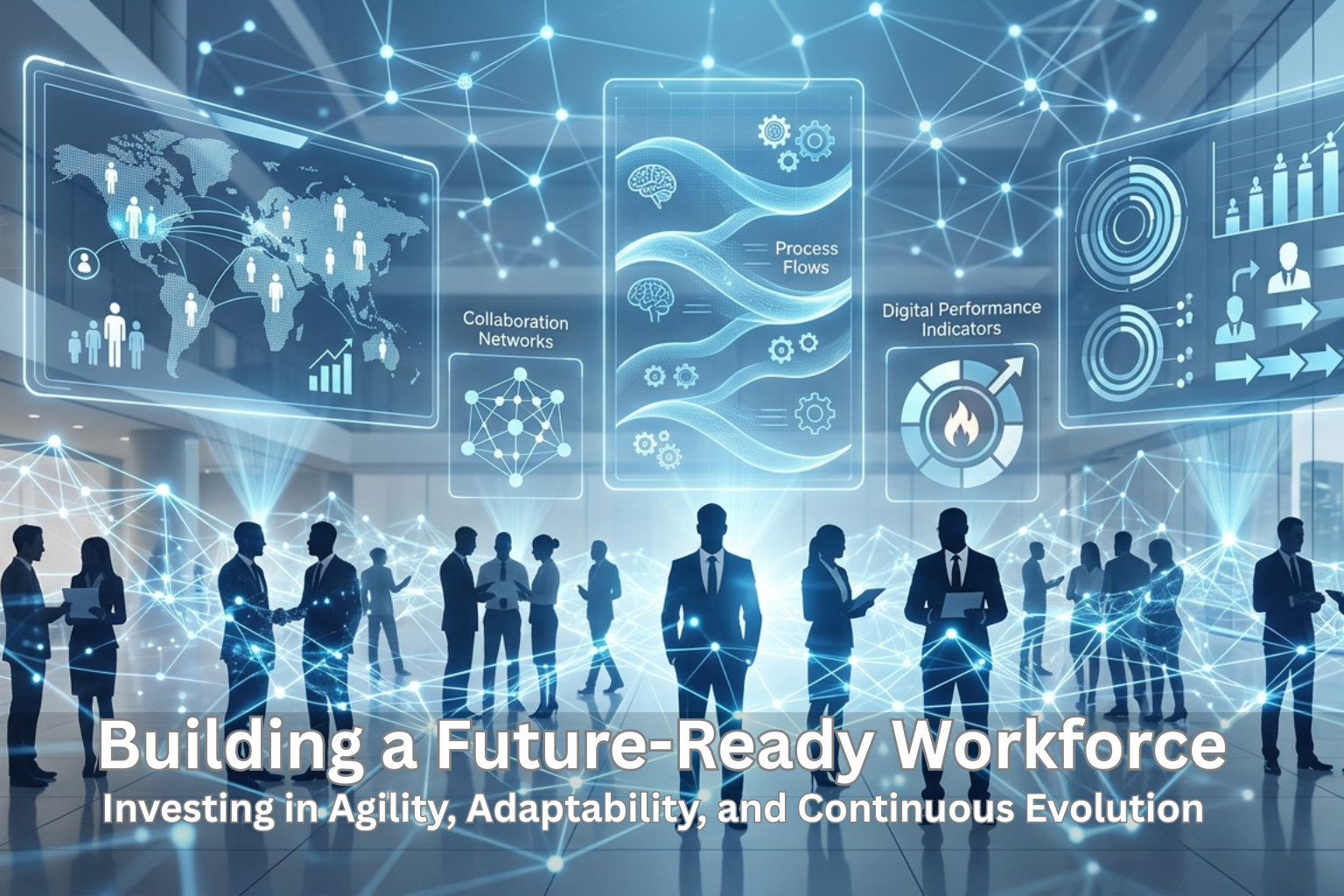
Building a Future-Ready Workforce 🌱
Forward-thinking organisations are investing beyond immediate hiring needs.
They are building:
- Leadership pipelines and succession plans 🔄
- Continuous learning cultures 📚
- Workforce agility and adaptability 🚀
- Strong employee experience and wellbeing initiatives 🤝
- Cross-functional collaboration and capability development 🧠
The organisations that thrive will not necessarily be the ones with the most advanced technology.
They will be the ones that adapt, learn and evolve the fastest.
The
Wyman Bain Approach 🧩
At Wyman Bain, we partner with organisations to build leadership and talent strategies that support sustainable digital transformation.
Our focus includes:
- Executive search for digital and transformation leadership 🎯
- Leadership assessment and succession planning 🌱
- Organisational design and cultural alignment 🤝
- Building agile leadership capability 🚀
- Supporting workforce transformation at scale 📈
We help organisations strengthen not just digital capability, but the leadership foundations required to sustain long-term growth and performance.
Conclusion 🌟
Digital-first business models are redefining the future of work, leadership and organisational performance.
But digital transformation is never purely about technology.
It is about how organisations lead people, shape culture and build capability in environments of constant change.
The organisations that succeed will be those that invest as intentionally in talent as they do in technology.
Because ultimately, digital transformation succeeds through people. 🚀