
The Risk of Over-Reliance on “Proven Track Records” ⚠️
The Risk of Over-Reliance on “Proven Track Records” ⚠️
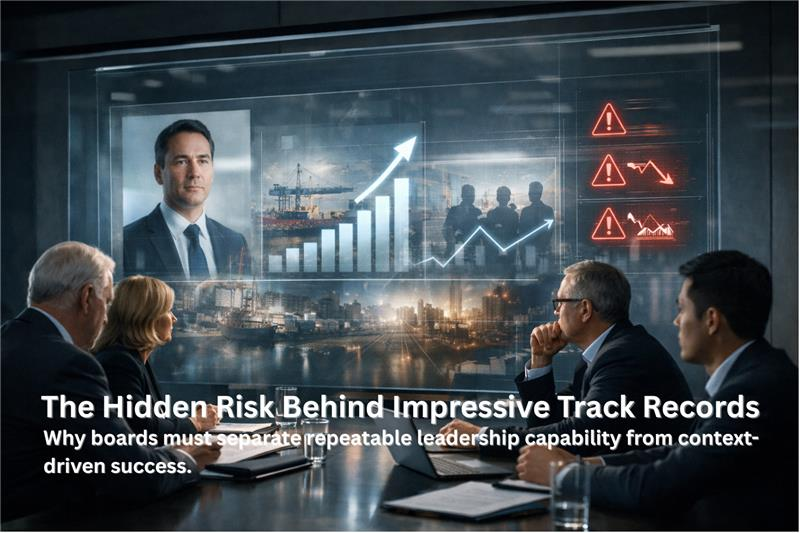
A strong track record is often treated as the definitive indicator of leadership quality. Boards and investors naturally seek reassurance in past success when making senior appointments.
However, at
Wyman Bain, we consistently see organisations place disproportionate weight on historical results, without fully examining the conditions under which those results were achieved, or whether they are repeatable.
Past performance matters. Over-reliance on it creates
risk.
Track Records Reflect Context, Not Capability 🧭
A track record captures outcomes delivered in a specific environment:
- A particular market cycle 📈
- A defined organisational culture 🏛️
- A given governance model and support structure 🤝
When these variables change, results do not always translate. Leadership effectiveness is not portable by default.
The
Hidden Risk of Context Dependency 🔍
Two leaders may deliver similar results for very different reasons.
One may have:
- Exercised sound judgement under pressure
- Built resilient teams and systems
- Adapted strategy as conditions evolved
Another may have benefited from:
- Favourable timing or market tailwinds
- Inherited momentum
- Exceptional surrounding capability
Without understanding how outcomes were achieved, boards risk mistaking circumstance for competence.
When Track Records Become
Misleading ⚠️
Over-reliance on track records can obscure critical risk factors:
- Inability to operate beyond familiar environments
- Limited openness to challenge or learning
- Overconfidence in legacy strategies
- Poor cultural or governance alignment
These issues typically surface only after appointment, when corrective action is costly.
What Boards Should Assess Instead 🧠
Track records should inform judgement, not replace it.
More predictive indicators include:
- Quality of decision-making under pressure
- Capacity to adapt, learn and course-correct
- Behaviour when challenged or scrutinised
- Alignment with organisational culture and governance
These factors determine whether past success can be repeated in a new context.
The
Wyman Bain Perspective 🧭
At Wyman Bain, we look beyond outcomes to assess judgement, behaviour and contextual fit.
We support boards and investors by:
- Examining how results were achieved, not just what was achieved
- Stress-testing leadership capability in unfamiliar conditions 🔥
- Identifying risk hidden behind impressive track records
- Supporting appointments that deliver sustainable, long-term value
Because leadership selection is not about appointing someone who has succeeded before, it is about appointing someone who can succeed
again.
📩 To discuss executive search, leadership assessment or board advisory support, please contact the Wyman Bain team.