The Talent Implications of Digital-First Business Models 💻🚀
The Talent Implications of Digital-First Business Models 💻🚀
Digital-first business models are transforming how organisations operate, compete and grow. From financial services and professional services to technology, retail and manufacturing, businesses are increasingly using digital platforms, data, automation and artificial intelligence to create new opportunities. 🌐📊
But digital transformation is not simply about technology. It is fundamentally about people. 👥
As organisations become more digitally driven, the skills, leadership capabilities and experience they require are changing. Businesses need individuals who can combine specialist expertise with commercial awareness, adaptability and the ability to lead through change. 🎯
🔄 A New Talent Equation
Digital-first organisations often operate at greater speed than traditional businesses. Products evolve quickly, customer expectations change rapidly and decisions are increasingly informed by data. ⚡📈
This creates demand for professionals who can:
- 💡 Understand emerging technologies and their commercial impact
- 📊 Make informed, data-driven decisions
- 🤝 Work across traditional functional boundaries
- 🔄 Lead transformation and organisational change
- 🧠 Adapt quickly to new technologies and market conditions
- 💼 Balance innovation with commercial discipline
For employers, this means traditional recruitment approaches may no longer be enough. The strongest candidate may not always have the most obvious career history or job title.
🧩 The Rise of Hybrid Leaders
Digital business models are creating greater demand for leaders who can operate across multiple disciplines.
Technology leaders increasingly need commercial awareness. Finance leaders need to understand digital operations and data. Commercial leaders need to appreciate the role of technology in customer acquisition, products and growth. 💻💰
These hybrid leaders can connect technology, people and business strategy. 🧭
Rather than operating within functional silos, they can bring different teams together around common objectives. This ability can be particularly valuable when organisations are implementing major transformation programmes. 🚀
⚙️ Specialist Digital Skills Remain Essential
While hybrid leadership is becoming increasingly important, organisations still need deep technical expertise.
Key areas include:
- 🤖 Artificial intelligence and machine learning
- 🔐 Cybersecurity
- ☁️ Cloud technology
- 📊 Data and analytics
- 💻 Software engineering
- 🛠️ Digital product management
- ⚡ Automation
- 🏗️ Enterprise architecture
- 🔄 Digital transformation
Finding experienced professionals in these areas can be challenging, particularly when organisations are competing for the same specialist talent. 🎯
Employers therefore need to consider not only the skills required today, but the capabilities they are likely to need as their business evolves. 📈
🤝 The Growing Importance of Human Skills
Technology may enable digital transformation, but people determine whether it succeeds.
Communication, collaboration, leadership, problem-solving and adaptability are becoming increasingly important across senior roles. 🗣️💡
Digital transformation can involve new systems, changing processes, restructuring teams and introducing new ways of working. Strong leaders need to communicate these changes effectively and create confidence throughout the organisation. 🌱
For this reason, technical expertise alone is rarely enough.
The ability to influence stakeholders, collaborate across functions and lead people through uncertainty can be equally important. 🧠🤝
🤖 AI Is Changing the Nature of Work
Artificial intelligence is also reshaping the talent landscape.
Rather than simply replacing jobs, AI is changing how many professionals perform their roles. Routine activities can increasingly be automated, allowing employees to focus more on strategy, analysis, creativity, decision-making and relationships. 📊💭
This is creating demand for greater AI literacy across the workforce.
Executives do not necessarily need to be technical AI specialists, but they increasingly need to understand how AI can be applied within their organisation, where it can create value and what risks need to be managed. 🔐⚖️
The future workforce will therefore require a combination of technological awareness and human judgement. 👥🤖
🎯 Recruitment Needs to Look Beyond the CV
One of the biggest implications of digital-first business models is the need to rethink how talent is assessed.
A candidate does not necessarily need to have performed exactly the same role previously to bring significant value to an organisation.
Experience leading transformation, launching products, entering new markets or managing complex change can demonstrate capabilities that transfer across roles and industries. 🌍📈
For executive hiring, the key question should therefore extend beyond:
"Has this person done this exact job before?"
It should also consider:
"Does this person have the experience, judgement and adaptability required for where the business is going?" 🧭
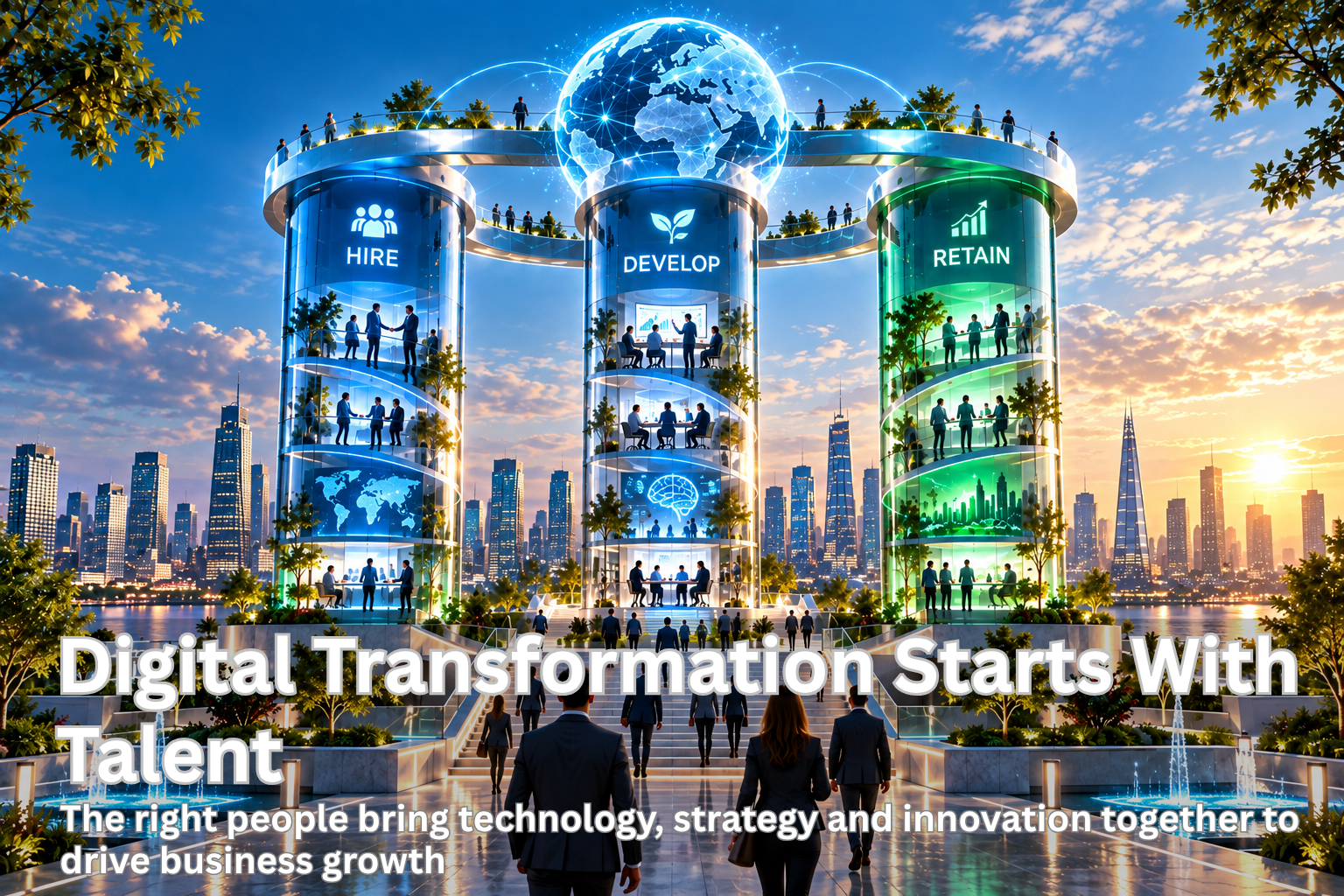
📈 Building Talent for the Future
Digital-first organisations need to think about talent as a long-term strategic asset. 💼
This means balancing three priorities:
🔎 Hire
Bring in external expertise where critical capability gaps exist.
📚 Develop
Give existing employees opportunities to build new digital, technical and leadership skills.
🤝 Retain
Create an environment where talented people can grow, contribute and see a future within the organisation.
A strong combination of recruitment, development and retention can help organisations remain resilient as technology and markets continue to change. 🌱🚀
🧭 The Role of Executive Search
As digital business models evolve, leadership requirements are becoming increasingly complex.
Organisations need leaders who can combine commercial thinking, technological understanding, strategic judgement and strong people leadership. 💼💡
Identifying these individuals requires more than matching CVs to job descriptions. It requires an understanding of the organisation's strategy, culture, challenges and future ambitions. 🔍
At Wyman Bain, we understand that successful digital transformation ultimately depends on having the right people in place.
The organisations that develop their talent strategy alongside their technology strategy can build the capabilities needed to navigate change, develop new opportunities and support sustainable growth. 🌐📈
🚀 Technology may drive the transformation but people make it happen.