
How Chairs Can Read the “Temperature” of the Executive Team 🌡️
How Chairs Can Read the “Temperature” of the Executive Team 🌡️
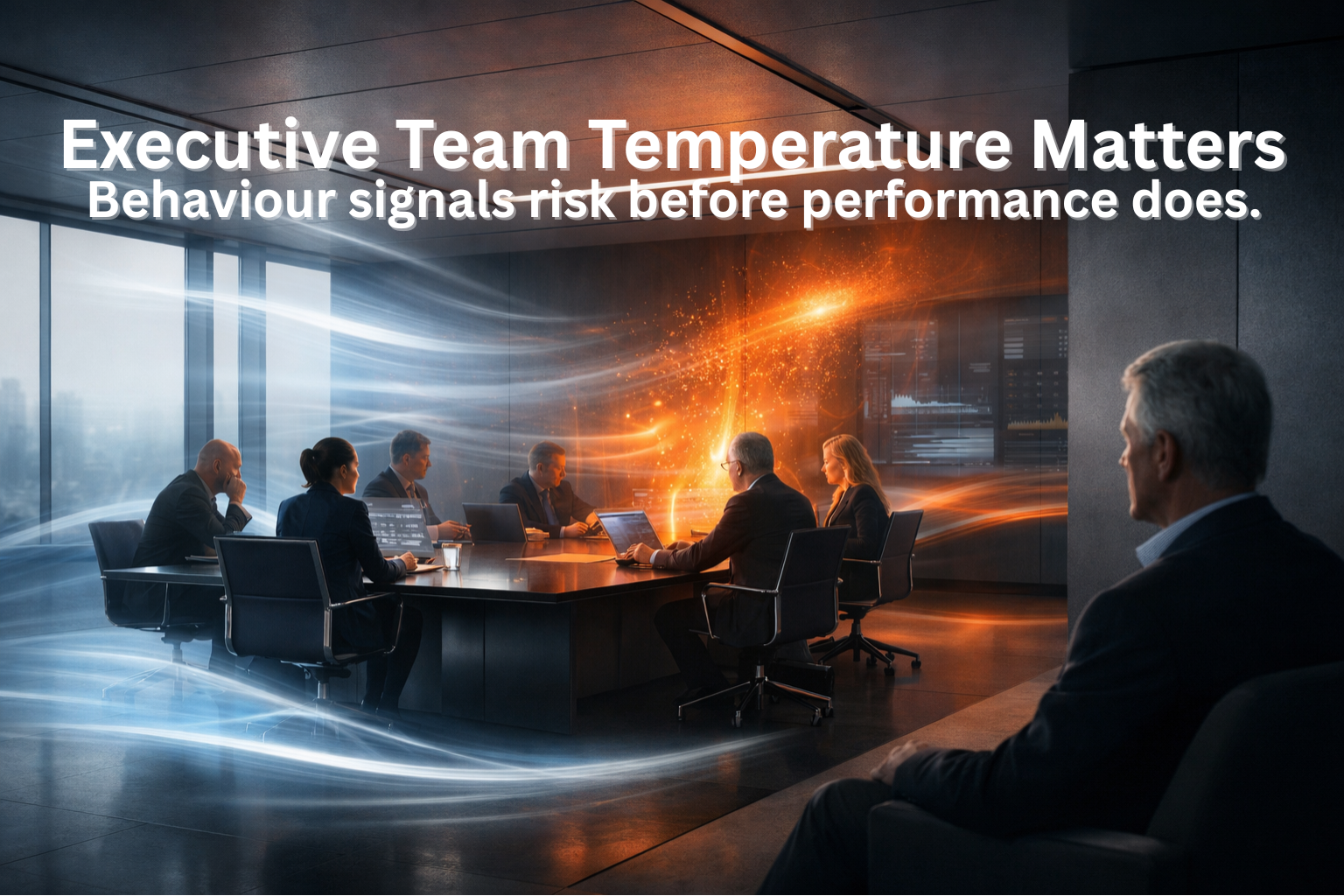
One of the Chair’s most critical and least visible responsibilities is understanding the true state of the
executive team.
Board packs,
dashboards and performance metrics provide assurance, but they rarely reveal how the team is functioning beneath the surface. The real risks often sit in behaviour,
energy and unspoken dynamics, not in the numbers.
Reading the “temperature” of the executive team is therefore not a soft skill. It is a core governance capability. Chairs who read it well intervene early. Those who don’t are often reacting after performance, trust or talent has already been compromised.
What “Temperature” Really Reflects
The temperature of an executive team is a measure of its underlying health, including:
- Levels of psychological safety
- Quality of challenge and debate
- Trust and alignment across the team
- Energy, confidence and resilience under pressure
- Willingness to surface risk, uncertainty and bad news
Importantly, apparent calm is not always a positive signal. A lack of tension can indicate disengagement or suppression, while robust debate can be a sign of a healthy, high-performing team.
The Chair’s role is to tell the difference.
Signals Chairs Should Watch Closely 🚨
1. How
disagreement is handled
In healthy teams, disagreement is open, respectful and focused on the issue.
In unhealthy teams, it is either avoided or personalised.
Warning signs include:
- Consistent, rapid agreement on complex matters
- Dissent appearing only outside formal meetings
- A small number of voices shaping most decisions
These patterns often point to declining psychological safety.
2. The flow of
information
In high-trust environments, bad news travels quickly.
In low-trust environments, it arrives late, filtered, softened or reframed.
When issues consistently reach the board after they were already known internally, the temperature is likely higher than reported.
3. Behaviour under pressure ⚡
Periods of stress are particularly revealing.
Watch for shifts towards defensiveness, excessive caution or artificial certainty. A loss of curiosity, or a narrowing of options, often signals fear or fatigue within the team.
4. What happens beyond the
boardroom
The
executive team’s true temperature is rarely revealed in formal meetings alone.
One-to-one conversations, informal interactions, turnover patterns and succession risks frequently provide clearer insight than polished presentations.
Questions Effective Chairs Ask 🤔
Rather than seeking reassurance, effective Chairs create space for honesty. Questions such as:
- What is proving most difficult for the team right now?
- Where are we most stretched or uncertain?
- What conversations are we avoiding?
- Where do incentives risk distorting long-term judgement?
These questions signal permission to speak candidly, and often surface issues before they escalate.
When the Temperature Is Rising 🔥
Early intervention matters.
This rarely requires immediate structural change. More often, it involves:
- Resetting expectations around challenge, candour and pace
- Supporting the CEO in addressing unresolved tensions
- Slowing decision-making to improve judgement, not control outcomes
- Creating protected spaces for difficult issues to be aired
Left unaddressed, elevated temperature does not stabilise. It either erupts visibly or erodes performance quietly over time.
Reading the executive team’s temperature is not about control or intrusion. It is about stewardship.
Chairs who remain attuned to the emotional and behavioural dynamics of the executive team help preserve judgement, sustain trust and protect long-term value.
By the time problems are visible in performance metrics, the temperature has usually been high for some time.
The most effective Chairs notice the change early, and act while there is still room to do so.
CONTACT US >>>>>>>>>