From Engineering Expert to Strategic Leader: Competency Gaps in Aviation Roles ✈ ️
From Engineering Expert to Strategic Leader: Competency Gaps in Aviation Roles✈ ️
Aviation has always been built on technical excellence. Safety, compliance and operational precision depend on engineering rigour.
But today’s aviation environment is different.
Digital acceleration, sustainability mandates, geopolitical volatility and heightened regulatory scrutiny mean that senior roles demand more than technical authority. They demand strategic leadership.
At
Wyman Bain, we support aviation boards and
executive teams in identifying and closing the competency gaps that emerge when engineering experts transition into enterprise leaders.
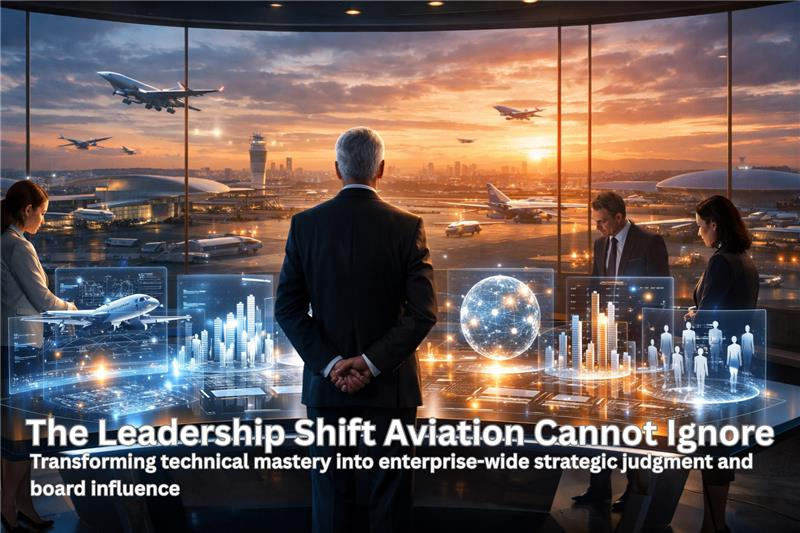
🛫 The Leadership Shift
Aviation Cannot Ignore
Many senior aviation leaders rise through technical pathways, maintenance, airworthiness, flight operations, infrastructure or systems engineering.
Technical mastery builds credibility.
But executive responsibility requires a broader mandate:
- Enterprise-wide strategic judgement
- Commercial and capital allocation literacy
- Governance and regulatory fluency
- Stakeholder and investor engagement
- Cultural and organisational leadership
The transition is not automatic. It must be intentional.
🔍 Where
Competency Gaps Commonly Surface
1️From Problem-Solving to Strategic Framing
Engineers are trained to solve defined problems.
Strategic leaders must define the right problems, balancing
risk, growth, resilience and long-term value.
2️From Operational Systems to Enterprise Systems
Understanding aircraft systems or operational workflows is foundational.
But senior roles require fluency across financial performance, regulatory ecosystems,
supply chain fragility and geopolitical exposure.
3️From
Technical Precision to Commercial Discipline 💼
Capital-intensive infrastructure, margin pressure and fleet modernisation require leaders who understand return on investment, funding structures and long-term value creation.
4️From Functional Authority to Board Influence 🏛️
Communicating technical risk to boards and regulators demands clarity, composure and strategic narrative, not simply data depth.
Executive presence becomes as important as technical credibility.
5️From Team Leadership to
Cultural Stewardship 👥
High-reliability team leadership differs from shaping culture across multinational, matrixed organisations.
Transformation requires influence beyond expertise.
🌍 Why the Gap Matters Now
The aviation sector faces simultaneous structural pressures:
- Net-zero and decarbonisation commitments
- Automation and digital integration
- Increasing regulatory intensity
- Infrastructure modernisation
- Global talent shortages
In this environment, promoting technical excellence without assessing strategic readiness creates governance risk.
Leadership precision must match operational precision.
🚀 Engineering the Transition to Strategic Leadership
Closing competency gaps requires structural discipline:
✔️ Competency-led leadership frameworks aligned to future strategy
✔️ Independent executive assessment beyond technical track record
✔️ Targeted development in commercial, governance and stakeholder capability
✔️ Cross-functional exposure to enterprise decision-making
✔️ Forward-looking
succession planning at board level
Leadership progression should be designed, not assumed.
🧭 From Expertise to Enterprise Stewardship
Aviation will always demand engineering excellence.
But the next generation of aviation leaders must integrate:
Technical credibility.
Strategic foresight.
Commercial discipline.
Cultural influence.
At Wyman Bain, we partner with aviation organisations to strengthen executive search, leadership assessment and succession architecture aligned to future complexity.
Because in aviation, safety may begin with engineering, but resilience and long-term value depend on strategic leadership.
CONTACT US >>>>>>>>>>