
Creating Effective Board Succession Plans: Securing the Future of Your Organisation
Creating Effective Board Succession Plans: Securing the Future of Your Organisation
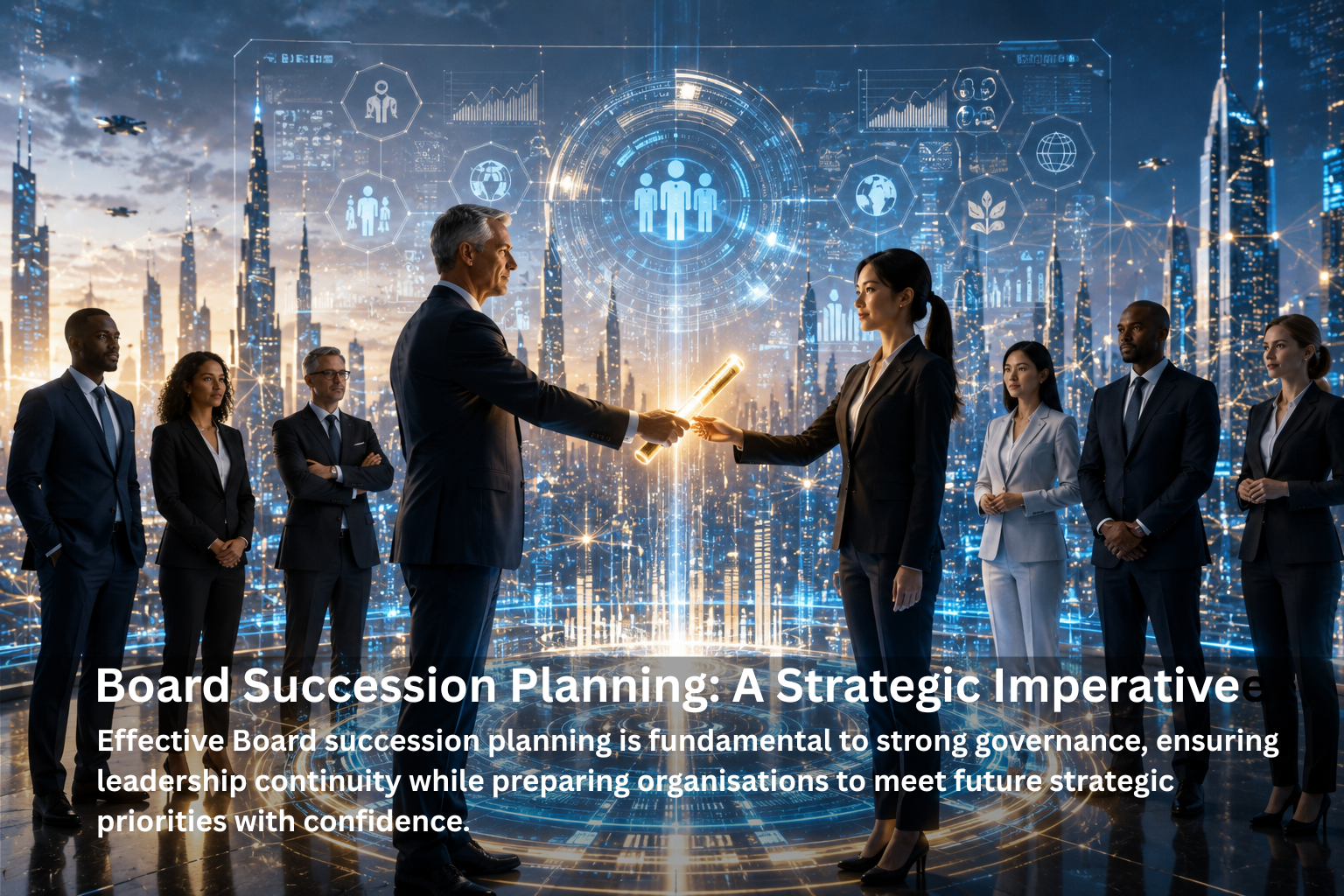
Strong leadership doesn't happen by chance it happens through careful planning.
📈 One of the most important responsibilities of any Board is ensuring that the organisation has the right leadership in place, not only today but for the future.
An effective Board succession plan helps organisations prepare for leadership changes, maintain stability, and build long-term resilience. Whether driven by retirement, term limits, unexpected departures, or organisational growth, succession planning should be an ongoing strategic priority rather than a last-minute exercise.
🌟 Why Board Succession Planning Matters
Without a clear succession plan, organisations risk:
⚠️ Loss of valuable knowledge and experience
⚠️ Leadership gaps during critical periods
⚠️ Reduced stakeholder confidence
⚠️ Slower decision-making and governance challenges
⚠️ Difficulty attracting high-calibre Board members
A proactive approach ensures continuity while bringing fresh perspectives and diverse thinking into the Boardroom.
🎯 Start with Your Strategic Direction
Succession planning should always align with your organisation's long-term strategy.
Ask yourself:
- Where is the organisation heading over the next 3–5 years? 🚀
- What new skills will the Board need?
- Are there emerging risks or opportunities requiring different expertise?
- Does the current Board reflect the diversity of our stakeholders and markets?
The future Board should be designed for tomorrow's challenges, not yesterday's.
👥 Assess Current Board Capability
Before recruiting new members, evaluate the strengths and gaps within your existing Board.
Consider:
✅ Skills and expertise
✅ Industry knowledge
✅ Governance experience
✅ Financial oversight
✅ Digital and technology expertise
✅ ESG and sustainability understanding
✅ Diversity of thought, background and experience
A Board skills matrix can be an invaluable tool for identifying future recruitment priorities.
📅 Plan Ahead
Succession planning is not simply replacing someone when they leave.
Develop a forward-looking plan that considers:
- Retirement timelines
- End of Board terms
- Committee succession
- Chair succession
- Executive and Non-Executive Director transitions
- Emergency succession arrangements
The earlier planning begins, the wider the talent pool available.
🌍 Prioritise Diversity
High-performing Boards benefit from diverse perspectives.
Effective succession planning should actively consider diversity across:
- Gender 👩💼👨💼
- Ethnicity 🌍
- Age and generational experience
- Professional backgrounds
- International experience
- Cognitive diversity and different ways of thinking
Diversity strengthens governance, improves decision-making and enhances innovation.
🎓 Invest in Future Board Talent
Succession planning isn't only about external recruitment.
Organisations should identify and develop potential future Board members by:
- Mentoring emerging leaders 🤝
- Offering governance training
- Providing Board observer opportunities
- Supporting committee participation
- Encouraging continuous professional development
Building an internal leadership pipeline creates long-term organisational resilience.
📋 Establish a Structured Recruitment Process
Successful Board appointments require more than personal networks.
Best practice includes:
- Clear role specifications
- Skills-based selection criteria
- Transparent recruitment processes
- Independent assessment
- Thorough due diligence
- Comprehensive onboarding programmes
Selecting the right individual is just as important as filling the vacancy.
🔄 Review the Succession Plan Regularly
Organisations evolve and so should succession plans.
Review your plan annually or whenever significant organisational changes occur.
Regular reviews ensure your Board continues to have the right balance of skills, experience and leadership capability.
Board succession planning is far more than preparing for retirement, it is about safeguarding the future of your organisation.
An effective succession plan ensures leadership continuity, strengthens governance, supports strategic growth and builds confidence among stakeholders, employees and investors alike.
The most successful organisations don't wait until a vacancy appears they continuously prepare for what's next. 🌟
🤝 How Wyman Bain Can Help
At Wyman Bain, we work with organisations to strengthen governance through strategic Board appointments, succession planning and executive search. Our tailored approach helps clients identify future leadership needs, attract exceptional Board talent and build diverse, high-performing Boards that are equipped for long-term success.