🏗️ Boardroom Perspectives on ESG Integration in Construction Projects 🌍
🏗️ Boardroom Perspectives on ESG Integration in Construction Projects 🌍
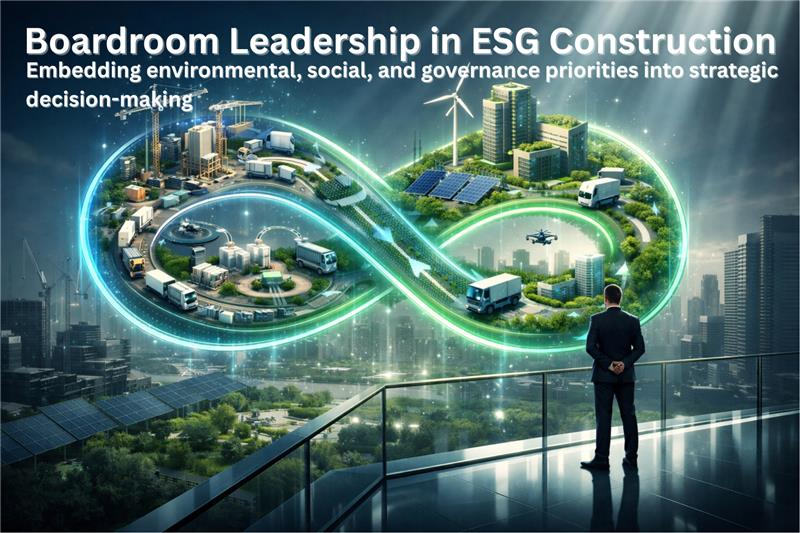
Environmental, Social and Governance (ESG) integration has become a defining issue for the
construction sector. It is no longer a peripheral reporting exercise, it is a board-level priority shaping capital allocation, risk oversight and long-term enterprise value.
For construction organisations operating amid regulatory tightening, investor scrutiny and increasing stakeholder expectations, ESG is fundamentally about resilience and competitiveness.
At
Wyman Bain, we advise boards and executive teams on embedding ESG into the strategic, financial and operational architecture of construction businesses.
🌱 ESG as
Strategy, Not Compliance
Leading boards recognise that ESG must inform core decision-making, not sit alongside it.
Effective integration influences:
- Capital investment and portfolio prioritisation
- Design standards and material specification
- Supply chain governance and procurement strategy
- Workforce safety, wellbeing and capability development
- Asset lifecycle performance and long-term value creation
When embedded at concept and planning stage, ESG becomes a value driver rather than a constraint.
🌍 Environmental Stewardship in Project Delivery
The construction industry is central to the global decarbonisation agenda. Boards must therefore exercise oversight across:
- Carbon reduction pathways aligned with national and international targets
- Circular material flows and responsible resource use
- Water management and biodiversity protection
- Low-carbon design and modern methods of construction
The shift is from cost-led delivery to value-led, sustainable infrastructure development.
👥 Social Responsibility as Strategic
Risk Management
Construction projects are inherently community-facing. Social performance directly affects licence to operate and long-term reputation.
Boards should ensure:
- Robust health, safety and wellbeing governance
- Transparent stakeholder engagement and community partnership
- Investment in skills, diversity and workforce resilience
- Measurable positive social and economic impact
Social oversight is not philanthropy, it is risk management and brand stewardship.
⚖️
Governance: From Policy to Performance
ESG ambition requires governance discipline.
High-performing boards:
- Integrate ESG metrics into executive remuneration frameworks 💼
- Establish clear accountability at enterprise and project levels
- Strengthen ethical standards and supply chain due diligence
- Monitor ESG risks with the same rigour as financial metrics
Governance is the mechanism through which ESG strategy is operationalised.
📊 Critical Questions for
Construction Boards
To ensure ESG integration is substantive rather than symbolic, boards should ask:
- Is ESG embedded in tender strategy and project risk modelling?
- Are we assessing whole-life carbon and value, not merely upfront cost?
- Do we possess the leadership capability to scale sustainable delivery?
- Are incentives aligned with long-term environmental and social outcomes?
Board clarity and alignment determine whether ESG becomes a source of differentiation or administrative burden.
🚀 From Obligation to Competitive Advantage
Organisations that approach ESG defensively will struggle to unlock its strategic potential.
Those that embed ESG into enterprise strategy will:
- Enhance access to capital 💷
- Strengthen investor and stakeholder confidence 🤝
- Improve operational resilience
- Build enduring enterprise value 📈
In construction, ESG integration is not optional. It is integral to sustainable growth and long-term competitiveness.
🤝 How
Wyman Bain Supports Construction Leaders
We partner with boards and executive teams to:
- Assess ESG maturity and strategic alignment
- Redesign governance and operating models
- Align incentives with sustainable value creation
- Build executive capability for responsible, resilient growth
ESG in construction is not a trend. It is a structural transformation in how projects are financed, designed and delivered.
The
question for boards is not whether ESG matters, but whether it is embedded deeply enough to secure long-term advantage.