The Future of Executive Compensation: Balancing Cash, Equity & Purpose 💼📈
The Future of Executive Compensation: Balancing Cash, Equity & Purpose 💼📈
Executive compensation is undergoing a fundamental transformation. As organisations respond to economic volatility, digital acceleration and shifting workforce expectations, leaders are increasingly motivated by a balance of
financial reward, long-term value creation and organisational purpose.
At
Wyman Bain, we are seeing a decisive move away from traditional, cash-heavy packages towards more
strategic, holistic and purpose-aligned compensation frameworks, particularly across manufacturing, engineering, technology and private equity–backed environments.
1. A Changing Landscape for
Executive Reward 🌍
Several forces are reshaping how organisations design, evaluate and communicate executive compensation:
📌 Economic and market uncertainty
Boards are adopting more resilient pay structures that ensure financial stability without weakening performance incentives.
📌 Heightened competition for leadership talent
Demand for experienced operational, digital and transformation leaders continues to outstrip supply, raising the bar for compelling remuneration design.
📌 Increased regulatory and shareholder scrutiny
Transparency, fairness and robust pay-for-performance alignment are now essential.
📌 A more purpose-driven executive mindset
Senior leaders are actively prioritising organisations whose values, culture and impact align with their own.
These factors are driving significant change in how compensation is structured and communicated at senior levels.
2.
Cash Compensation: Still Foundational, but No Longer Central 💷
Base salary and annual bonuses remain important, yet their dominance is diminishing.
Today’s organisations are shifting to:
- More performance-linked variable pay
- Clear, measurable short-term KPIs
- Reduced reliance on large guaranteed bonuses
- Balanced structures that support both stability and accountability
Cash remains essential, but it is no longer the sole driver of executive motivation or retention.
3.
Equity: Strengthening Alignment and Long-Term Value 📊
Equity-based reward has become a critical component of modern executive compensation, extending far beyond the technology sector.
Common structures include:
- Share options
- RSUs (Restricted Stock Units)
- Growth shares (especially in PE-backed organisations)
- LTIPs (Long-Term Incentive Plans)
Equity offers three strategic advantages:
- It aligns executives to long-term organisational value
- It supports sustainable, ownership-driven decision-making
- It enhances retention, particularly during periods of transformation or scale
For many senior leaders, meaningful equity participation is now a defining element of an attractive package.
4. Purpose,
Culture & Non-Financial Value: The New Executive Priorities 🌱✨
Purpose has become a central component of executive decision-making. Leaders increasingly seek roles that offer:
🌟 A clear organisational mission
Senior professionals want their leadership to generate meaningful, measurable impact.
🌟 A leadership culture that supports high performance
Trust, authenticity and psychological safety now play a critical role in attracting and retaining executives.
🌟 Sustainable working practices and wellbeing support
As burnout rises, executives are placing higher value on:
- Flexible working
- Protected personal time
- Sensible workloads
- Holistic wellbeing investment
Purpose does not compete with compensation, it enhances it.
5. What High-Performing Executive Packages Look Like Today 🎯
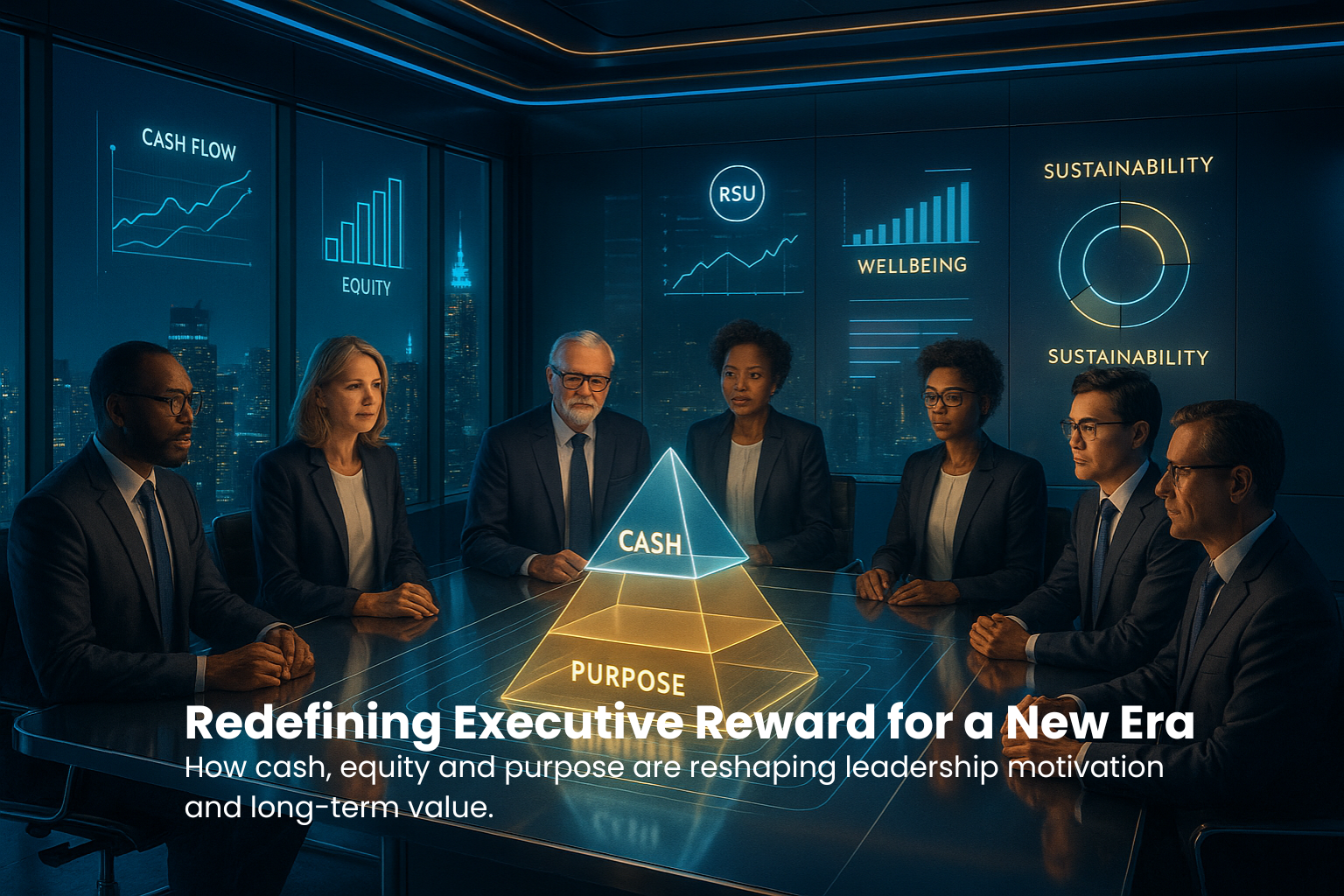
Organisations leading the market increasingly adopt a three-pillar approach:
1️Competitive cash aligned with performance
Ensuring security while reinforcing accountability.
2️Significant long-term equity incentives
Encouraging ownership and long-term value creation.
3️A compelling purpose-driven proposition
Fostering commitment, motivation and cultural alignment.
This integrated model is proving most effective at attracting senior leaders who deliver sustained organisational performance.
6. How
Wyman Bain Supports Modern Compensation Strategy 🤝
As specialists in executive search and leadership advisory, Wyman Bain helps organisations:
✔ Benchmark compensation across cash, equity and benefits
✔ Structure competitive and strategically aligned executive packages
✔ Advise on equity participation models suitable for transformation and growth
✔ Provide market intelligence on leadership expectations and trends
✔ Secure senior leaders motivated by long-term organisational impact
Our expertise ensures that compensation strategies support attraction, performance and retention at the highest level.
Conclusion: The Future of
Executive Compensation Is Balanced, Strategic and Purpose-Led 🚀
The next era of executive compensation will not be defined by the largest salary or highest bonus. It will be defined by alignment, between reward, responsibility, culture and purpose.
Organisations that modernise their compensation strategies now will be best positioned to secure the leadership talent required for long-term resilience, innovation and growth.
If you would like to refine your compensation approach or attract senior leaders aligned with your organisational goals, the Wyman Bain team is here to support.
📩
Contact us to discuss your executive compensation and leadership strategy.