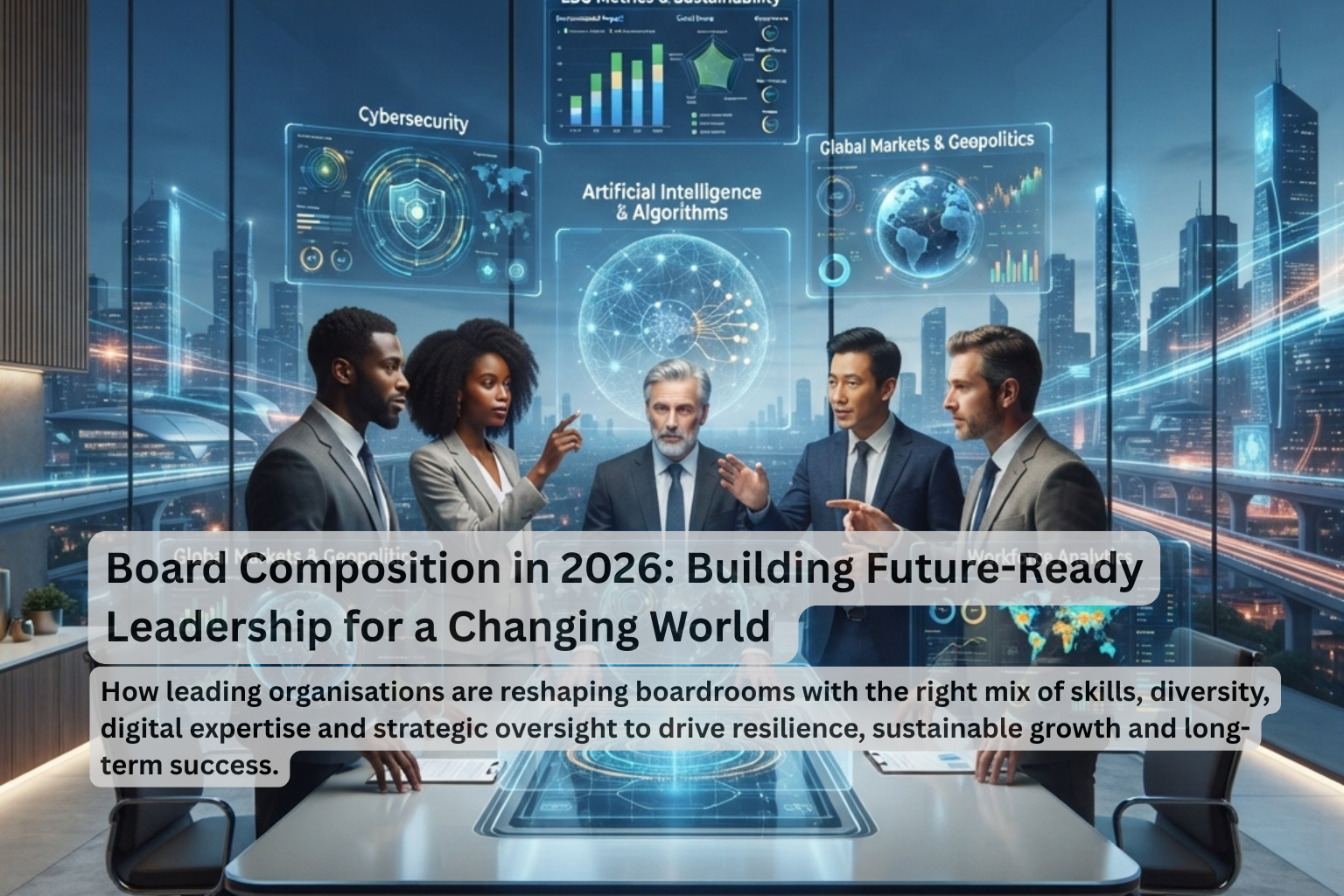
Board Composition in 2026: What Leading Organisations Are Prioritising 🏛️
Board Composition in 2026: What Leading Organisations Are Prioritising 🏛️
Board Composition in 2026: What Leading Organisations Are Prioritising 🏛️
As the business landscape continues to evolve, so too do the expectations placed on boards of directors. In 2026, effective board composition is no longer simply about governance and compliance it is about creating diverse, agile and forward-thinking leadership teams capable of navigating uncertainty, driving sustainable growth and strengthening organisational resilience.
Leading organisations are rethinking how they appoint and develop board members, ensuring they possess the expertise, perspectives and leadership qualities needed to meet today's challenges and tomorrow's opportunities.
1. Skills-Based Boards Over Status-Based Appointments 🎯
The traditional approach of appointing board members based primarily on seniority or prestige is giving way to a more strategic, skills-focused model.
Boards are increasingly seeking expertise in areas such as:
💻 Digital transformation
🤖 Artificial intelligence (AI)
🔒 Cybersecurity
🌱 Sustainability and ESG
⚖️ Risk management
👥 Talent and culture
Organisations are conducting regular board skills assessments to identify capability gaps and recruit directors who bring practical, future-focused experience.
2. Diversity That Strengthens Decision-Making 🌍
Diversity remains a strategic priority not simply to meet expectations, but because it leads to stronger governance and better decision-making.
Leading boards are improving diversity across:
💼 Gender
🌎 Ethnicity
👥 Age and generational perspectives
🎓 Professional backgrounds
🏢 Industry experience
✈️ International expertise
A wider range of perspectives enables more balanced discussions, reduces groupthink and supports better long-term outcomes.
3. Digital Confidence Is Becoming Essential 💡
Technology now influences every aspect of organisational performance.
Boards are expected to understand:
🤖 AI governance
🔐 Data protection and privacy
🛡️ Cyber resilience
🚀 Digital innovation
📊 Technology investment
Directors no longer need to be technical specialists, but they must ask the right questions and provide effective oversight of digital strategy.
4. Greater Focus on ESG and Sustainability 🌱
Environmental, Social and Governance (ESG) considerations have become embedded within board agendas.
Stakeholders increasingly expect boards to oversee:
🌍 Climate-related risks
♻️ Sustainable business strategies
🤝 Ethical leadership
❤️ Corporate culture
🤲 Social impact
Successful organisations recognise that sustainability supports long-term value creation rather than acting as a standalone initiative.
5. Stronger Governance and Risk Oversight ⚖️
The pace of change means risks are becoming increasingly interconnected.
Boards are expanding their oversight of:
🌐 Geopolitical uncertainty
🚚 Supply chain resilience
💻 Cyber threats
📜 Regulatory developments
💷 Financial resilience
⭐ Reputation management
Leading organisations are investing more time in scenario planning and strategic risk discussions rather than focusing solely on compliance.
6. Succession Planning Is a Continuous Process 🔄
High-performing boards understand that succession planning should never be reactive.
Forward-thinking organisations are:
🌟 Identifying future board talent
📈 Developing executive leadership pipelines
👔 Planning CEO succession
🔁 Refreshing board membership regularly
A structured succession strategy ensures continuity while bringing fresh perspectives into governance.
7. Culture and Human Capital Are Board-Level Priorities ❤️
People remain every organisation's greatest asset.
Boards are paying closer attention to:
😊 Employee wellbeing
👏 Leadership capability
🌟 Workplace culture
💼 Talent retention
📚 Skills development
Strong organisational culture is increasingly recognised as a key driver of performance, innovation and long-term success.
Looking Ahead 🚀
Board composition in 2026 reflects a broader shift in governance from oversight to strategic leadership.
The most effective boards combine diverse perspectives, relevant expertise and a commitment to continuous learning. They are equipped not only to respond to change but to anticipate it, helping organisations remain resilient, competitive and purpose-driven.
At Wyman Bain, we support organisations in strengthening board effectiveness through executive search, leadership assessment, succession planning and governance advisory services. By helping clients build capable, diverse and future-ready boards, we enable organisations to lead with confidence in an increasingly complex world.
An effective board is one of an organisation's greatest strategic assets. Investing in the right mix of skills, experience and perspectives today will shape stronger leadership and better business outcomes for years to come.
Is your board ready for the challenges and opportunities of 2026?